





Fig. 1. Drought-damaged mixed stand showing gaps in the canopy, yellowing of needles and leaves, and tree mortality. Heat and drought damage trees through two main physiological mechanisms: hydraulic failure and carbon deficiency. Photo: Andreas Rigling (ETHZ)
Climate change is impacting our forests more rapidly than trees can adapt naturally. The empirical knowledge of forestry practitioners, built up over generations, is becoming increasingly unreliable – not because it is wrong, but because it is based on assumptions that no longer apply. An understanding of tree physiology provides the scientific basis needed to bridge this gap: if we know why trees die as a result of heat and drought, we can tailor specific management decisions to address these vulnerabilities, rather than searching for a single ‘climate-resistant’ tree species.
Climate stress: damage and approaches to dealing with it
Climate change affects trees in three ways: through temperature stress, water stress, and increased pressure from pests and diseases (Fig. 2).
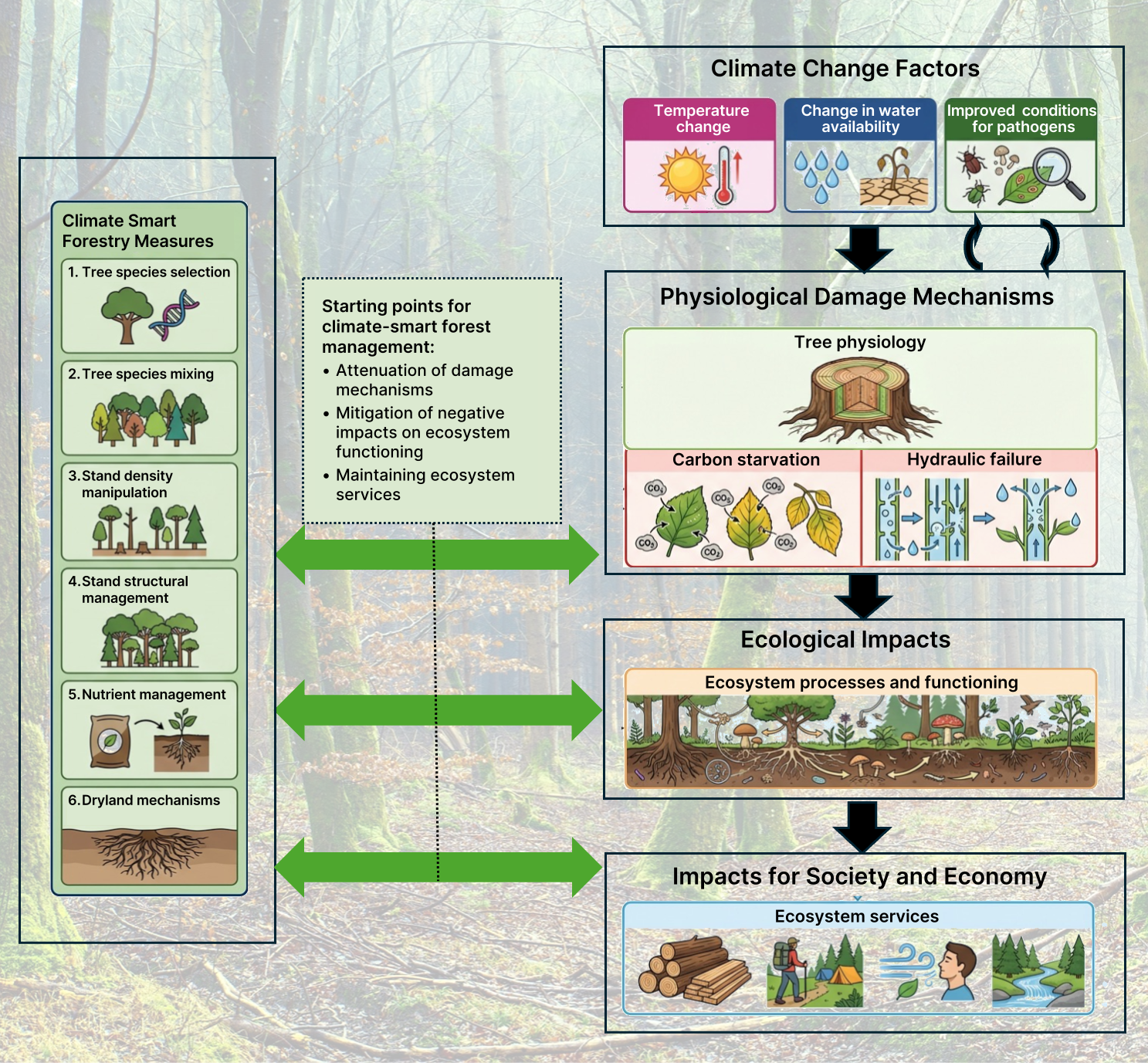
Fig. 2. Climate change-induced stress affects tree physiology through specific damage mechanisms that impair ecosystem functions and forest services. Climate-friendly forest management addresses these mechanisms. Source: Gessler et al. (2026), New Phytologist, modified.
The first two factors trigger two main physiological damage mechanisms:
- Hydraulic failure: When a high vapour pressure deficit in the atmosphere (heat) coincides with insufficient availability of water in the soil, air bubbles (embolisms) block the water transport system in the xylem. The tree dries out from the inside. Blocked vessels also provide entry points for pathogenic fungi.
- Carbon deficiency: To conserve water, trees close their stomata. However, this also brings photosynthesis to a halt, thereby reducing carbon assimilation and carbohydrate production. The tree’s energy reserves dwindle until neither its metabolism nor its defences against pathogens can be sustained.
The two mechanisms reinforce each other, making weakened trees even more susceptible to biotic attacks. This is precisely where effective, climate-adapted forestry management comes into play, by tailoring management measures specifically to these damage mechanisms, rather than aiming for a blanket form of ‘climate resilience’, when it is in any case unclear how this may be achieved.
Tree species selection in times of climate change
Trees from drier regions have developed characteristics that make them more resistant to hydraulic failure: denser wood with narrower water-conducting vessels, a more resilient hydraulic system, and more efficient regulation of the stomata. Such characteristics can be taken into account specifically when selecting species and provenances.
Because trees planted today must be able to withstand both current and future climatic conditions, the traditional site-based approach to species selection is no longer sufficient. The concept of assisted migration offers three graded options: the shifting of provenances within the current range of a species, the expansion of cultivation slightly beyond the historical range and – as the most far-reaching measure – the introduction of species from significantly warmer or drier regions. Before introducing non-native species, consideration should be given to rare native species that have received little attention in forestry to date.
There are two trade-offs that must always be considered: even though they perform better in dry years, drought-resistant species often grow more slowly than other species in favourable years and are at a disadvantage when competing with other species. Species from warmer places of origin may also be more susceptible to frost - a risk that grows as spring arrives earlier and late frosts become more frequent.
Species distribution models as aids for decision-making
Web-based tools such as tree-app.ch (Switzerland) or klimafitterwald.at (Austria) assist with species selection by providing climate projections and habitat suitability models. However, it is important to be aware of their limitations: extreme weather events, local site conditions and the trees’ adaptability are not usually considered in the models. They provide important guidance but cannot replace the judgement of experienced forestry professionals.
Promoting resilient mixed forests
Mixed forests can mitigate drought stress through three mechanisms: The portfolio effect spreads the risk across tree species that react differently to stress; niche complementarity, for example through the selection of species with different root depths, enables a more efficient use of soil water; and through hydraulic redistribution, deep-rooted trees transport water from moist deeper layers to drier upper layers at night, also benefiting neighbouring plants and seedlings.

Fig. 3. A structurally diverse mixed stand with several tree species and age classes. Mixed forests are better able to mitigate drought stress through niche complementarity, hydraulic redistribution and the portfolio effect – though whether and to what extent this occurs depends on local site conditions. Photo: Andreas Rigling (ETHZ)
Whether and to what extent these benefits occur naturally depends largely on the site’s drought history. However, these mechanisms can be promoted through active selection of the tree species composition. Where there is a risk of fire, the admixing of fire-resistant deciduous trees into coniferous stands provides additional protection.
Drought history determines the effect of mixture
Species biodiversity reduces drought stress in forests that have experienced regular droughts in the past. In forests without regular water stress, however, it can increase vulnerability. Tree species that are adapted to moist sites are more likely to have a competitive advantage above ground than deep root systems. When stands of such tree species experience drought, the unfavourable root-to-shoot ratio can increase the stress on the trees. The admixing of species with deeper root systems specifically improves niche complementarity. It should also be noted here that species that are adapted to dry conditions may have a competitive disadvantage during periods of good water availability. In such cases, silvicultural measures may need to be taken to reduce competition from other trees.
Learning from dry forests
In the course of evolution, ecosystems in arid regions have developed mechanisms that enable trees to survive in conditions of extreme drought. Some of these mechanisms are also to be found in temperate boreal forests, and they can be promoted through targeted management measures.
- Hydraulic redistribution: This can be specifically enhanced by the selection of deep-rooted species, such as various oak species. In temperate and subtropical forests with regular dry periods, hydraulically redistributed water volumes of around one third of the total water uptake of large trees have been measured.
- Water uptake via leaves and bark: Many tree species are able to absorb water directly from mist, dew and light rain – a phenomenon also documented for European beech, Norway maple and various pine species. Water absorbed through the leaves can be transported through the tree down to the roots and acts as an additional buffer during dry periods.
- Canopy convector effect: Rough, multi-layered crown surfaces generate air turbulence, which releases heat into the atmosphere through sensible heat flux, without consuming water. This mechanism comes into play when transpiration-based cooling is limited by a lack of water, and it protects leaves from critical overheating temperatures.
In terms of forest management, this means that species with characteristics favouring these mechanisms should be actively considered in the selection of species and establishment of stands. Structurally diverse, multi-layered stands – which are in any case a key objective of near-natural forest management – further promote the convector effect.
Stand density, structure and production time
A reduction in stand density lowers the overall demand for water and increases the amount of water available for the remaining trees. In arid regions, thinning is a reliable means of improving resistance to drought. In moist stands with a good water (and also nutrient) supply, caution is advised: following thinning measures, trees initially invest heavily in the expansion of their crowns, before the root system has had time to match this growth. If a drought occurs during this period, the trees are particularly vulnerable because of the unfavourable root-to-shoot ratio (temporary crown dominance). Several moderate intervention measures are therefore preferable to single, intensive thinning operations, even if they incur higher management costs.

Fig. 4. A stand after thinning, with reduced canopy closure of the remaining trees. The reduction in stand density lowers the overall water requirements – an effective means of increasing drought resistance on dry sites. On moister sites, however, caution is advised to avoid a structural imbalance in which the crown becomes too heavy in relation to the root mass. Photo: Hubert Schmid (WSL)
Larger and taller trees are generally more susceptible to hydraulic failure: They have to transport water against gravity over longer distances, and the tree crowns are more exposed to heat, wind and atmospheric dryness. A lower ratio of tree height to trunk diameter – achievable through early and repeated thinning measures – reduces this risk whilst at the same time increasing the tree’s stability when exposed to wind and snow.
Shorter production times reduce exposure to extreme events and allow for more rapid adaptation of the tree species portfolio. Structures of varying ages are better at mitigating the effects of drought at the stand level and maintain water-use efficiency over longer periods. Shorter production times do, however, come at a price: they reduce carbon sequestration and can have a negative impact on biodiversity, as many forest benefits are linked to old trees and habitat continuity. This can be counteracted by the targeted conservation of old woodland on sheltered sites such as shady slopes or moist depressions.
Nutrient supply under climate change
High nutrient availability promotes above-ground growth at the expense of the roots, thereby increasing vulnerability to drought. Fertilisation exacerbates this effect, stimulating above-ground biomass growth, lowering the root-to-shoot ratio, and reducing the frequency of mycorrhizal associations. High nitrogen input from the air also has a similar effect. Routine fertilisation is therefore not recommended in stands at risk of drought. The more sustainable alternative is to combine tree species with complementary nutrient uptake strategies. Liming can promote tree recovery following droughts, but the mechanisms involved have not yet been sufficiently researched – widespread application is not recommended.
The bottom line for practitioners
Forest management based on ecophysiology is not a prescribed formula, but a pattern of thought: it means understanding what kills trees when they are under stress and selecting measures that address precisely that. (fig. 5).
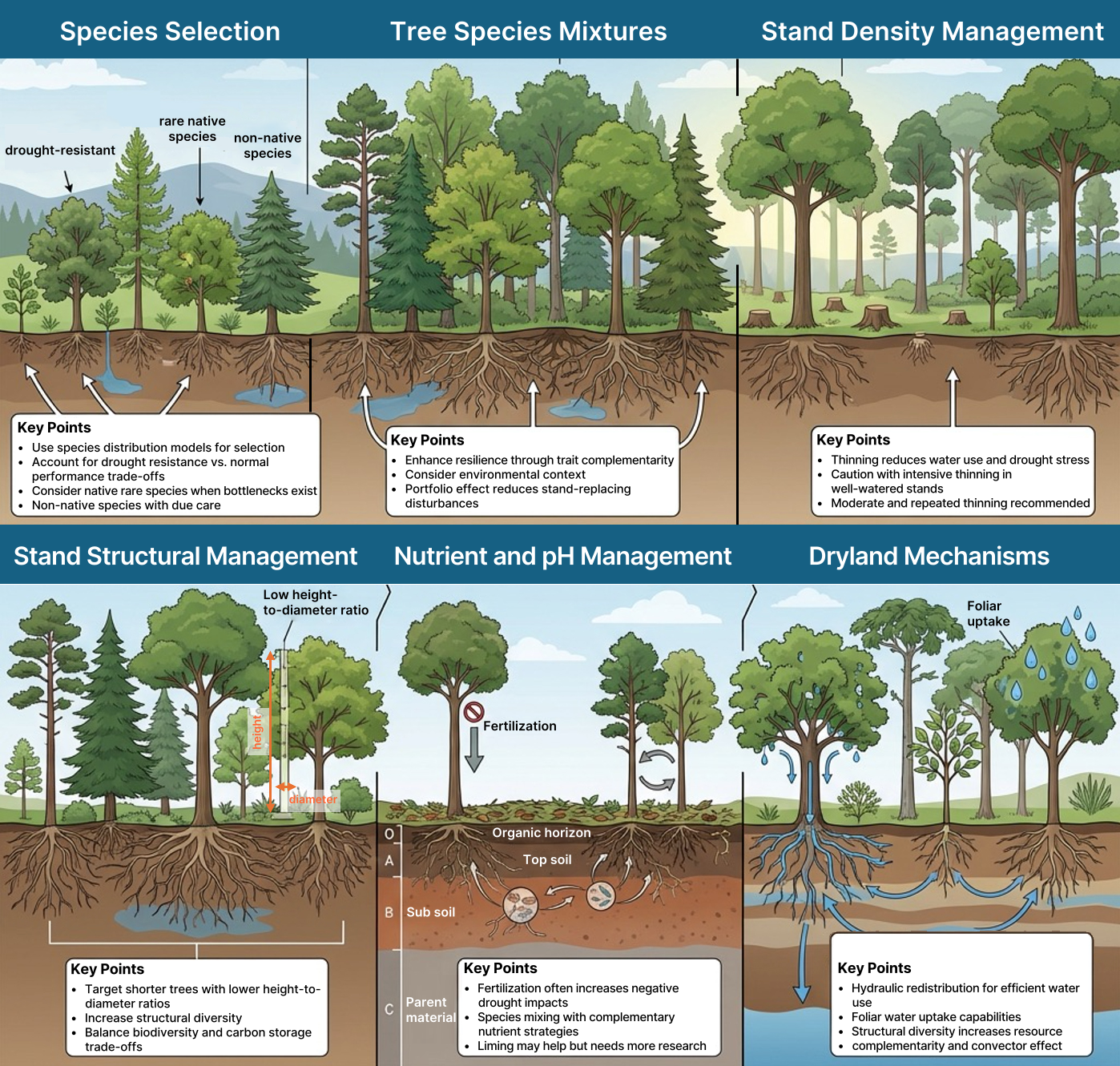
Fig. 5. An overview of the most important climate-friendly forest management practices and key considerations when adapting forests to climate change. Source: Gessler et al. (2026), New Phytologist, modified.
Individual tools such as tree species selection, species mixture, thinning measures and structural diversity do not work in isolation, but through their interaction. Their effect also always depends on the site: what builds up drought resistance in dry regions can temporarily have the opposite effect on moist sites.
Three key principles guide this approach:
- Diversification, i.e. the combination of species, provenances, structures and functional characteristics in such a way as to create diversity, complementarity and mutual buffering.
- Monitoring, i.e. active monitoring of tree responses following intervention measures, in order to identify and correct deviations at an early stage.
- Site-appropriate action, i.e. ensuring that no measures are taken without an assessment of local water availability, drought history and competitive conditions.
The forests we establish today will experience the climate of the second half of the century. This does not require perfect action now, but a clear direction, guided by tree physiology within an ecological context.
Translation: Tessa Feller
Literature
Gessler A., Grünzweig J.M., Bigio L., Hartmann H., McDowell N., Krumm F., … Bottero A. (2026) Shaping future forests: how can ecophysiology support climate-smart forest management? New Phytologist. doi.org/10.1111/nph.71007

