





Fig. 1. Structurally rich mixed stands can reduce the risk of biotic damage and increase the resilience of forest stands. Photo: Andreas Rigling (ETHZ)
Biotic disturbances caused by insects and pathogens have been increasing in European forests for years. Climate change and global trade are exacerbating this development: higher temperatures, more frequent dry periods and milder winters promote the development and spread of many harmful organisms, while international trade increases the risk of alien species being introduced. The interaction of these factors increases the likelihood of more severe or widespread damage to the forest occurring. With this as the background, the focus is increasingly on preventive forest management with site-appropriate and mixed stands. The following overview outlines the role that tree species mixtures can play in this, and where their limits lie.
Less damage in mixed stands
Statistical analysis of more than 600 case studies shows that forest stands with several tree species are, on average, about 23% less affected by biotic damage than monocultures (fig. 2). This is the case for various harmful organisms, including specialist insects and invasive species. The effect has been shown across many forest types, although its strength varies depending on the site and species combination.
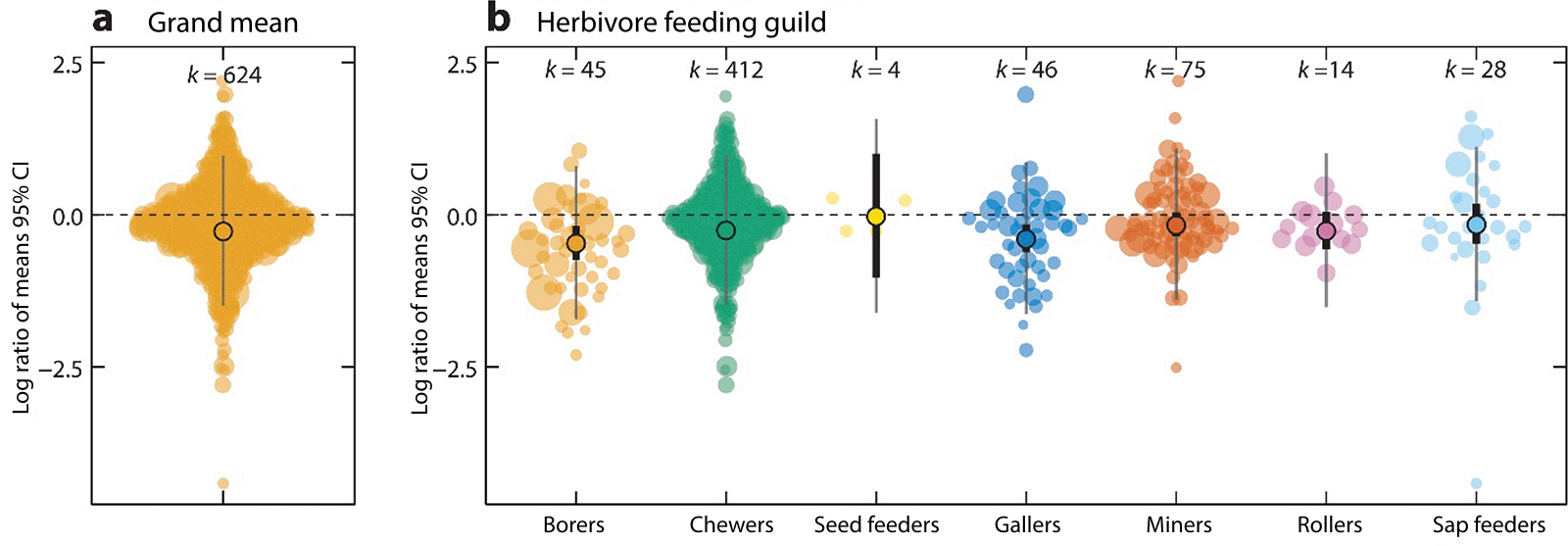
Fig. 2. Effect of tree species diversity on insect infestation a) -23% across all studies and b) for insect groups of different feeding strategies. The effect is particularly pronounced in specialist species (-42%). Source: Jactel et al. 2021, modified.
Mechanisms for minimising damage
On the one hand, neighbouring non-host species reduce the “visibility” of suitable host trees, making it more difficult for pests to find or specifically target their host trees. Secondly, as the proportion of a susceptible tree species decreases, so too does its availability (host dilution), which limits the development of high population densities. In addition, stands that are richer in terms of structure and species promote natural antagonists such as predatory insects or birds. This can further slow down and mitigate the development of damage.

Fig. 3. Pure stands can provide favourable conditions for host-specific pests, because host trees are spatially contiguous, more concentrated, and easy to find. Photo: Andreas Rigling (ETHZ)
Composition over number of species
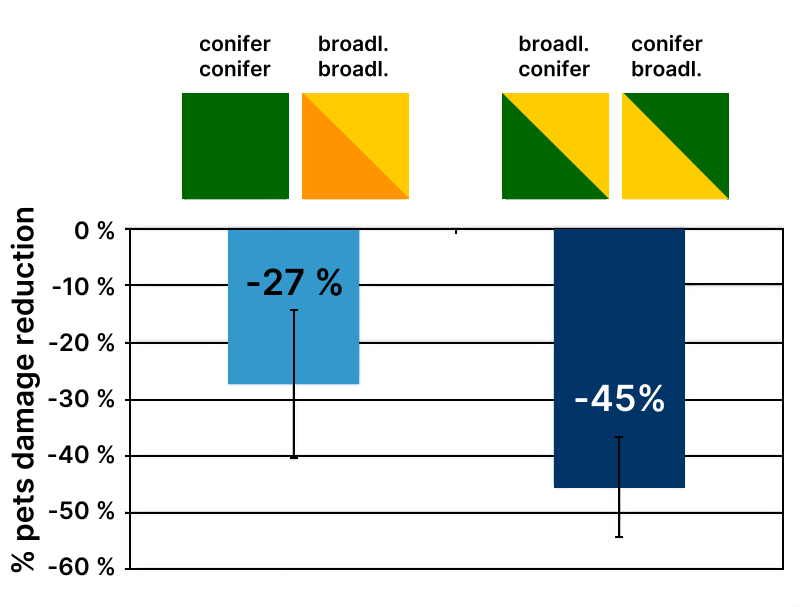
Fig. 4. The meta-analysis of 119 studies shows a lower insect burden in mixed stands (left), especially in deciduous-coniferous mixtures (right). Illustration based on Jactel and Brockerhoff (2007).
It is not just the number of tree species that is crucial for the preventive effect of mixed stands against insect infestation, but also their specific combination. In many cases, two tree species are sufficient to achieve a measurable effect. It is particularly effective to mix susceptible host tree species with suitable non-host species as well as combinations of less genetically related species such as coniferous and deciduous trees (fig. 4).
A similar pattern can be observed with regard to pathogens: mixed stands have lower infestation rates on average than pure stands (Field et al. 2025). Here, too, it is not so much the number of tree species that is decisive, but rather the identity of the neighbouring tree species. Non-susceptible trees interrupt host continuity, thereby reducing the spread of pathogens. Although many pathogens spread passively, for example via spores, mixed stands nevertheless reduce the probability of transmission, especially when susceptible trees are spatially separated from each other. Overall, mixed stands can help protect against disease.
Practical planning
The selection of suitable tree species mixtures should be risk-oriented and take site conditions, climatic developments and known biotic risks into account. Economic factors, tending costs and browsing by game have a significant influence on implementation (see below). In the long term, mixtures can contribute to more stable yields and a lower risk of damage.
Limited effectiveness of control measures
Even with a proactive approach to silvicultural management, it is of course not possible to avoid biotic damage completely. Further measures against harmful organisms (fig. 5) thus remain components of forest management where necessary.
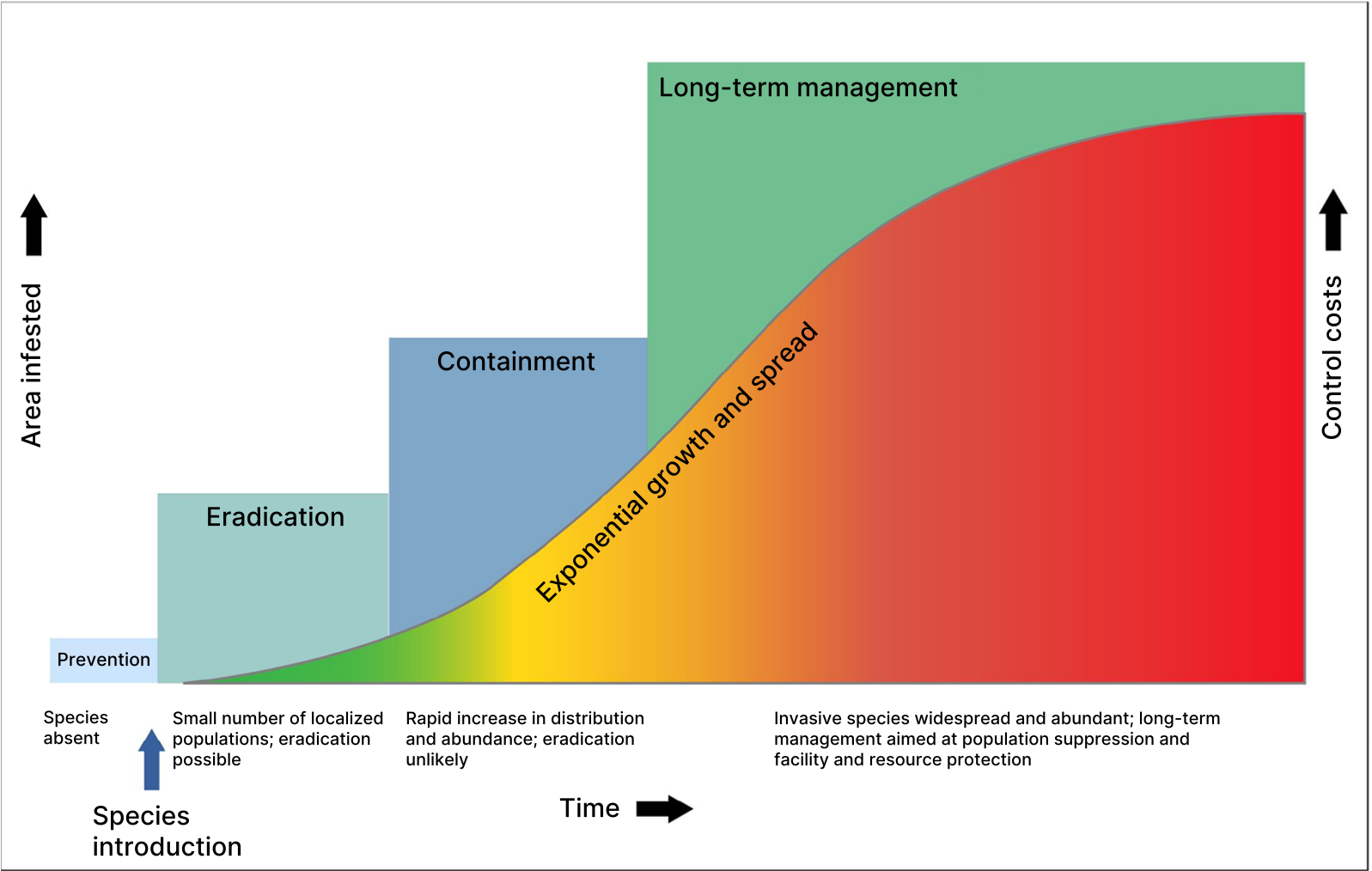
Fig. 5. The effectiveness of control measures decreases and costs rise as invasive pests become more established. Source: GAO 2015, modified.
Global trade increases the risk of alien harmful organisms being introduced. Controls apprehend only a very small proportion of the potential introductions of invasive species. A species appearing for the first time can be successfully eradicated in the early stages (i.e. if detected early, while its occurrence is still very limited in spatial terms). As it becomes more established, however, the chances of success decrease significantly: an evaluation of European programmes documents 848 officially declared eradication attempts against non-native pests and pathogens on woody plants since 1945 (Branco et al. 2023). Less than 10% of known non-native organisms on woody plants have ever been the target of an eradication attempt. Around one third of these cases involved organisms that were still limited to the imported material; in these cases, the success rate was 100%. If we consider established species only, the success rates were 50% (for arthropods) and 61% (for pathogens). Which means that in total only 5% of established pest species have been eradicated. Spatial spread proved to be a key influencing factor: success declined sharply when infested areas exceeded certain sizes (arthropods: > 100 ha; pathogens: > 10 ha).

Fig. 6. Early signs of infestation on the trunk (bore dust, in this case from the citrus long-horn beetle). With many harmful organisms, the timing is crucial: the earlier an infestation is detected, the greater the room for manoeuvre. Photo: WSL
As the organism spreads, the objectives and success prospects of management measures shift: damage limitation and long-term resource protection become the priorities.
There are also conflicts of interest: control measures can have a negative effect on non-target organisms, disrupt ecological processes, or be socially controversial.
Role of natural antagonists
Prevention and containment measures can be complemented by the biological control of invasive species via natural antagonists. However, long-term studies on classical biological pest control – i.e. the targeted introduction of natural enemies from the area of origin of a harmful organism – show that classical biological control programmes are only fully effective in a limited number of cases (complete eradication in around 11% of cases; Seehausen et al. 2021). The results depend heavily on the characteristics of the pests, the antagonists and the host species, and on the management conditions. The analyses therefore emphasise the importance of careful consideration and adaptive, long-term planning.
Native natural enemies also contribute to the regulation of harmful organisms: they influence the probability of establishment of alien species, and can curb their population development and the extent of damage. Species-rich forest stands also promote these antagonists (Stemmelen et al. 2021).
Although natural antagonists may not be effective in combating pests in the short-term, they can help stabilise pest populations in the long-term, and they are part of the basic ecological makeup of resilient forest stands.
Prevention through tree species mixture
A clear consequence is to be drawn from the available evidence: if biotic damage is increasing and the effectiveness of subsequent control measures is limited, the preventive silvicultural management of forest stands becomes more important. Tree species mixtures reduce the risk of biotic damage on average and increase the resilience of stands.
Tree species mixture is not a substitute for monitoring or management, but a key lever that can be used to limit biotic risks at an early stage and reduce dependence on reactive measures.
Structural and economic conditions
The implementation of preventive measures through tree species mixture not only depends on their ecological effectiveness, but also to a large extent on economic and institutional conditions. Short-term economic incentives can supplant long-term risk-oriented decisions, especially if damage occurs with a time lag or the consequences do not have to be borne entirely by those responsible for management. Subsidies and incentive systems as well as ownership structures have a significant influence on forestry practice and determine the extent to which preventive measures are actually implemented.
Game browsing as a limiting factor
A major limiting factor in the establishment of stands is browsing by wild animals. The effects vary greatly from region to region and depend on game density, hunting strategy and tree species selection. Depending on the composition, species mixtures can spread or reduce the browsing pressure, but they are not a substitute for adapted wildlife management.

Fig. 7. Game browsing can make it difficult to establish mixed stands; protective measures and adapted wildlife management remain key prerequisites for the implementation of preventive strategies. Photo: Fritz Frutig (WSL)
These conditions show that scientific evidence and practical implementation are not necessarily congruent.
Outlook
Biotic disturbances will continue to gain in significance under changing environmental conditions. Scientific evidence shows that tree species mixtures reduce the risk of biotic damage on average and increase the resilience of forest stands. Given the limited effectiveness of curative control measures, the preventive silvicultural management of stands plays a key role. Whether this potential is exploited, however, depends on implementation under the given economic and institutional conditions.
Translation: Tessa Feller
Literature
Branco S., Douma J.C., Brockerhoff E.G., Gomez-Gallego M., Marcais B., Prospero S., … Branco M. (2023) Eradication programs against non-native pests and pathogens of woody plants in Europe: which factors influence their success or failure? NeoBiota. 84, 281-317. doi.org/10.3897/neobiota.84.95687
Field E., Hector A., Barsoum N., Koricheva J. (2025) Tree diversity reduces pathogen damage in temperate forests: A systematic review and meta-analysis. For. Ecol. Manag. 578(15). 13 p. doi.org/10.1016/j.foreco.2006.08.008
Jactel H., Brockerhoff E. G. (2007) Tree diversity reduces herbivory by forest insects. Ecol. Lett. 10(9), 835–848. doi.org/10.1111/j.1461-0248.2007.01073.x
Jactel H., Moreira X., Castagneyrol B. (2021) Tree Diversity and Forest Resistance to Insect Pests: Patterns, Mechanisms, and Prospects. Annu. Rev. Entomol. 2021(66), 277-96. doi.org/10.1146/annurev-ento-041720-075234
Seehausen M. L., Afonso C., Jactel H., Kenis M. (2021) Classical biological control against insect pests in Europe, North Africa, and the Middle East: What influences its success? NeoBiota. 65, 169-191. doi.org/10.3897/neobiota.65.66276
Stemmelen, A., Jactel, H., Brockerhoff E.G., Castagneyrol, B. (2021) Meta-analysis of tree diversity effects on the abundance, diversity and activity of herbivores' enemies. Basic and Applied Ecology, 58 (2022) 130-138. doi.org/10.1016/j.baae.2021.12.003


![[Translate to English:]](/assets/_processed_/6/0/csm_wsl_alb_europa_weiss_f29e22c9f7.webp "[Translate to English:]")
