



Climate change is leading to more extreme weather events. Heavy rainfall events are becoming more frequent, while summer droughts are becoming longer and more intense. This also jeopardises important ecosystem services provided by our forests, including flood and soil protection, or the provision of drinking water (Fig. 1). To counteract these effects, decentralised retention and storage of precipitation water in forests must be significantly increased in comparison with up to now.
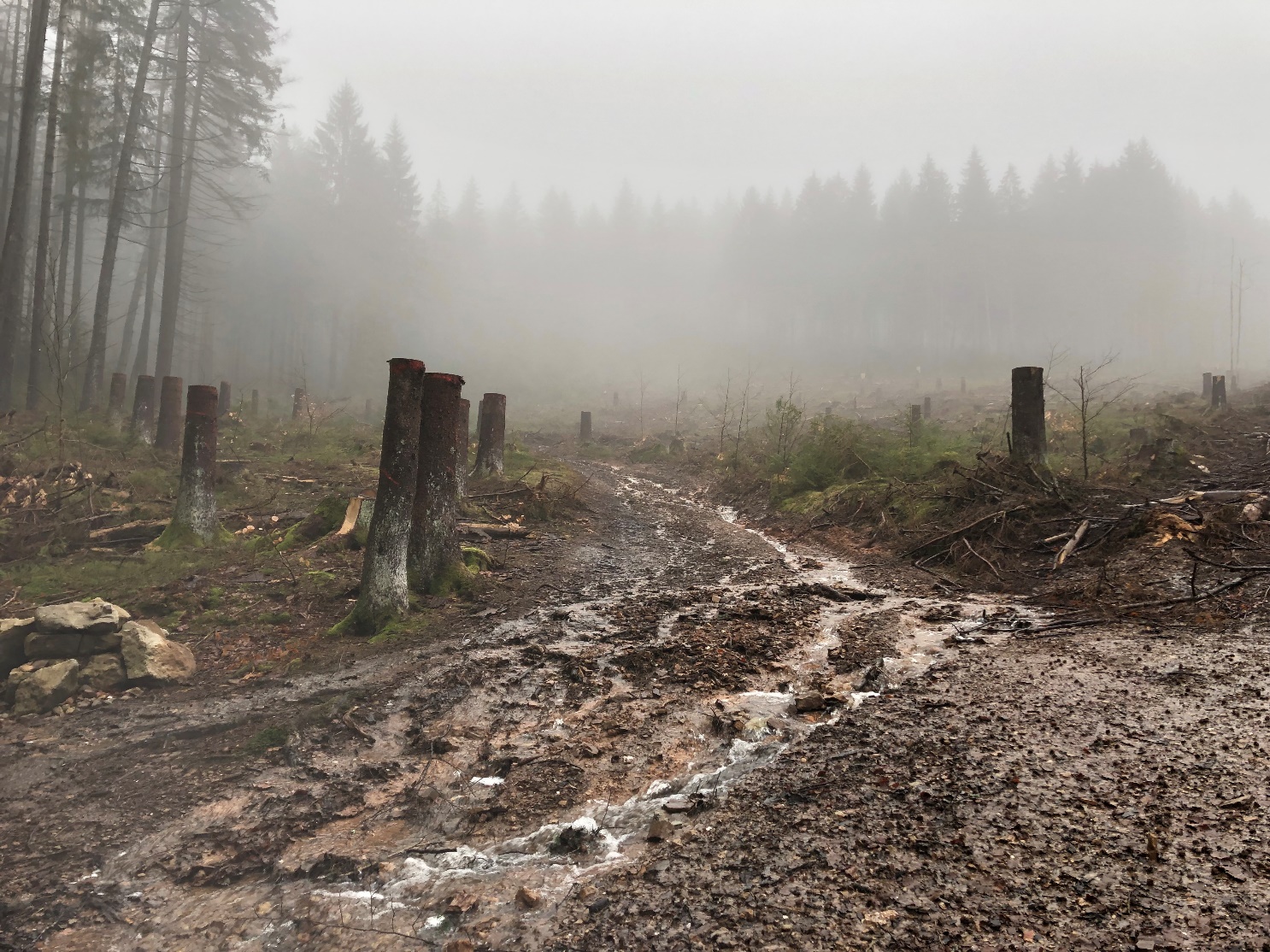
Fig. 1: Extensive soil erosion and a severely damaged machine path after heavy rain. (Photo: FVA BW/Heike Puhlmann)
What can decentralised water retention in the forest achieve?
Forests play a central role in the water cycle and have a balancing effect on runoff processes through their water consumption and the large water storage potential of their soils. This important function of forests is influenced by forest management, and forest access infrastructure in particular. Soil compaction by forestry machinery, the opening up of the intermediate runoff on road embankments, and the channelling of surface runoff into roadside ditches favour the increased generation, acceleration and concentration of runoff from forests.
Decentralised retention of surface water, optimised drainage of road water and its targeted re-infiltration can mitigate these negative effects on runoff formation and concentration. Increased water storage not only improves the water supply to forest stands, but can also have a positive effect on underlying settlement and agricultural areas. This can reduce the risk of flooding, raise low water levels in watercourses, and improve groundwater recharge. Another positive effect of water retention is the creation and ecological enhancement of wetland habitats in the forest, which can provide habitats for a wide variety of animal and plant species.
What retention measures are there?
A variety of measures are suitable to improve water retention in forests:
Optimising forest roads | Temporary storage of surface runoff |
Diversion of runoff from roads
Optimisation of skid trails
Improvement of water-road crossings
Design of road network
|
|
Reversing drainage measures | |
| |
Water body development | |
Utilising the potential of standing water bodies
Renaturalisation of watercourses
Activation of watercourse surroundings
|
In general, compliance with guidelines for forest road construction and the network of access trails between them in itself helps to reduce adverse effects on the landscape water balance. Additional measures on forest roads and skid trails to prevent runoff concentration and increase water drainage into the stand are not only relatively inexpensive to implement, but can also be highly effective. For example, retention areas can be created in which the water is temporarily stored and, under suitable soil conditions, can also seep away (Fig. 3). The closing and dismantling of historical drainage ditches also significantly increases water storage in forest areas. Similarly, the development and maintenance of new/additional water bodies and their surroundings can have a positive effect on the landscape water balance by increasing the retention time of water in the forest.
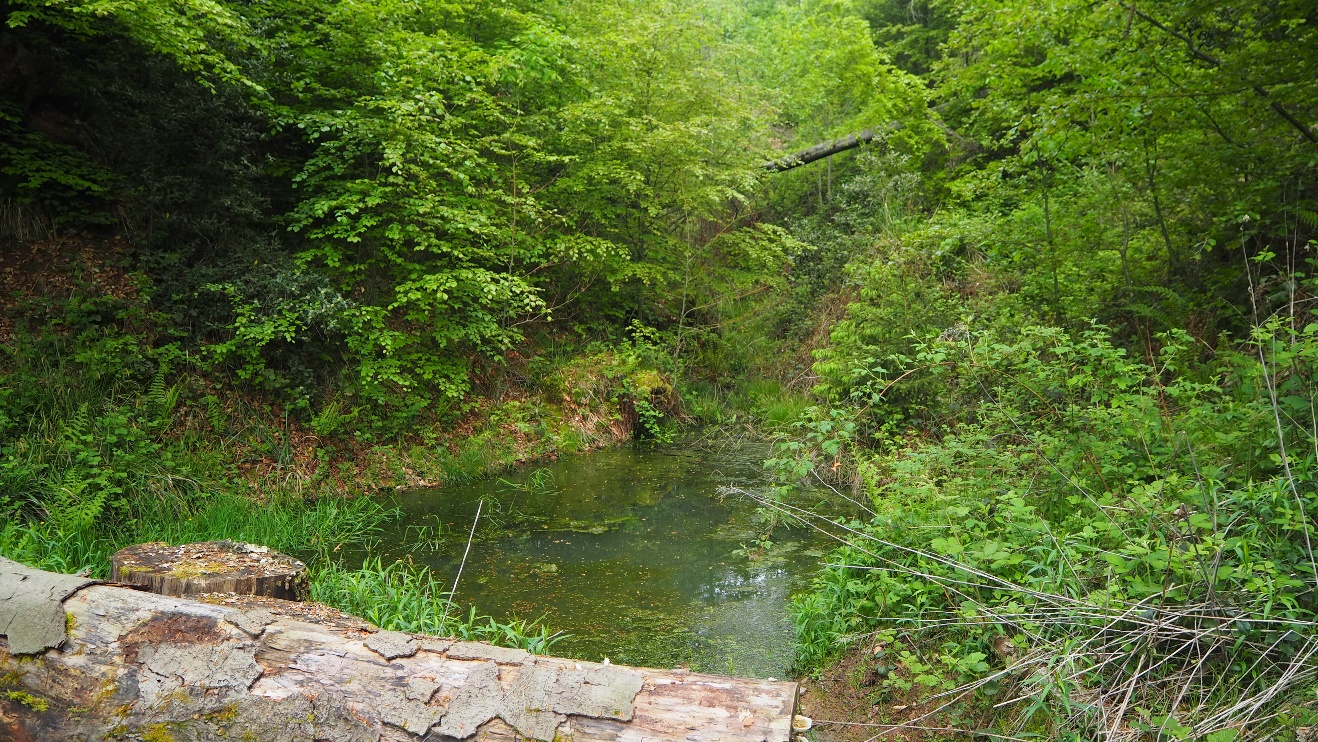
Fig. 3: Retention and infiltration measure to mitigate flooding and summer soil dryness (Herbolzheim municipal forest). (Photo: FVA BW/ Juliane Wüllenberger)
Practical examples
Infiltration trenches are permeable gravel “bars” in the road body that absorb water from side ditches on the upper sides of roads and allow it to seep away in a controlled manner on the lower sides. Unlike traditional pipe culverts, they slow down the runoff and promote an even infiltration on the valley side.
How do I go about planning?
Firstly, the overarching objective of the planned water retention measure should be clarified: Is the measure primarily intended to protect against flooding and erosion? Is water availability during dry periods to be improved? Is habitat enhancement the main focus?
Suitable areas and appropriate measures should then be identified in accordance with the objectives, taking into account the hydrological conditions. During further planning, the legal framework must be checked, the necessary authorisations obtained, and if necessary, any other stakeholders involved at an early stage. Before the construction work is carried out, agreements should also be made for regular condition checks and maintenance work. Ideally, an impact evaluation should also be planned.
Fig. 4 provides an overview of the most important steps in the planning and implementation of water retention measures in forests.

Fig. 4: Steps in the planning and implementation of water retention measures in forests. (Illustration: B612 GmbH)
What legal framework conditions must be observed?
The applicable legal framework conditions must be checked when planning measures. In particular, issues concerning water, soil and nature conservation must be clarified, as well as any other possible protection requirements. Fig. 5 provides an overview of the measures that intervene in the ecosystem that need to be examined at the planning stage, and which authorities may need to be involved. It also indicates the relevant legislation.
Am I interfering with the water body?
When planning measures in bodies of water or their immediate surroundings, it must be checked whether the measure requires approval under the Water Resources Act or whether it is a maintenance measure that does not require formal authorisation.
In Baden-Württemberg, the state is responsible for the maintenance and development of water bodies of the first order; the executing bodies are the state water authorities at the regional councils. These water bodies or sections of water bodies are defined in Annex 1 of the Water Act of Baden-Württemberg. As a rule, the respective municipality is responsible for water bodies of the second order.
The assessment aid in the lower part of Fig. 5 provides guidance on whether a planned measure is purely water body maintenance - or water body development requiring authorisation.

Fig. 5: Legal framework conditions to be observed and authorities to be involved in the planning of water retention measures in forests. (Illustration: B612 GmbH)
In principle, measures are coordinated with the responsible lower water authority [“Untere Wasserbehörde”]. Further information can be found in Kompaktinfo 6: Gewässerunterhaltung oder Gewässerausbau (LUBW & WBW, 2022), a flyer on “water body maintenance or water body development” (German only). Once the measure has been officially approved, it can be carried out in the forest by the district foresters. Measures that do not require authorisation can be carried out by the district foresters on behalf of the local authority as part of water body maintenance.
![[Translate to English:]](/assets/wald/naturschutz/gewaesser/fva_wasserhandbuch_struktur/fva_wasserhandbuch_struktur_abb1.jpeg "[Translate to English:]")
![[Translate to English:]](/assets/wald/naturschutz/gewaesser/fva_wasserhandbuch_pilotbau/fva_wasserhandbuch_pilotbau_abb1.jpeg "[Translate to English:]")
![[Translate to English:]](/assets/_processed_/2/a/csm_Hero_Wasser_12bc7ae466.webp "[Translate to English:]")