



Results of a Germany-wide provenance trial 10 years after sowing
The silver fir plays an important role in times of climate change due to its taproot system, which enables it to access more moist layers of soil. In forestry practice, seed from Romania is increasingly being used as a climate-adaptive alternative. A silver fir provenance trial carried out throughout Germany in 2011 by the Bavarian Office for Forest Genetics (AWG) in cooperation with the Working Group of the Institutions for Forest Tree Breeding of the Federal States (ARGE) shows that plants from seed plantations and stands in the Romanian Carpathians develop well on many sites, often even better than native reference provenances.
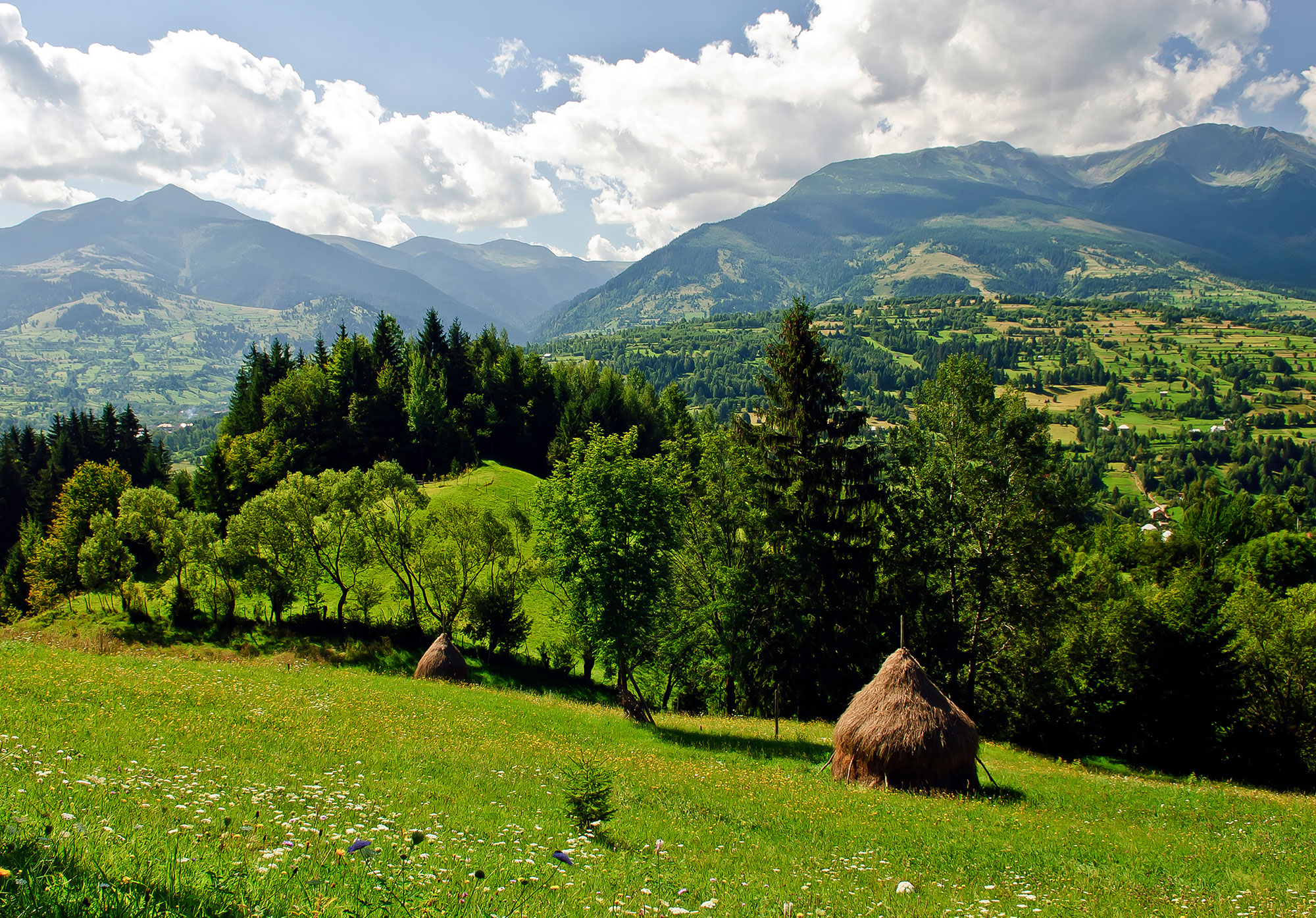
Fig. 1: Forest areas in the Rodna National Park in the Carpathian Mountains (Photo: Gavrila Stetco, Pietrosu Mare, CC BY-SA 3.0)
Distribution of Carpathian fir in Romania
In the mountain ranges of the Balkan region, silver fir forms the timberline under favourable temperature and moisture conditions [1]. In Romania, it is a mountain tree species whose distribution towards the south is increasingly shifting to higher altitudes. There it colonises exclusively the montane zone of the Carpathians and Bihor Mountains. In this post-glacial remigration area, the fir stands are characterised by high genetic variability [2, 3, 4].
The climate in the Carpathian arc is temperate continental. Depending on the altitude (colline lowlands in Transylvania: 300 m; alpine highlands of the Carpathians up to 2500 m), annual precipitation varies between 600 and 1500 mm. The optimum conditions for fir are in cool, humid regions with annual precipitation of around 800 mm and average annual temperatures of 7°C [5].
Objectives and description of the trial
As the Bavarian provenance and utilisation recommendations already increasingly recommend Romanian plantation seed as a climate-plastic alternative to native provenances, the development of seed plantation provenances (SPL) is of great interest for forestry practice. Seed from the Avrig SPL (Reg. No. PS-BR-SB79) is marketed under the synonym Poiana Neamtulu, seed from the Baia Sprie SPL (PS - BR-MM81) as Carbunar, and seed from the Sugas SPL (PS-BR-CV82) is also marketed under the names Valcele, Covasna and St. Georghe.
To evaluate the differences between the provenances, progeny from seven autochthonous seed harvesting stands and the three seed plantations mentioned were planted (Fig. 2). The seed from these seed sources was obtained by representative harvesting from 20 predominant parent trees that were at least 30 metres apart. Cone pickers collected 20 cones from each tree.
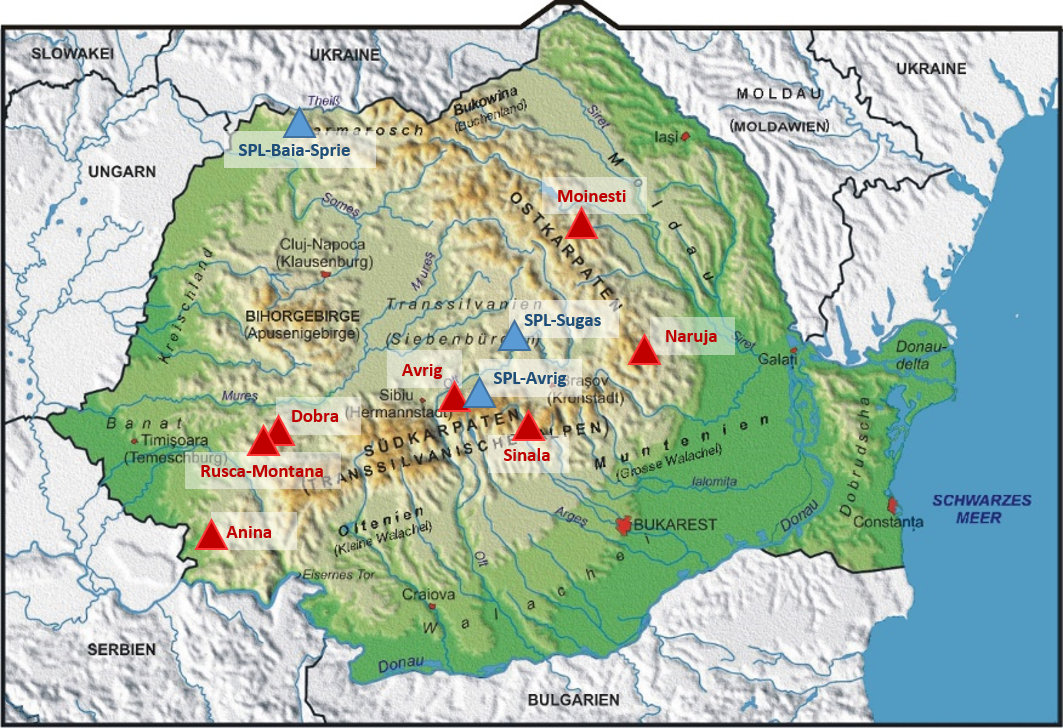
Fig. 2: Location of the used harvesting stands and seed plantations (SPL) in Romania (Map: Crux, ROMANIA Fizic, CC BY-SA 3.0)
The provenances included in the trial come from altitudes between 600 and 1100 metres above sea level. The average annual precipitation recorded there between 1970 and 2000 was 740 mm. The average annual temperature reaches 6.0°C. During the growing season (May to September), the average rainfall is 450 mm, and the average temperature is around 14.09°C. The bulk of the rain falls in early summer. These climatic conditions correspond roughly to those of the low mountain ranges of northern Bavarian.
For comparison purposes, the trial was supplemented with three German provenances from approved seed orchards in regions with high precipitation (Alps, Black Forest, Thuringian Forest).
The planting was carried out on 11 trial plots at altitudes of 25 to 640 metres above sea level. The climatic conditions during the growing season are characterised by an average of 380 mm of summer precipitation, and average temperatures of around 14.8 °C.
The trial thus involved the transfer of firs from predominantly higher-altitude, cool-humid climatic regions in Romania to mostly lower-lying, predominantly warm-dry cultivation sites in Germany (Fig. 3).
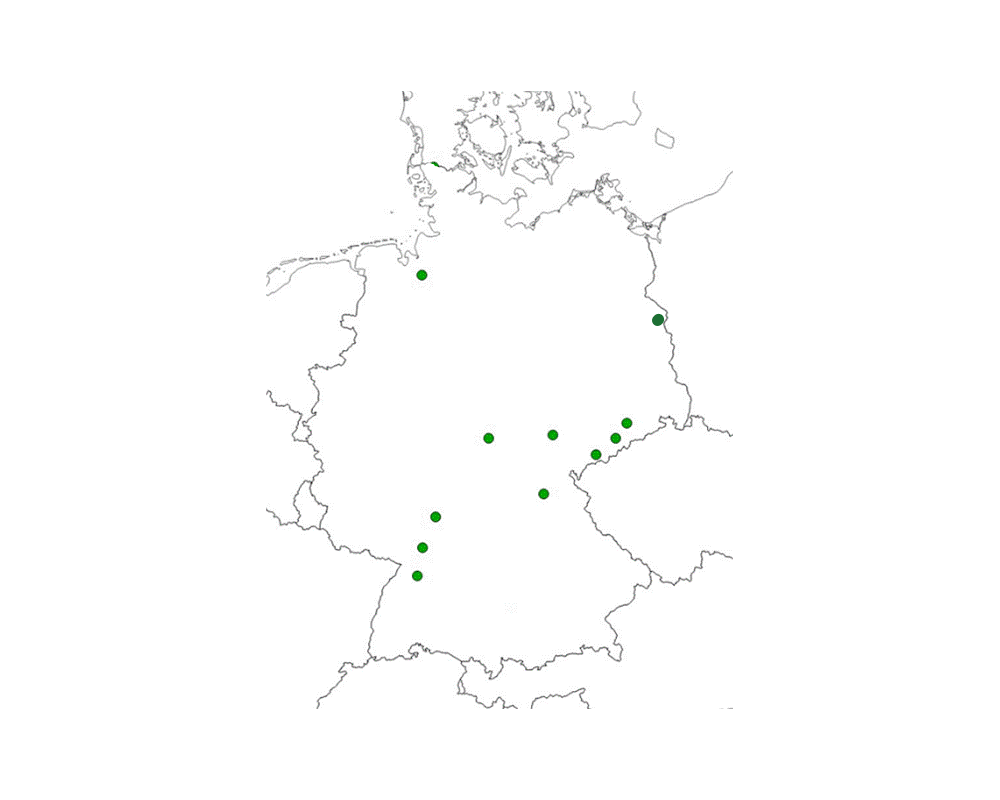
Fig. 3a: Location of the trial plots in Germany.

Fig. 3b: Climate zones of the provenances and trial sites.
The driest and warmest area, with 250 mm of summer precipitation, is in the Breitefenn forest district, on sandy soil in the Mark of Brandenburg region, one of Germany’s driest regions. By contrast, the cool, humid trial plots in Höfen (Black Forest) and Conradswiese (Ore Mountains) receive more than twice as much rainfall.
The trial design was a block model with three replicates. Plots were planted with 48 plants (age 3+2) in a 2 m x 2 m planting pattern.
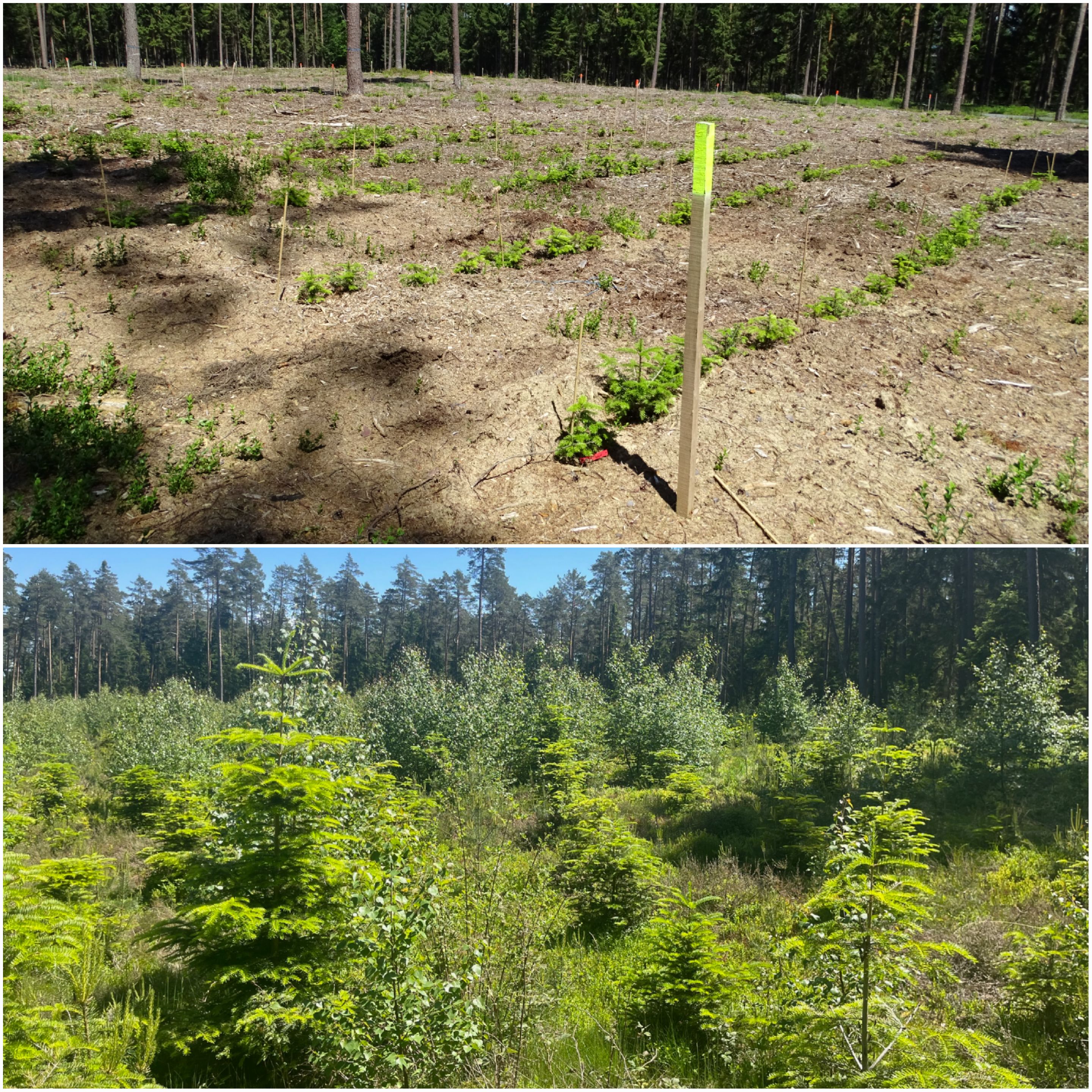
Fig. 4: Trial plot in Muckenreuth/Bamberg (top: in the year of planting; bottom: 7 years later) (Photo: AWG).
Evaluation of the provenances
The progeny from Romanian stands and seed plantations have developed very well in terms of survival rate and plant height.
Survival rate
The average survival rate of the provenances on all plots was 88%. On the Harsefeld area, the survival rate was significantly lower at 66%. Trial sites at higher elevations with more precipitation during the vegetation period tended to show above-average survival rates.
The Carpathian provenances showed 7% higher survival rates than the German provenances. As the survival rate increased, plant height also increased with many provenances - giving an indication of the vitality of suitable provenances. The trial thus provides an initial indication of the good adaptability of Romanian silver fir provenances to German site conditions.
Failures in the first few years were caused by weevils and competing vegetation, but also by late frost. Despite the exceptionally low rainfall in the years following planting, no drought-related failures were observed with any of the provenances.
Growth performance
Five years after the establishment of the trials with 5-year-old nursery plants, the plants of Romanian provenance had reached an average height of 84 cm. The three German reference provenances were 77 cm tall on average. The lowest height of 51 cm was measured on the highest site, Conradswiese in the Saxon Ore Mountains, while the best height growth performance of 127 cm was measured near Östringen in Baden-Württemberg. There was no demonstrable correlation between the altitude of the trial site and plant height.
The height development of the Romanian silver fir provenances was on average 14% higher than those of the German reference stands. The seedlings from the Dobra designated gene conservation unit and the Baia-Sprie seed plantation showed above-average height growth on most of the trial plots - despite different site conditions. The seedlings from the Dobra seed harvesting stand reached a mean height of 94 cm and on 9 out of 11 of the trial plots, their height growth was above the mean height of the respective trial plot. At the same time, this provenance also had above-average survival rates.
The Romanian seed plantation Baia-Sprie outperformed the Avrig seed plantation by 15% in terms of height growth. The Avrig seed plantation combines clones from the Southern Carpathians. Due to its higher number of clones, the Baia-Sprie plantation has a broader genetic base than the Avrig plantation. It also grows in a cooler, more humid climate than the Avrig and Sugas plantations and the majority of the German trial sites. The transfer to considerably warmer environmental conditions may also have promoted growth. Depending on the number of parent trees involved in pollination, there may in addition also be performance differences among the respective offspring of a harvest year.

Fig. 5: Grouping of the provenances according to survival rate and plant height at age 10, averaged over all trial sites (green symbols: Romanian seed plantations; blue symbols: Romanian stands; grey symbols: German reference stands).
Very good provenances are characterised by above-average height growth combined with a high survival rate (Fig. 5). Progeny from the Dobra and Naruja stands and the Baia-Sprie and Sugas seed plantations show the best development. All Carpathian provenances grow significantly better than the Sonneberg (Thuringian Forest) and Teisenberg (Alps, submontane) reference stands which are approved as seed harvesting stands in Germany. Only the Oberharmersbach stand in the northern Black Forest is on a par with the seedlings of Romanian provenance in terms of height growth performance.
The plant height of the Dobra stand seedlings and that of the seedlings from the Baia-Sprie and Avrig seed plantations was above the respective area average both at the driest and warmest site in Breitefenn, and at the most humid and coolest trial site in Höfen.
Height growth in 2020
The annual growth in 2020 was recorded on four areas. Larger plants showed significantly longer annual shoots. Above-average leading shoot lengths were measured in the progeny of all seed plantations and the Dobra stand, while below-average shoot lengths were measured for all German provenances. Even when analysing the height growth only of plants not damaged by late frost, the Dobra provenance was clearly above the other provenances.
There was a correlation between the altitude of the provenance stand and growth: Seedlings of provenances from higher-altitude Carpathian sites often showed higher growth rates. On warmer trial sites, the plants were considerably taller on average and had longer annual shoots. In contrast, the correlation between the amount of precipitation at the trial site and height growth was much weaker.
Genetic analyses are available for five of the seven Romanian harvesting stands [4]. A slight correlation can be seen if the mean diversity values of the heterogeneity of these stands are set in relation to plant height. Provenances with higher genetic diversity appear to be more vigorous.
Late frost damage depends on provenance
In spring 2020, late frost damage was recorded on six out of eleven trial plots. The Muckenreuth site in north-eastern Bavaria suffered the most damage (Fig. 6a), while the Breitefenn site in Brandenburg had the least damage.
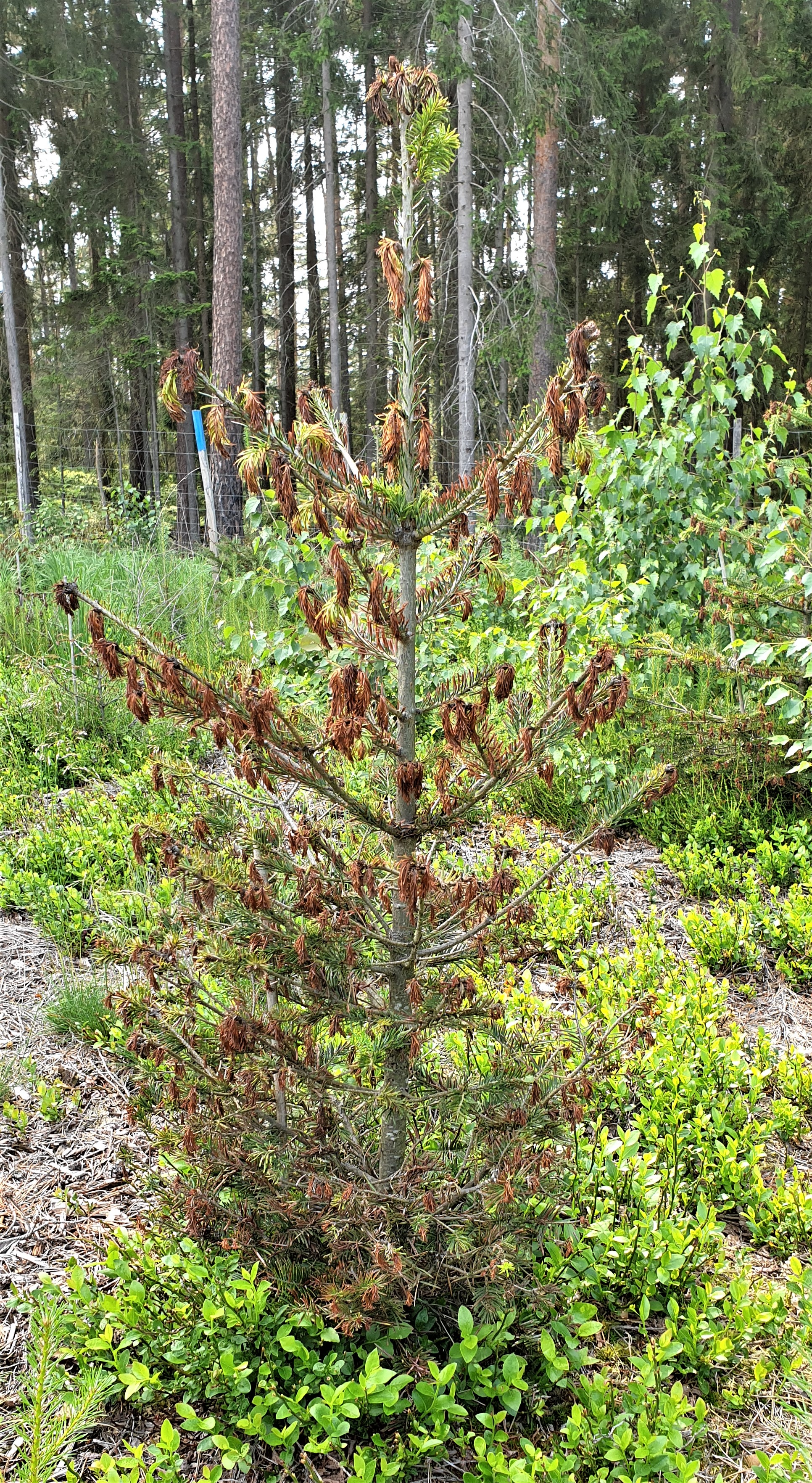
Fig. 6a: Muckenreuth trial area: 9-year-old tree of Avrig provenance with late frost damage.
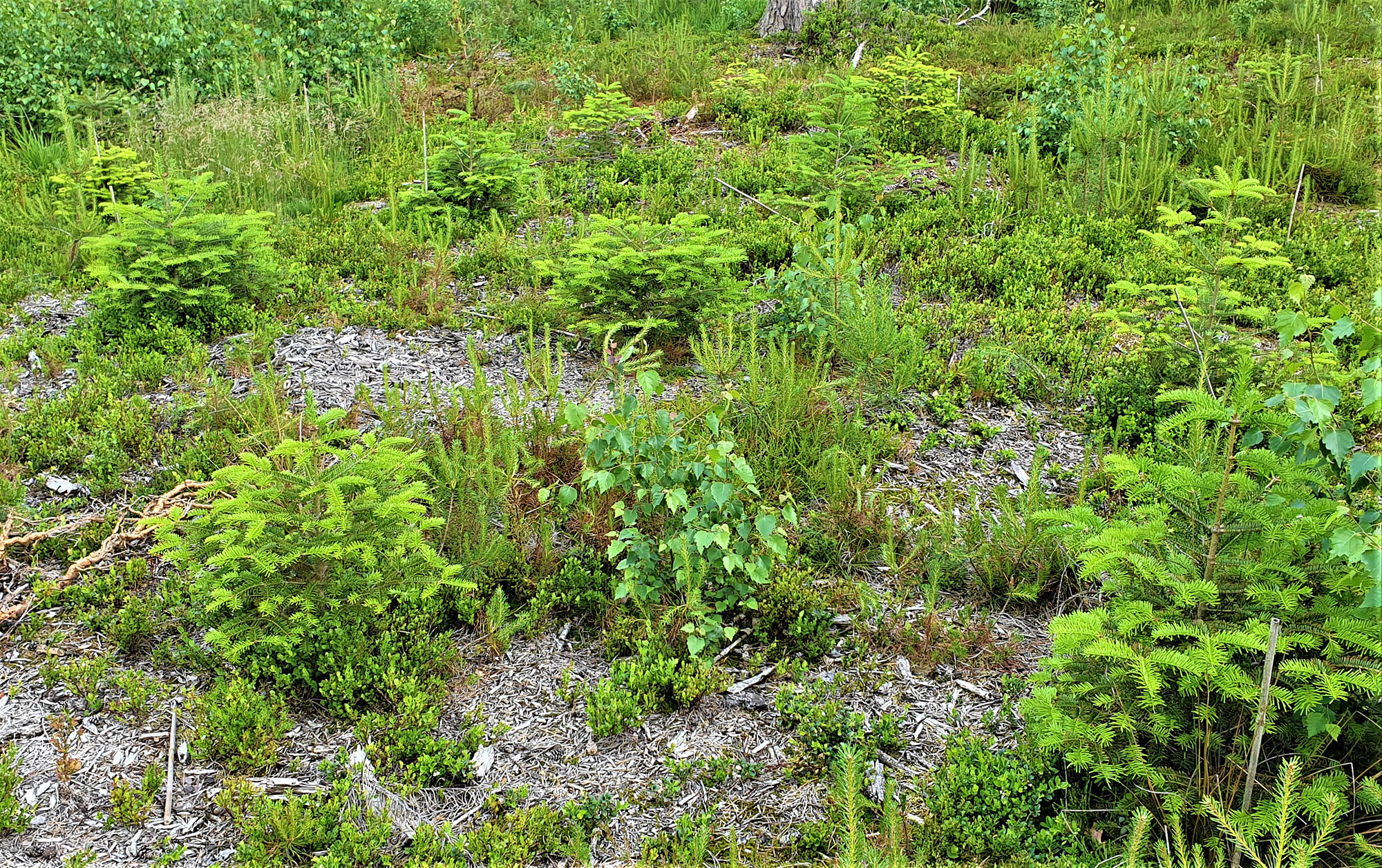
Fig. 6b: Seedlings of Dobra provenance with no damage (Photos: Schirmer, AWG)

Fig. 7: Proportions of different levels of late frost damage in progeny of the different seed plantations and harvesting stands in spring 2020 (in %)

Fig. 8: Correlation between the intensity of late frost damage and the average height increase in 2020 (left) and the failure percentage (right) for silver fir provenances.
The Dobra provenance showed hardly any frost damage on all sites (Fig. 6b), as did a high proportion of the progeny from the three Romanian seed plantations (Fig. 7). These results are consistent with the results of a first budding assessment in 2016 on the two plots in Thuringia [6].
In the following year, 2021, there was severe late frost again. The example of the Höfen trial site (Baden-W.) showed that the Dobra provenance again remained almost undamaged due to late budding.
Late frost damage leads to loss of vitality, scrub encroachment, forking and loss of growth. It increases the risk of losses. There was a demonstrable correlation between the intensity of late frost damage and increased losses (Fig. 8). The influence of late frost on growth was clearly recognisable: Plants with little frost damage had longer leading shoots and higher growth rates. Romanian provenances that were not affected by frost showed average annual growth of over 10 cm, whereas severely damaged provenances only reached 5 cm. There was no demonstrable correlation between plant size and late frost damage.
Frost damage was not only observed in the first few years after planting, but also at age 13 (Fig. 9).
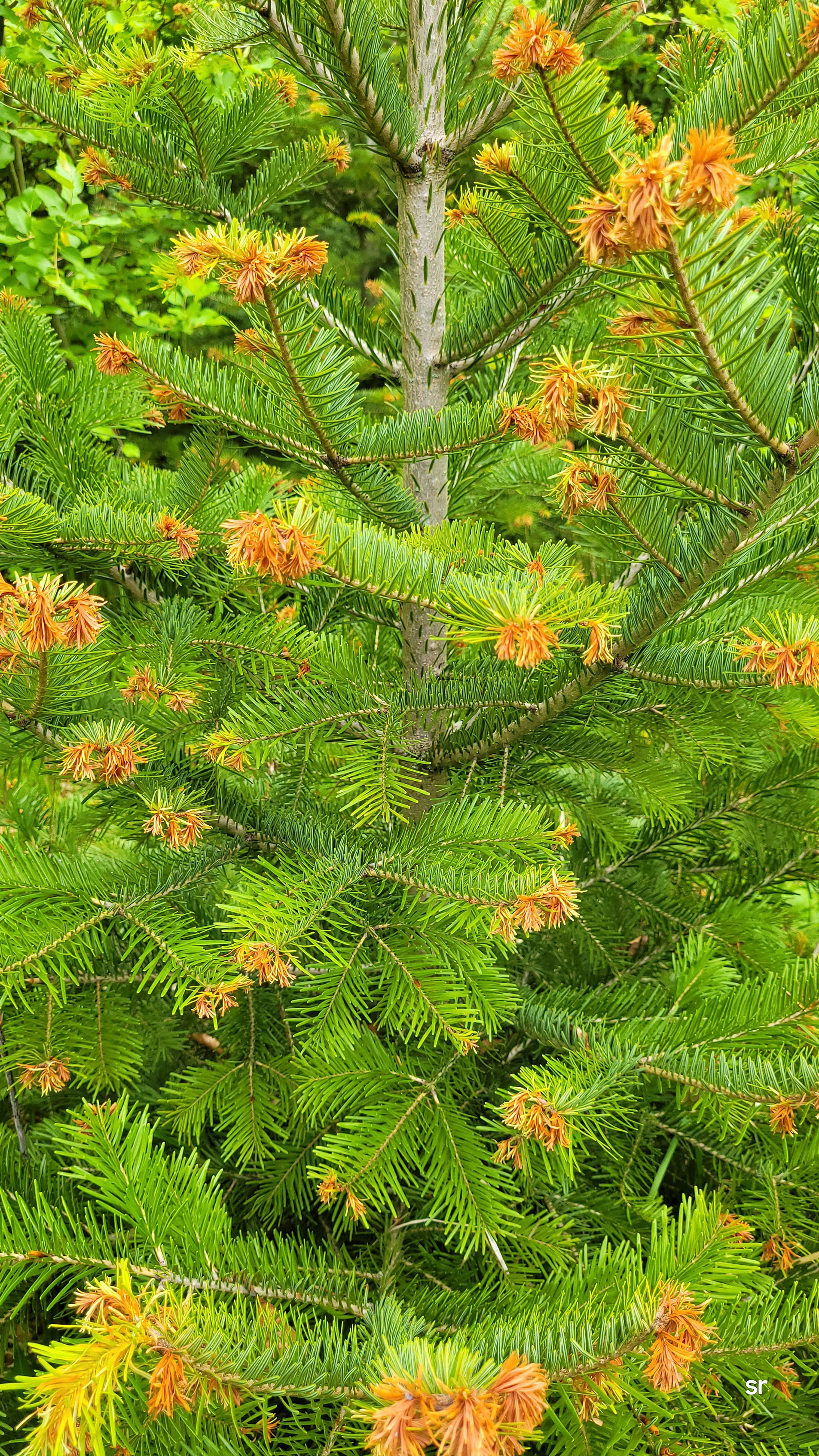
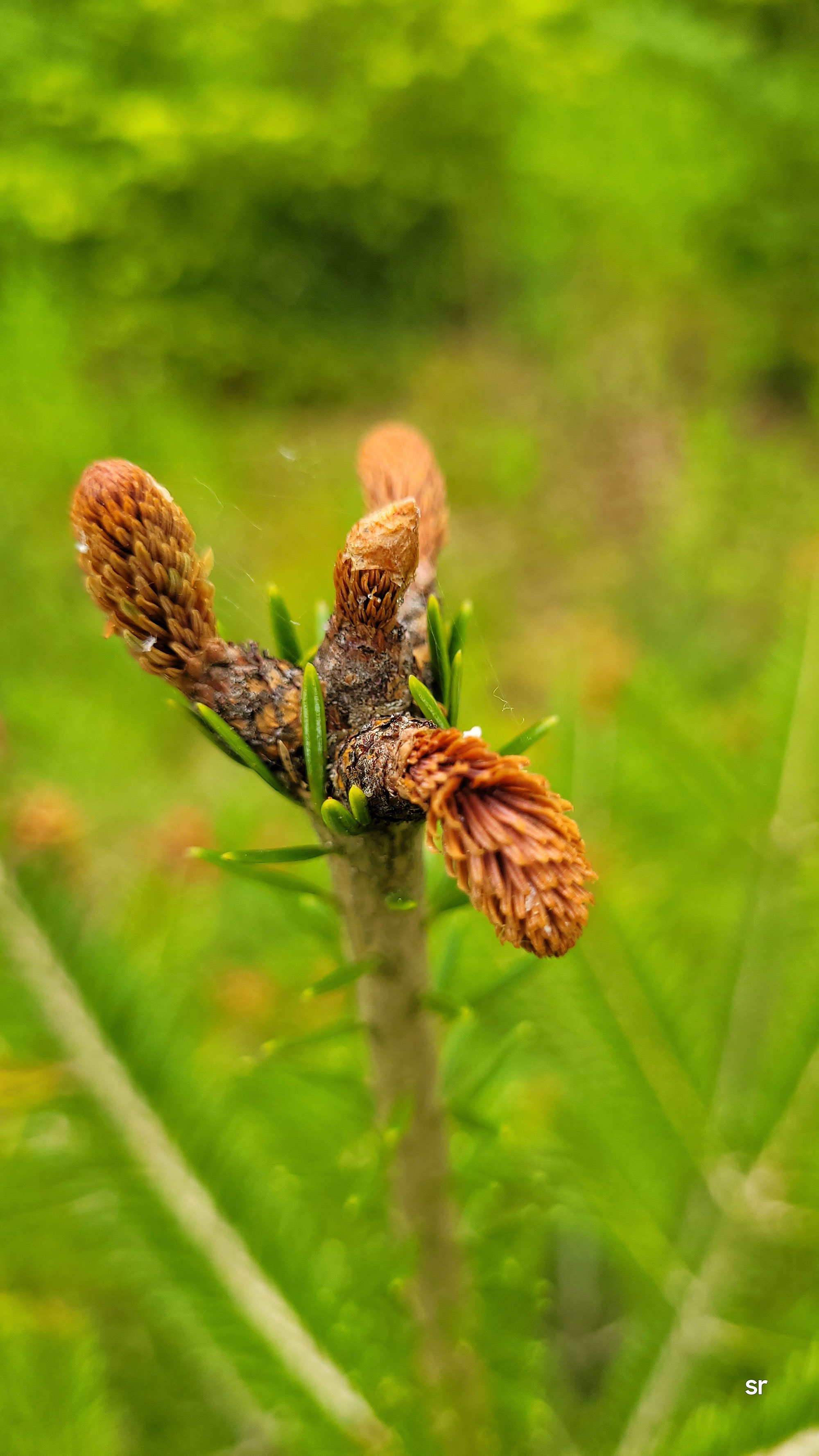
Fig. 9: Östringen trial area: 13 year old tree of Moinesti harvesting stand provenance with frost damage (Photo: Schirmer, AWG).
The Baia-Sprie seed plantation and the Dobra and Sinaia high-altitude stands showed significantly less frost damage than stands at lower altitudes.
Due to their vigorous growth and the lack of late frost damage, trees of the Dobra provenance from an altitude of 1075 m above sea level show above-average development in comparison with other provenances. Even on the Muckenreuth trial area (415 m above sea level), which was subject to severe frost damage, only 16% of the plants were damaged. By contrast, 88% of the plants of the Moinesti provenance were severely affected.
Conclusions for forestry practice
Romanian provenances show good growth performance and low losses in the planting trials. One reason for this could be the transfer from the humid, cooler mountain regions of the Carpathians to German cultivation areas with a generally more favourable climate.
Progeny from the Romanian seed plantations (SPL) already show significantly improved growth performance at the juvenile phase. This can be attributed to their selection for quality, vigorous growth and vitality. Plants from the plantations are typically also less susceptible to late frost. When planting Romanian silver fir, care should be taken to use mainly seed from seed plantations and stands with a proven high proportion of late-sprouting trees. When purchasing seeds from plantations, particular consideration should be given to the plantation provenances SPL Baia-Sprie and SPL Sugas. With 30 clones, SPL Avrig has a much narrower genetic base than SPL Baia-Sprie with 42 clones. In Germany, plantations must have at least 40 clones to be approved under under the Forest Reproductive Material Act FoVG as a seed source.
The seed from the Romanian seed-harvesting stands also performs very well, outperforming the German reference stands in many areas. However, provenances from the higher elevations of the Carpathians are often susceptible to late frost, both at high altitudes [7] and when transferred to lower altitudes. At low altitudes, the heat sum required for budding is reached earlier, resulting in early budding. The very vigorous high-altitude stand Dobra is an exception here, as it sprouts late on almost all plots at the lower altitudes of the German trial sites and consequently shows only very little damage caused by late frosts. The sprouting behaviour of progeny from this stand is also confirmed by the Romanian Forest Research Institute [8]. It is an officially designated Gene Conservation Unit in Romania (Reg. No. RG-BR-D220-2). The combination of high resistance to late frost and above-average growth performance makes the stand very interesting for seed harvesting. A genetic analysis of this stand shows good genetic diversity values in comparison with 36 other fir stands [4]. A site characterisation and approval under forest seed law for controlled seed harvesting by the Romanian forestry authority would be necessary to use seed from this stand for practical cultivation trials in Germany.
The best Romanian provenances come from mountainous regions with sufficient annual precipitation, and maximum precipitation in summer. Their adaptability to rising temperatures and increasing summer drought must therefore be given special attention in the coming years, especially at the Breitefenn trial site (Brandenburg), which has the lowest precipitation.
Special thanks go to all members of the Working Group of the Institutions for Forest Tree Breeding of the Federal States for the establishment and supervision of the trial plots and for the provision of data on this series of trials.

