



Various causes of damage to different tree species and the increased retention of habitat trees and deadwood are creating new challenges in forestry operations and increasing the risk of accidents. In addition, emerging natural regeneration often makes visibility and orientation more difficult. Helmet radios can help improve communication between foresters, forest workers and machine operators, thereby increasing safety.
A wide range of different communication solutions are available from specialist retailers, both as hand-held devices and for mounting on standard forest helmet combinations. But which system is suitable for which application?
In principle, the systems can be divided into two classes. On the one hand there are classic radio devices, and on the other hand, Bluetooth-based devices. Classic radio devices use a radio frequency to exchange calls. With these, only so-called “one-way communication” is possible. One participant presses the talk button and can then be heard by all other participants in the system. As long as the participant holds the radio button pressed down, no other participant can speak. Bluetooth systems, on the other hand, enable “multi-way communication”, also known as “full duplex”. With these systems, all participants are connected as in a telephone conference call, and they can speak and listen at the same time.
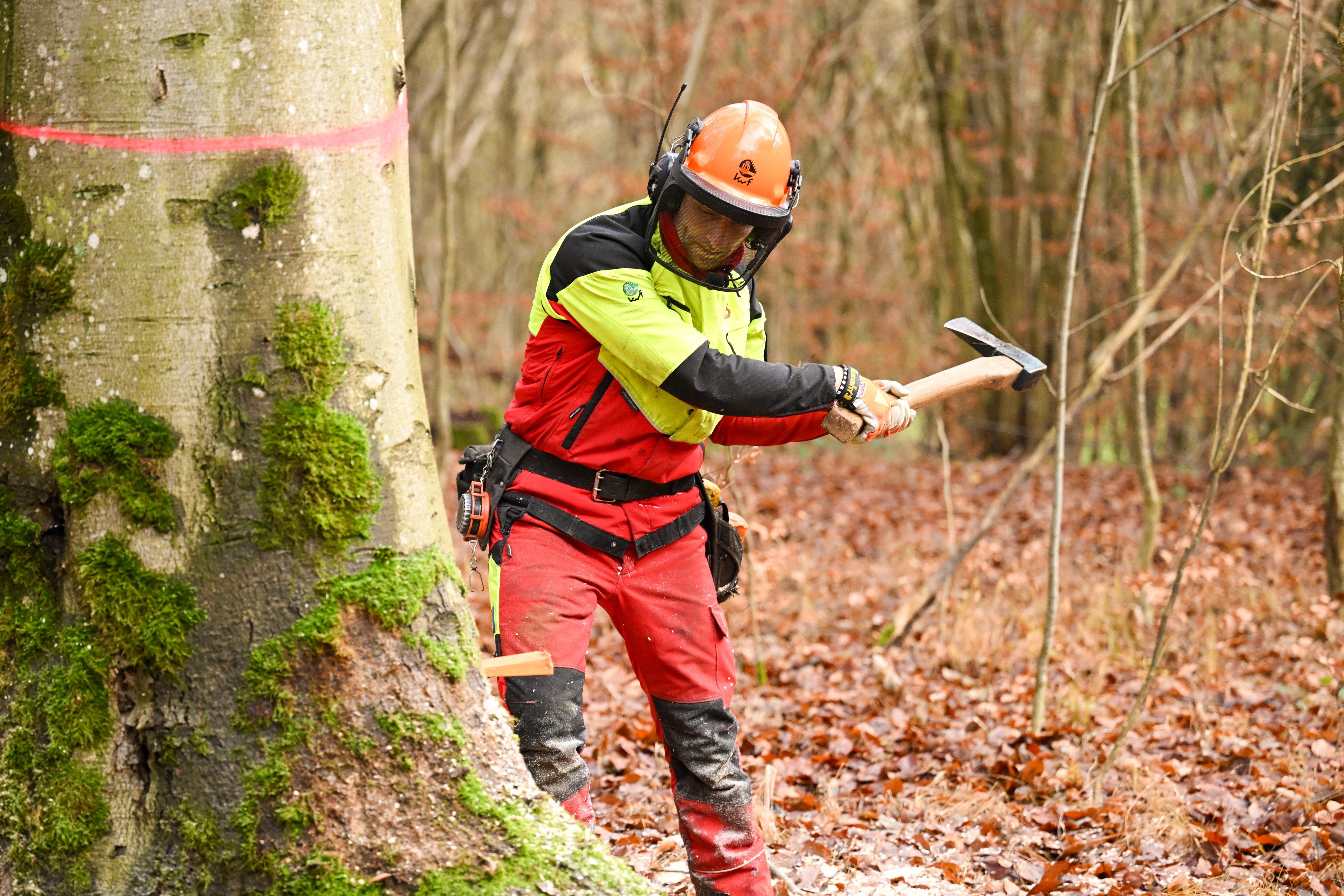
Fig. 1: Helmet radios can help to improve communication between foresters, forest workers and machine operators, thereby increasing safety. Photo: Tobias Hase
Range
Radio systems demonstrate their strengths especially in terms of range. Simpler systems use the so-called “PMR446 radio frequency”. This radio frequency is licence-free, can be used by anyone, and has a reduced signal strength. Depending on obstacles and terrain conditions, ranges between 500 m and 3 km are possible. For higher ranges, a so-called private mobile radio network can be applied for from the [German] Federal Network Agency. This makes ranges of up to 20 km possible, but licensing fees apply, and the use is limited to a specific area of application. Bluetooth systems are only suitable for communication at close range, over a few hundred metres. Depending on the manufacturer and system, the individual devices are sometimes used as signal amplifiers, thus increasing the range by creating a chain.
Radio systems
Radio systems are available on the market in various versions and configurations. They range from simple hand-held devices, also known as “walkie-talkies”, to systems that are fully integrated in hearing protection capsules that can be fitted to standard forest helmets. The licence-free version “PMR446” offers the advantage that different devices can quickly and easily be set to a uniform frequency, thus enabling communication between them. Hand-held devices can be combined with a speech unit or various headsets via cable or Bluetooth. During a timber harvesting measure, for example, forest workers posted to warn people away from operational sites can communicate with the foresters, other forest workers and machine operators. Those at warning posts can for example use a handheld device, the machine operator a handheld device with a headset, and the foresters a helmet radio.
The use of the radio system on the forest helmet varies depending on the manufacturer and system. On the one hand there are radio devices that are fully integrated in the hearing protection capsule. This increases the weight of the hearing protection capsule by the weight of the complete radio unit. Other systems use hand-held devices, which can be worn on a belt, for example. These are connected with the hearing protection capsules of the forest helmet via cable or Bluetooth. In this case, the hearing protection capsules only serve as a headset, and they are thus up to 50% lighter than the version with integrated radio. Some headsets now allow simultaneous connection to multiple devices. For example, the radio and smart phone can be connected at the same time (“multipoint”).
The companies Blickle&Scherer and Bareither+Raisch (“Kuno”) offer professional hand-held radios specially adapted for use in forestry work. The devices are connected via Bluetooth to the hearing protection capsules on the forest helmet as standard, and thus integrated in the forest helmet combination. Both systems are KWF-certified [approved by the German non-profit association “Centre for Forest Work and Technology”], use private mobile radio frequencies frequencies and have built-in position and GPS sensors as well as an emergency call function. The position sensor detects when the forester is no longer moving or is lying on the ground, and sends an emergency call to the connected group. It is also possible to forward the call directly to other employees or to the rescue coordination centre, including the GPS coordinates of the injured person. The emergency call function can also be activated by pressing the emergency call button. The “Kuno” system can also be expanded to include the “Harvesterwatch” function. This system detects forestry machines that are equipped with a special sensor and warns the forester/forest worker by voice message as soon as he/she enters within a pre-definable radius of the machines. This ensures that the forest worker does not enter the danger zone of the forestry machine in difficult terrain.

Fig. 2: Comparison of selected radio systems.
Bluetooth systems
Bluetooth-supported communication solutions, so-called “intercom systems”, have now also become established in the forestry sector. Originally, such systems were mainly found in the motorcycle sector as a means of communication within a group. Especially in the field of climbing tree care, this communication solution attracted attention relatively early on, and the systems began to be integrated in climbing helmets. In this field of application, the two major advantages of Bluetooth solutions really come into their own: within the group, people can speak and be heard at the same time - as in a group call - and there is no interference from other users.
Interference can occur especially when using PMR446 free radio frequencies in populated areas, when other people in the vicinity use the same radio frequency. The voice quality of intercom systems is usually also far superior to that of basic radio systems. Some manufacturers now offer hearing protection capsules with integrated Bluetooth communication modules. There are limitations in range and the compatibility of different systems. To increase the range, some providers use the individual participants in the communication as signal amplifiers. This allows them to bridge several hundred meters. In principle, Bluetooth systems only allow devices from the same manufacturer to be connected to each other. If different people or companies often work together, they must all have the same system in order to connect. Furthermore, there are still no solutions for people not wearing hearing protection, such as those posted to keep people out of danger areas, or machine operators. Currently, these people also need to wear hearing protection capsules from the respective provider in order to communicate with the other users. The Stihl “Advance ProCom” system is KWF-approved.

Fig. 3: Comparison of selected Bluetooth/intercom systems.
Helmet radios
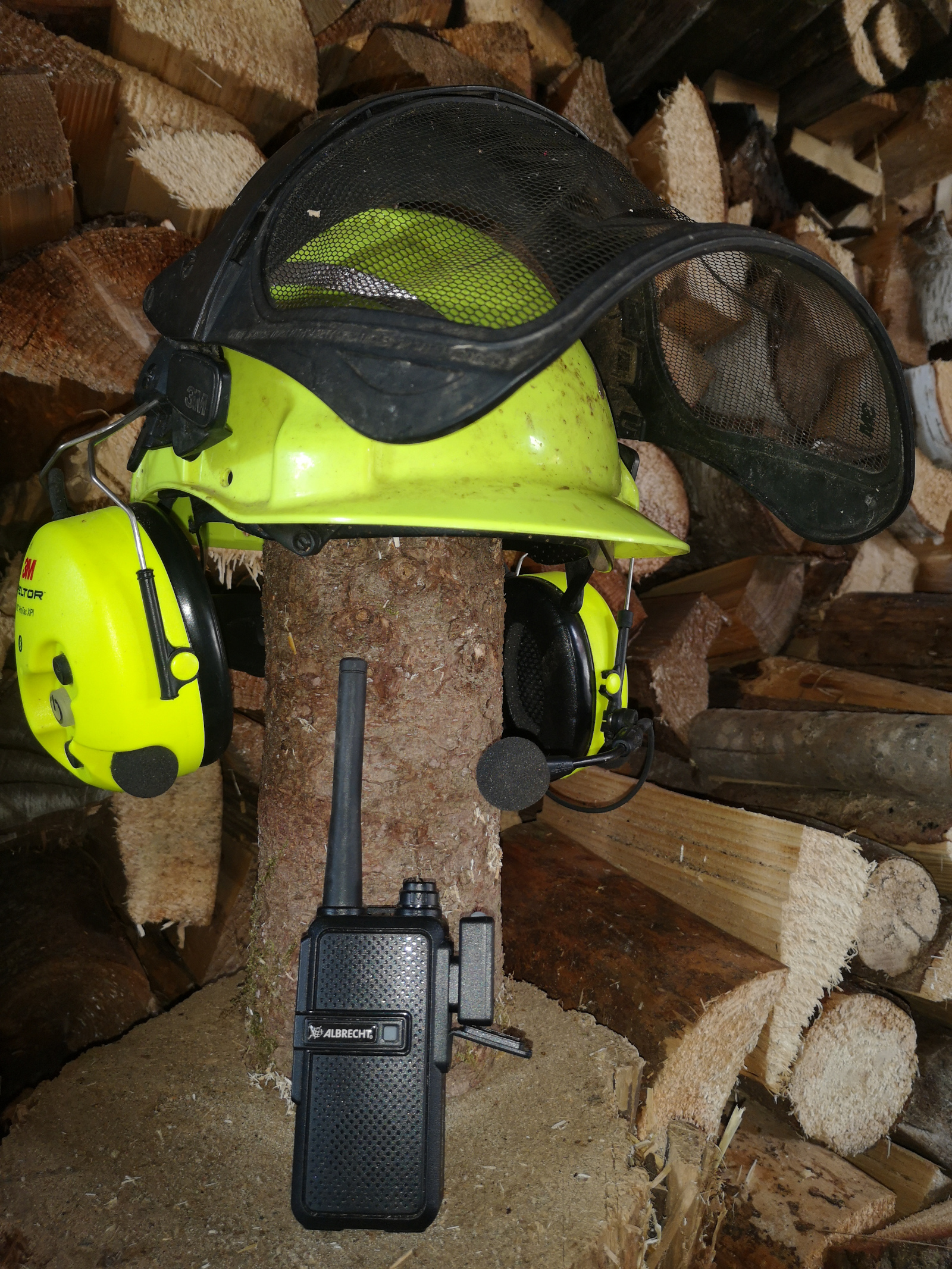
Fig. 4: PMR handheld radio connected via Bluetooth to Peltor's Protac XPI hearing protection headset. Photo: Andreas Hohenadl (LWF)
Whether PMR, private mobile radio network or intercom system, manufacturers install their various communication solutions in hearing protection capsules for use directly on the forestry helmet, and equip them with mounts for the most common forest helmet combinations. This makes them easy to mount on the forestry helmet, and ensures that the user can understand the messages of his colleagues even in very noisy conditions. The fact that most systems have built-in noise cancellation in the microphone also helps. Distracting ambient noise is thus filtered out of the communication as far as possible. In addition, many systems have an “active listening” function. This function allows ambient noise below a certain sound level to remain audible despite hearing protection. Only loud noises such as the noise of a chainsaw are filtered out. This additional function can have a huge safety benefit, as shouts or noises caused by falling branches or tree parts can be perceived despite hearing protection.
To be able to use handheld radios—from simple PMR devices to professional private mobile radios—as helmet radios, manufacturers such as Peltor, Starcom, and Savox offer various headsets. The headsets can either be clipped into standard hearing protection capsules or are designed as ready-made hearing protection capsules. They are then connected to the handsets via cable or Bluetooth.
The bottom line
Especially in difficult working conditions or in difficult terrain, the systems presented can make forestry work easier and improve safety. Different systems offer different advantages, whether in terms of acquisition price, range, or the type of communication.