



Fig. 1. Forests across Europe are increasingly showing signs of premature leaf fall, widespread browning and crown damage as early as summer. Photos: Andreas Rigling (ETH Zurich)
Drought, storms, and pest infestations are increasing as a result of climate change and fundamentally altering the ecological conditions for forests in Switzerland. This jeopardizes key ecosystem services such as timber production, protection against natural hazards, and the provision of habitat for native biodiversity. Empirical knowledge and traditional planning tools such as yield tables are indispensable, but they reach their limits in forestry practice when it comes to making decisions for the coming decades regarding sustainable tree species or the development of timber stocks.
Future scenarios for the forest
Climate change threatens important ecosystem services provided by Swiss forests, such as timber production, protection against natural hazards, and native biodiversity. This poses major challenges for forestry planning. On behalf of the National Centre for Climate Services (NCCS), ETH Zurich and WSL developed the FORTE and ForClim apps, which show the impact of climate change on various forest services under different climate scenarios. The apps’ functionality and sample results are presented below.
Consequences of climate change
The availability of the most important native tree species for forestry will decline under future climatic conditions, as these species will no longer be suitable in various locations where they grow today in the future due to rising temperatures and increasing drought.
Without the targeted promotion and planting of climate adapted tree species, the stability and productivity of forests may decline.
Climate change, extreme weather events, and other natural disturbances such as pests can increase tree mortality. Mixed forests are often more resilient than species-poor forests, as existing resources such as water and nutrients are better utilized and competition is avoided under unfavourable conditions.
What are ecosystem services?
Ecosystem services are benefits that humans derive from natural processes, such as trees purifying the air. These services ensure food, health, climate, and quality of life – often unnoticed, but indispensable. The cross-sectoral dashboard developed as part of this project shows how ecosystem services from forests, agriculture, and water bodies change over time and under different climate scenarios. It thus provides a unique overview for the whole of Switzerland.
With the ForClim and FORTE apps, you can check how severely the different areas and regions of Switzerland are affected. The apps are aimed at public sector specialists, foresters, companies, planning and consulting firms, researchers, and interested members of the public.
The app is still based on the older generation of climate scenarios (CH2018 climate scenarios). The new climate scenarios CH2025 climate scenarios vare now available. However, the main qualitative statements in both climate scenarios remain unchanged.
App ForClim
The ForClim (Forests in a Changing Climate) app simulates the future development of forest stands, enabling more informed planning of silvicultural measures to complement the existing Tree-App.
Future tree species composition
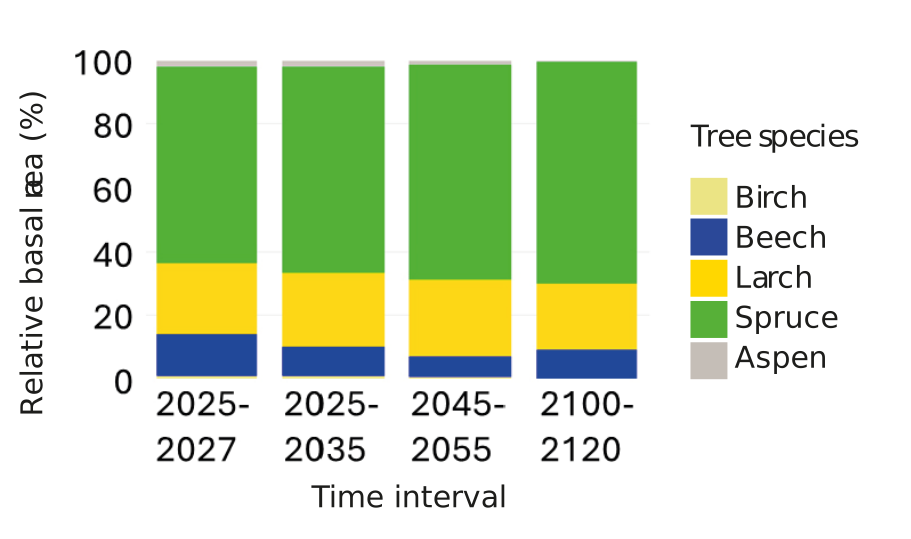
Tree species composition: indicator of climate fitness
The app simulates how the species composition of a forest will change over time under different climate scenarios. This information enables foresters to plan climate-resilient forests and promote climate adapted tree species. It allows them to understand which tree species composition will be appropriate in 50 years and how quickly different tree species will lose their competitive advantage at a given location.
Stand development
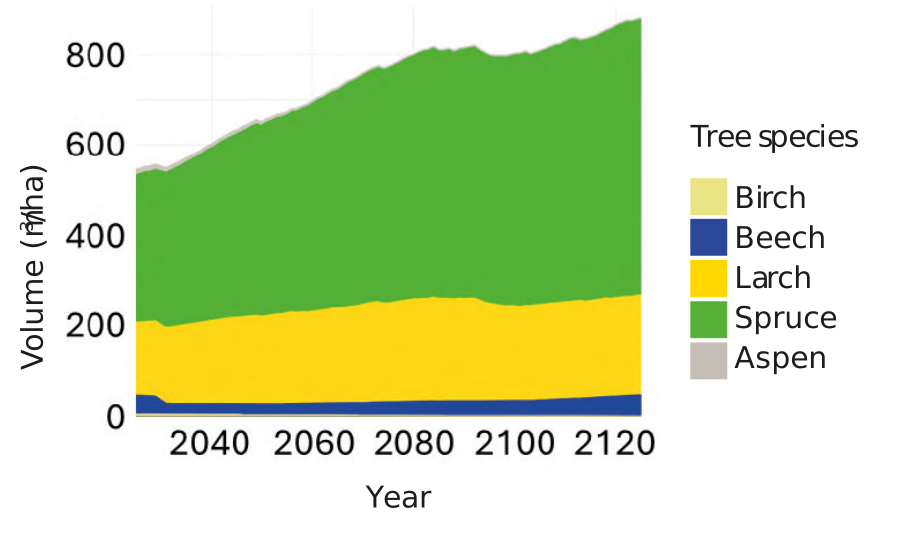
Stand development: indicator of growth and timber harvesting
The app provides results on the future development of biomass, timber stocks, and growth. With the help of dynamic time series graphics, foresters can strategically plan harvesting times: the app shows whether it makes sense to thin the forest and promote the regeneration of tree species.
Bestandesstruktur und Stabilität
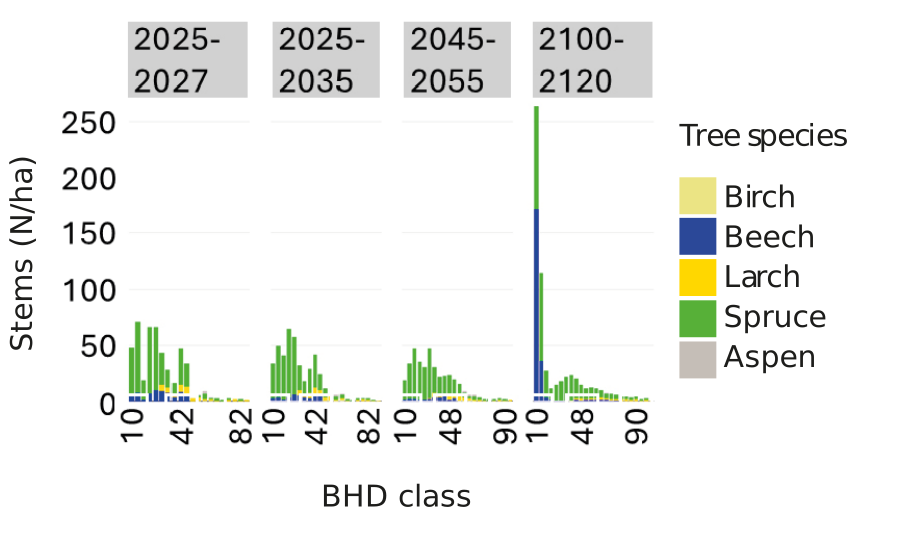
Stand structure and stability: indicator of resilience
The app indicates the future diameter distribution of the trees and the development of the ratio of tree height to trunk diameter (h/d, slenderness ratio). These variables are important indicators of the stability of a stand. This aspect has a higher priority than pure timber stock, especially in mountain forests, where the protective function is paramount.
App FORTE
The FORTE (Forest Tree Explorer) app provides a map-based overview of changes in the multifunctionality of forests and the ecosystem services derived from them for all of Switzerland.
Habitat suitability
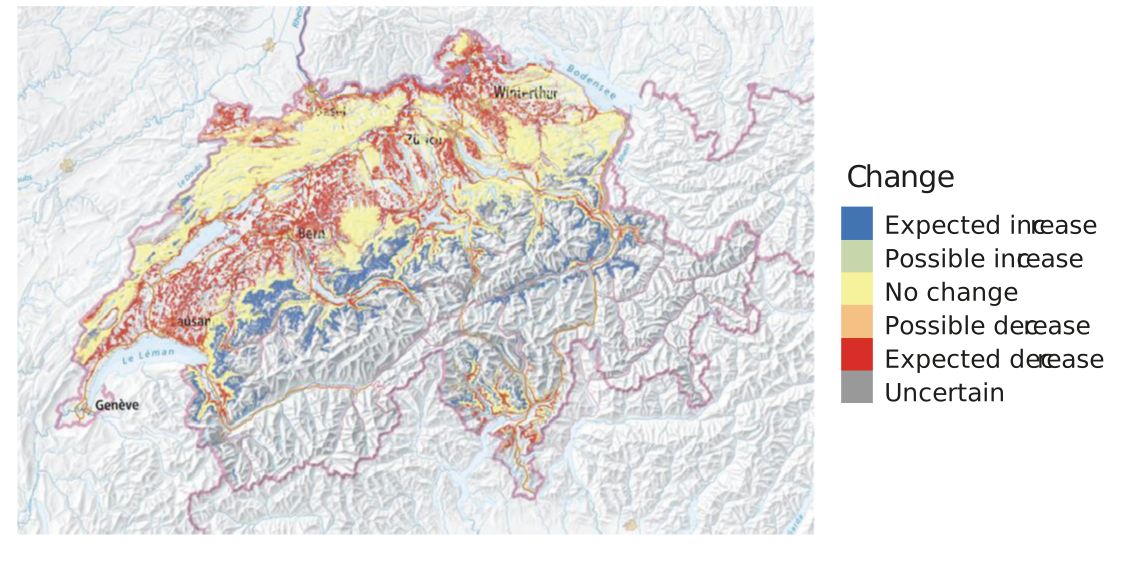
Habitat suitability: indicator of tree species distribution
The app shows how habitats for different tree species will change under future climate scenarios. It highlights the regions where conditions for certain species will improve or deteriorate. It also shows how extreme weather events can influence the distribution of species.
Forest health
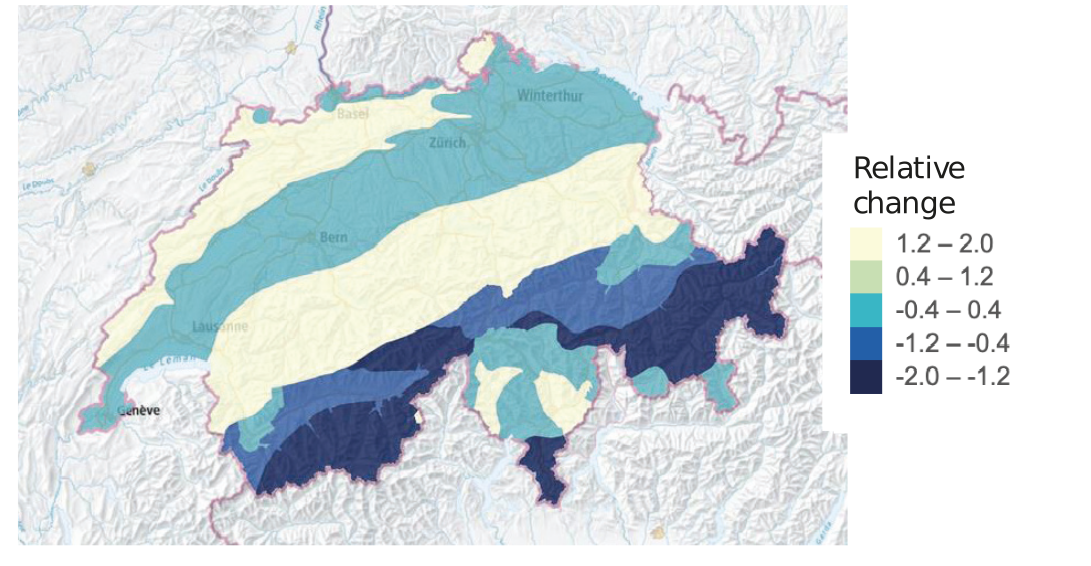
Forest health: indicator of resilience in Swiss forests
The app illustrates how climate change affects forest health. The maps provide information about the condition of forests under different climate scenarios and provide an important basis for the development of sustainable management strategies.
Multifunctionality and forest services
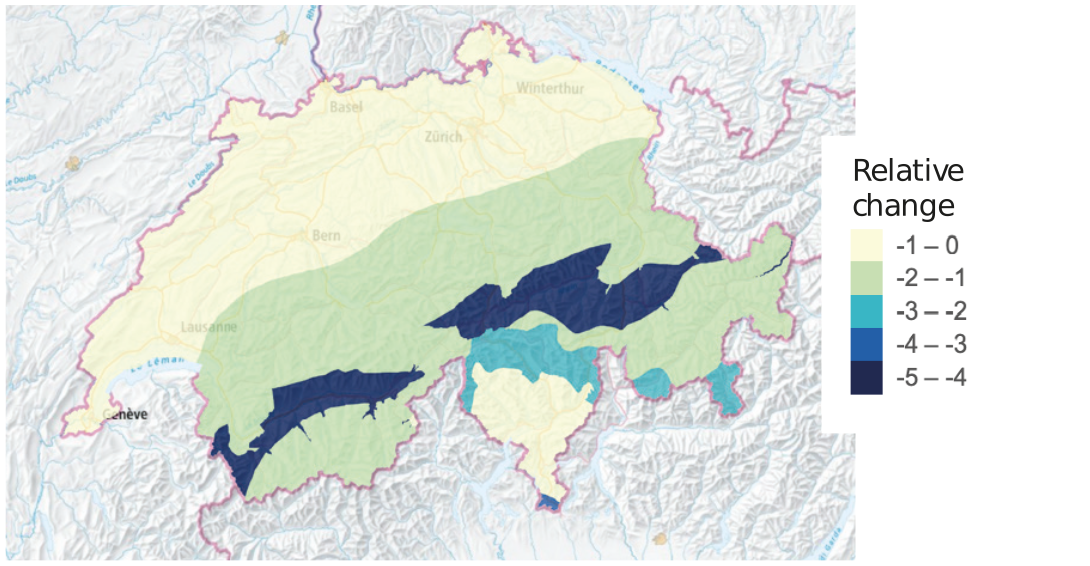
Multifunctionality and forest ecosystem services: indicators of climate-driven changes
The app shows how key ecosystem services such as wood production, carbon storage, and protection against natural hazards could change in the future. The maps help to assess the effectiveness of different adaptation strategies.
