




Disturbance events or planned timber harvesting create areas that must be regenerated for the next forest generation. Until now, full-area planting in a tight, regular planting pattern was the usual approach. However, increasingly frequent drought years can cause major losses in such plantings. Forest owners are no longer willing to take the risk of renewed losses; forest reproductive material is in some cases not available in sufficient quantity, and the time windows for regeneration measures are becoming narrower. A solution is to use existing or anticipated natural regeneration – including from pioneer woody species – for stand re-establishment. In addition, further tree species are introduced through targeted planting with minimal effort. This can be done in the form of groups or as other admixtures established in small patches or as individual trees.
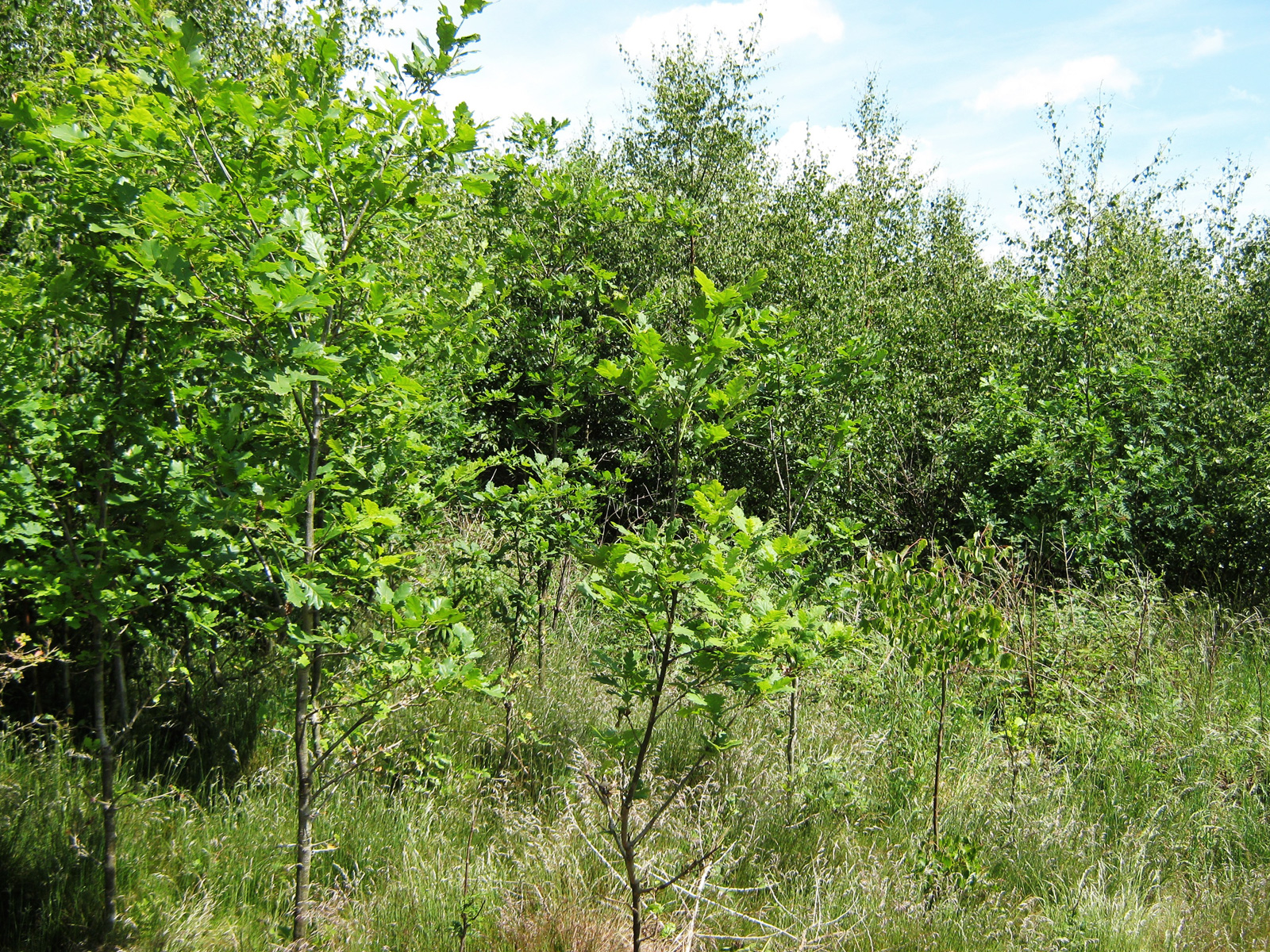
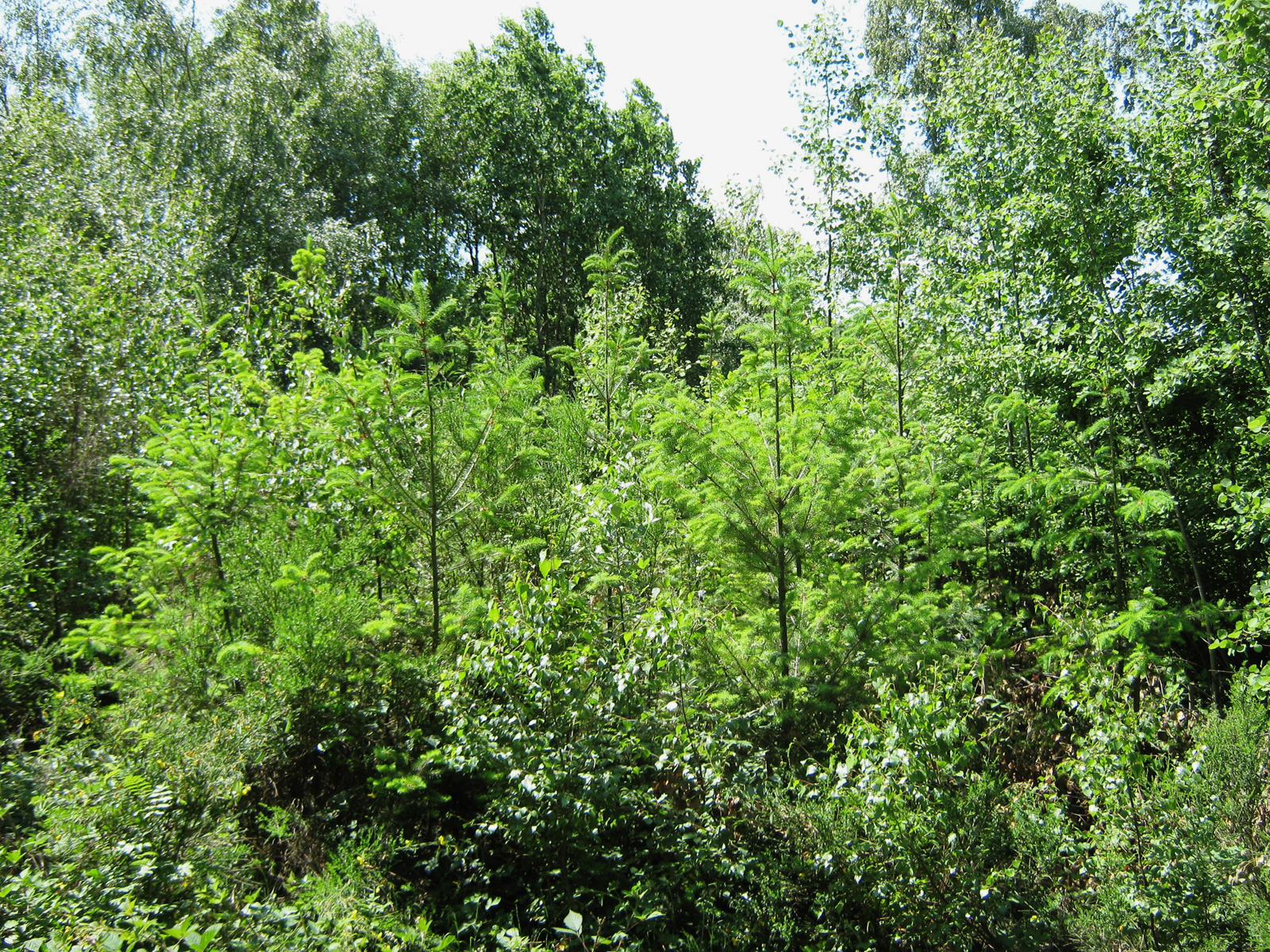
Fig. 1a/b: Examples of group planting: oak (left), Douglas fir (right), 7 years after planting, in filler trees consisting mainly of birch and aspen; tending operations carried out to date: bending/snapping birch and aspen at the edge of the groups in the 4th and 6th year after planting. Photos: Wolfram Rothkegel (LWF)
Objectives of an enrichment planting
Supplementing the existing natural regeneration potential that is climate-tolerant and appropriate to the objective and the site
- Introducing suitable, climate-tolerant admixed tree species
- Concentrating the introduction of target tree species on suitable subareas
- Reducing effort and costs compared with full-area planting, both at establishment and during tending
- Improving reforestation success by making use of natural regeneration potential
- Avoiding root problems (deformation, stability) and drought damage through a higher proportion of natural regeneration
- Minimising the number of plants required in the event of supply shortages
- Rapid reforestation of damaged areas
Why enrichment plantings?
From an economic perspective, the advantages of an enrichment planting lie in the lower time input and reduced costs involved in establishing the new stand. The desired target tree species can already be introduced in groups, one per target tree species, at the future target tree spacing, which simplifies subsequent tending. Necessary protective measures are limited to the area occupied by the introduced tree species and can be carried out efficiently using individual tree protection or small-scale fencing.
In the interspaces between groups, pioneer tree species, soft hardwoods, and shrubs originating from succession can be used. These establish themselves more easily and additionally promote the stem quality of the main tree species. In addition, they improve soil structure and humus formation, increase biodiversity, and are often suitable as future habitat trees.
Prerequisite – Assessment
For enrichment plantings to succeed, parts of the regeneration site must already contain, or be expected to develop, natural regeneration that meets the silvicultural objectives or suitable nurse vegetation. An assessment of the site condition must therefore be carried out before planting begins. Suitable nurse vegetation may consist of the following:
- Natural regeneration that is either incomplete, present only for a shorter period as a so-called temporary mixture, or not in line with the objective, e.g. of birch, rowan, Scots pine, Norway spruce, or other broadleaves and conifers
- Coppice shoots and root suckers, e.g. of aspen, bird cherry, alder, hornbeam, etc.
- Tall-growing shrubs such as hazel, elder, or alder buckthorn
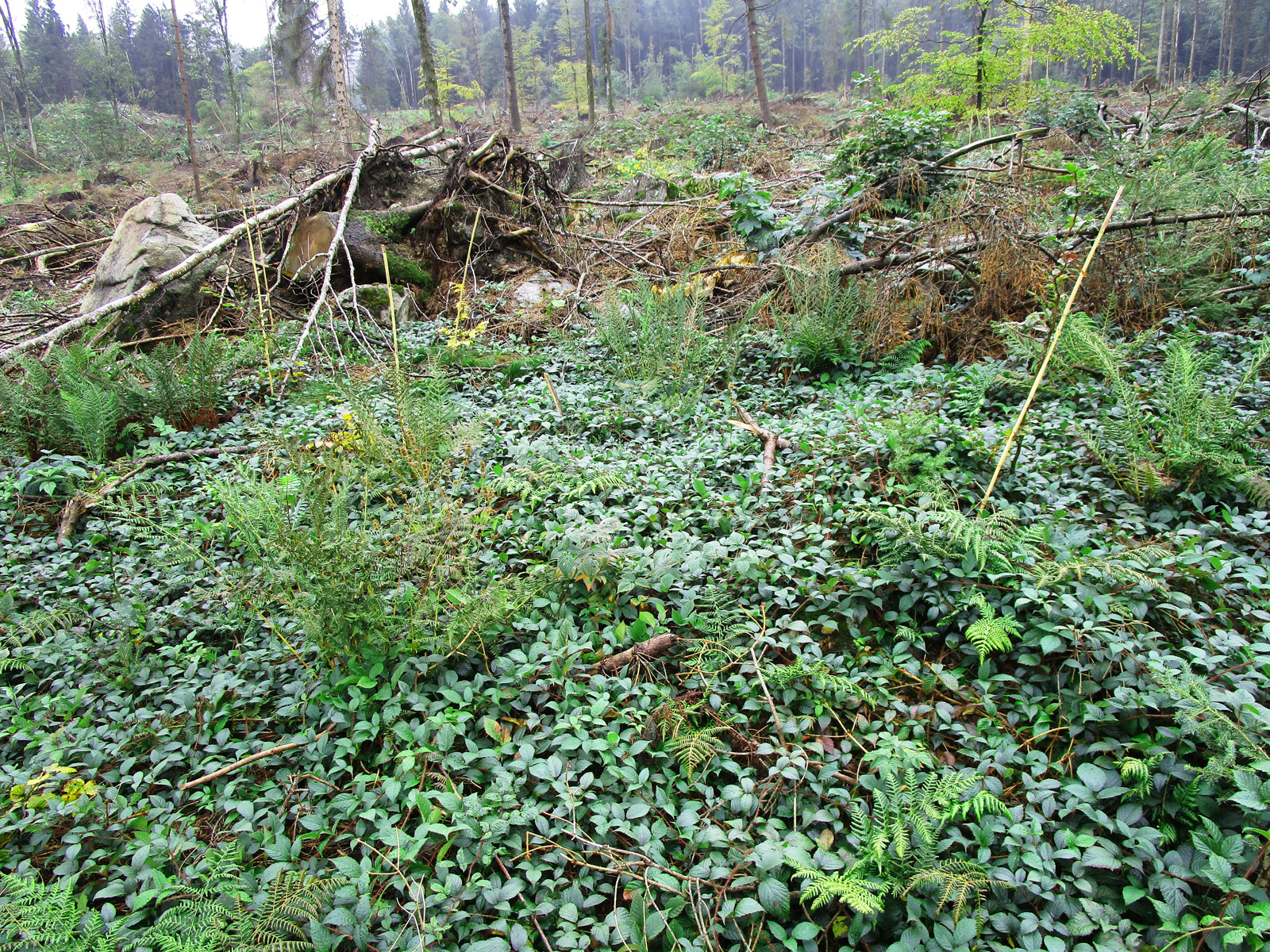
Fig. 2: A thorough assessment of the existing and expected natural regeneration/succession is an important measure. Marking the plants is helpful in this process. Photo: Wolfram Rothkegel (LWF)
Establishment on the site
If natural regeneration is insufficient, the desired tree species are introduced either at regular intervals or where needed (gaps). This is done in groups. The spacing between groups results from the expected crown diameter of the future mature trees, i.e. roughly 10–15 m. The planting pattern within a group varies depending on the method and tree species. The interspaces are not planted. Locations with only sparse natural regeneration are preferred for establishing the groups.
- Area-wide distribution: With an area-wide distribution of 50–100 groups per hectare, the planted area is reduced to roughly 1/4 to 1/5 of the total area – for example, for oak with a group area of 30 m² each. The planted trees must subsequently be assisted repeatedly as needed, through the removal, topping, or bending/snapping of competing trees and shrubs. This is made considerably easier by clearly marking the planted trees.
- Enrichment: If an area is already stocked with a high proportion of natural regeneration in line with the objective, or with filler trees from succession, it is possible to plant only the individual unstocked subareas with additional target tree species in the form of groups (small enrichment patches).
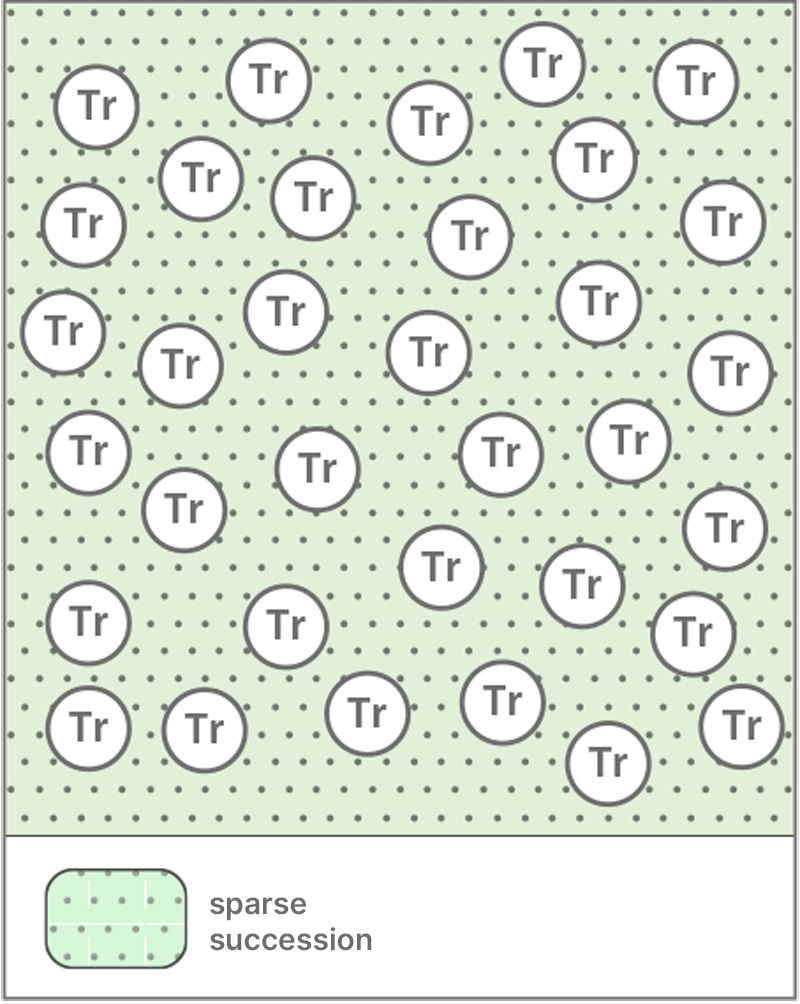
Fig. 3: Area-wide distribution of groups at target tree spacing within (sparse) existing natural regeneration or temporary filler trees; each circle marked "Tr" represents a group.
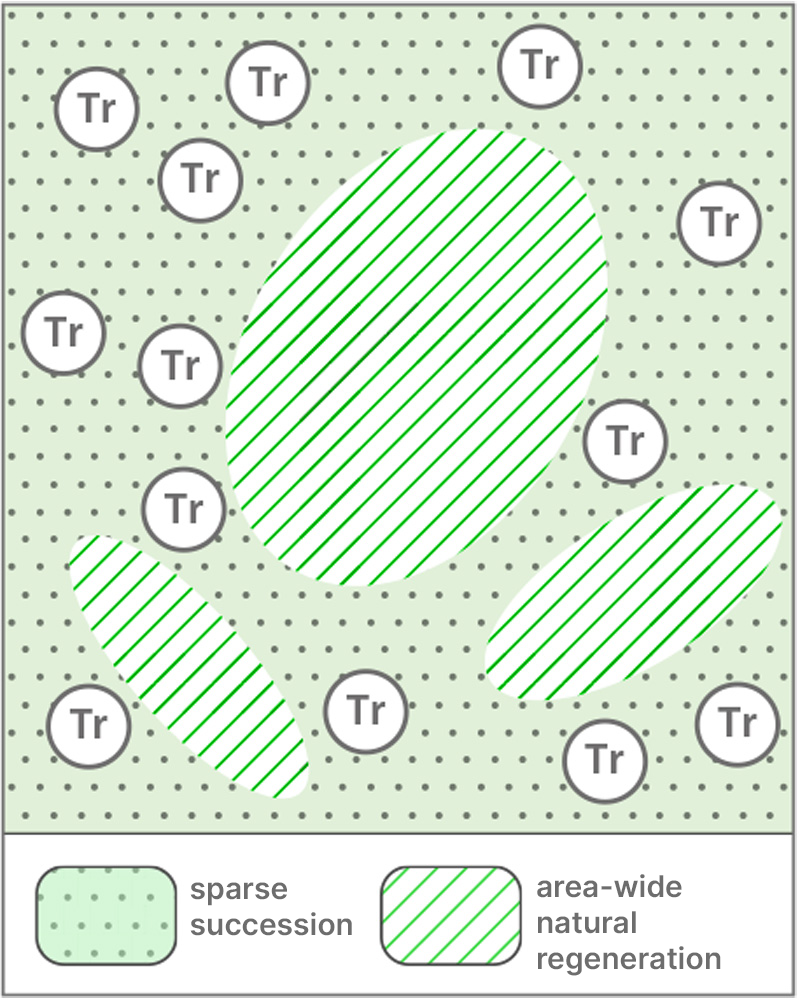
Fig. 4: Introduction of small enrichment patches ("Fettaugen") of the target tree species on unvegetated small areas within otherwise desired natural regeneration, as enrichment; each circle marked "Tr" represents a group.
Establishment and implementation
Groups can be established in circles or squares. The main or target tree species determines the planting pattern within the group. A subarea without significant natural regeneration or competition is selected, or prepared accordingly (e.g. with a brushcutter), for establishing a group. The centre of the group is marked with a stake. The first plant is planted at the centre of the group. The three examples of enrichment-planting layouts are flexible and can be adapted and varied according to tree species and local conditions. The advantage over individually introduced admixture lies in the reserve within the groups: when options and candidates are selected at a later stage, sufficient potential remains within the group. For conifer groups, the outer ring of shade-tolerant tree species is omitted. Planting-stock requirements and spacings for different tree species for the three variants presented are set out in detail in the fact sheet.
- Circular layout: In a circular layout, a ring of six further plants of the main tree species is planted at the appropriate distance; in the next ring, 12 plants of the main tree species are planted. In the outer ring, 12 plants of shade-tolerant tree species are planted.
- Square layout: In the square layout, a square of 8 plants of the main tree species is planted around the centre plant, followed by a further square of 12 plants of the main tree species, omitting the corners. The 16 plants of the shade-tolerant tree species are introduced in the outer row.
- Nelder wheels: In a Nelder wheel layout, planting is carried out star-shaped from the centre point, at radii of 2, 3, 4, 5, and 6.75 m, each offset by 45°. For oak, a further plant (shade-tolerant tree species) may also be set at the centre; for tree species that grow relatively quickly when young, this is not necessary. The difference compared with the groups described above is that, within the tending sequence, after removal of competing admixture, nurse trees are still present even further away from the target tree, and fewer main tree species are required at establishment.
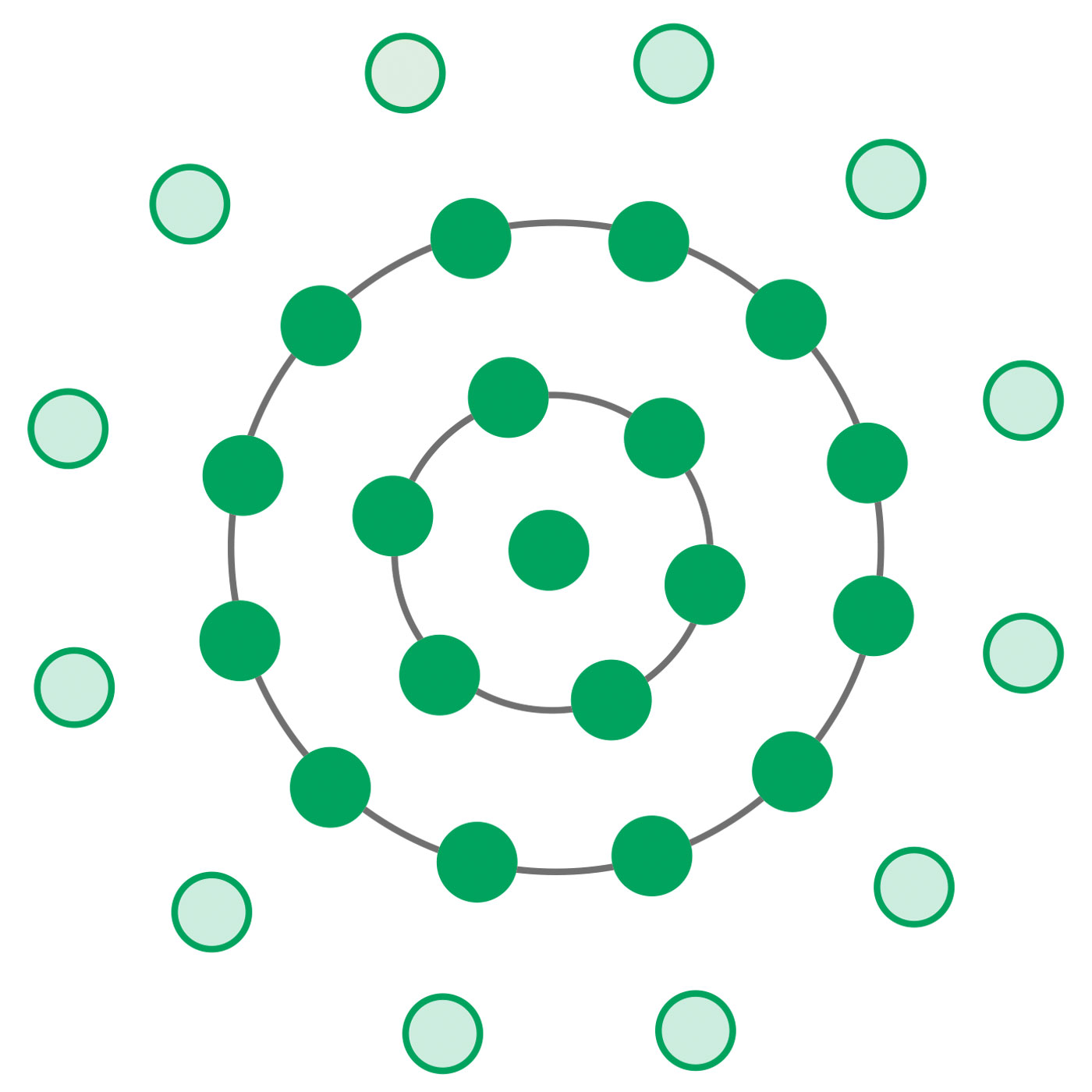
Fig. 5a: Circular layout
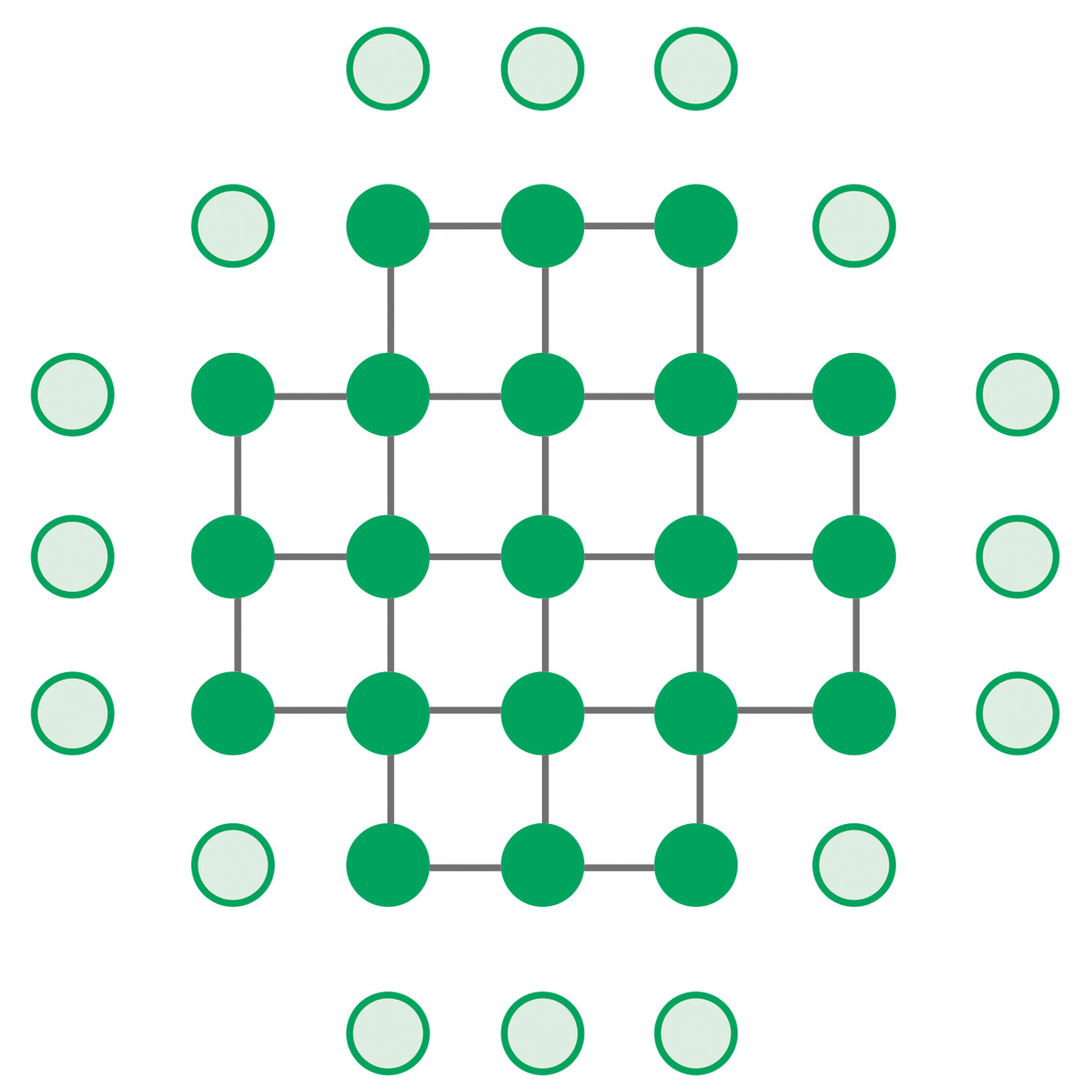
Fig. 5b: Square layout
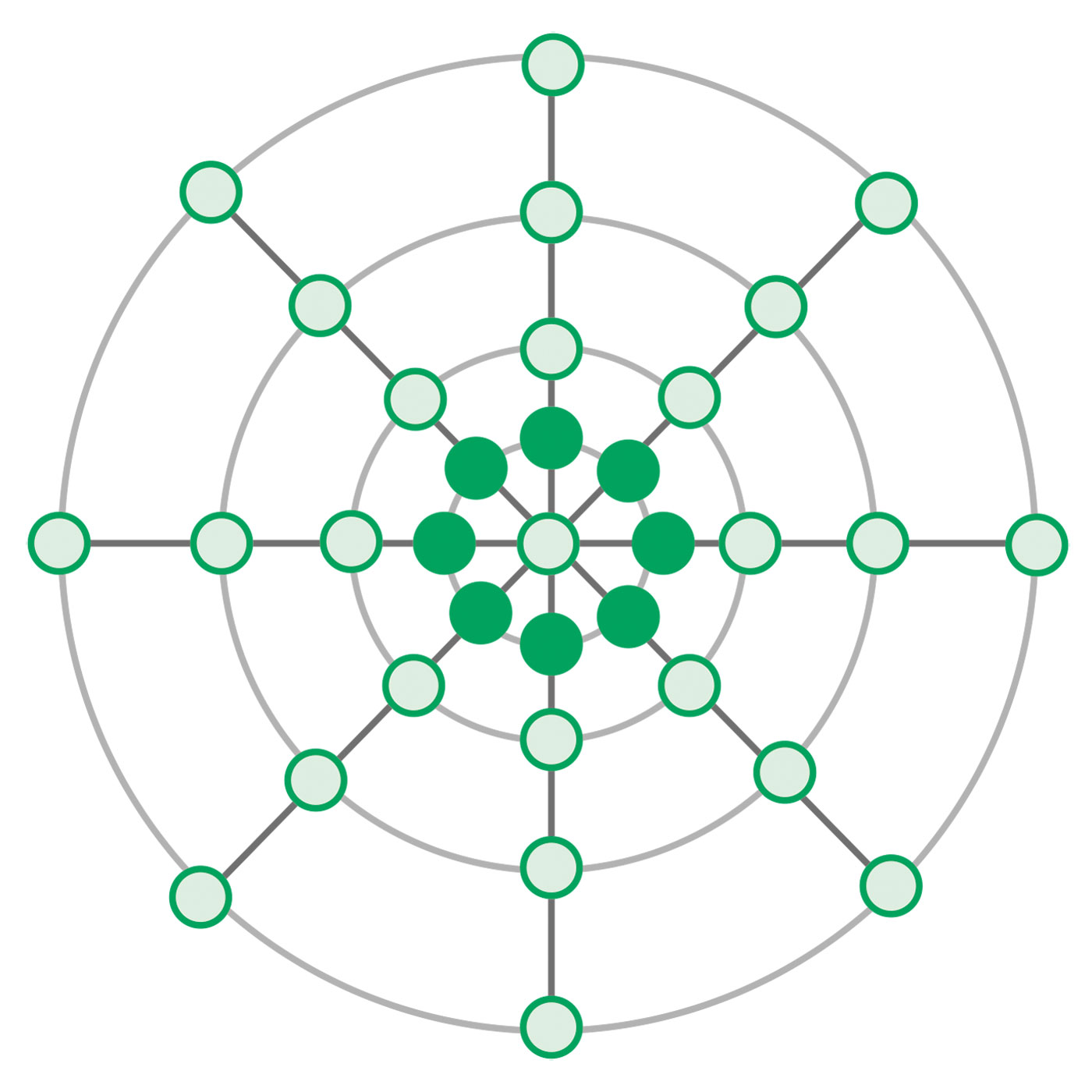
Fig. 5c: Nelder wheels
Protective measures
If protective measures against browsing damage are necessary, fencing the entire area is recommended where the number of groups per hectare is high. As a side effect, this also protects the natural regeneration/succession as the area's overall natural regeneration potential. Groups that are irregularly and widely distributed can be protected with small-scale fencing or tree shelters. This also makes them easy to locate, so that they do not need to be separately marked.
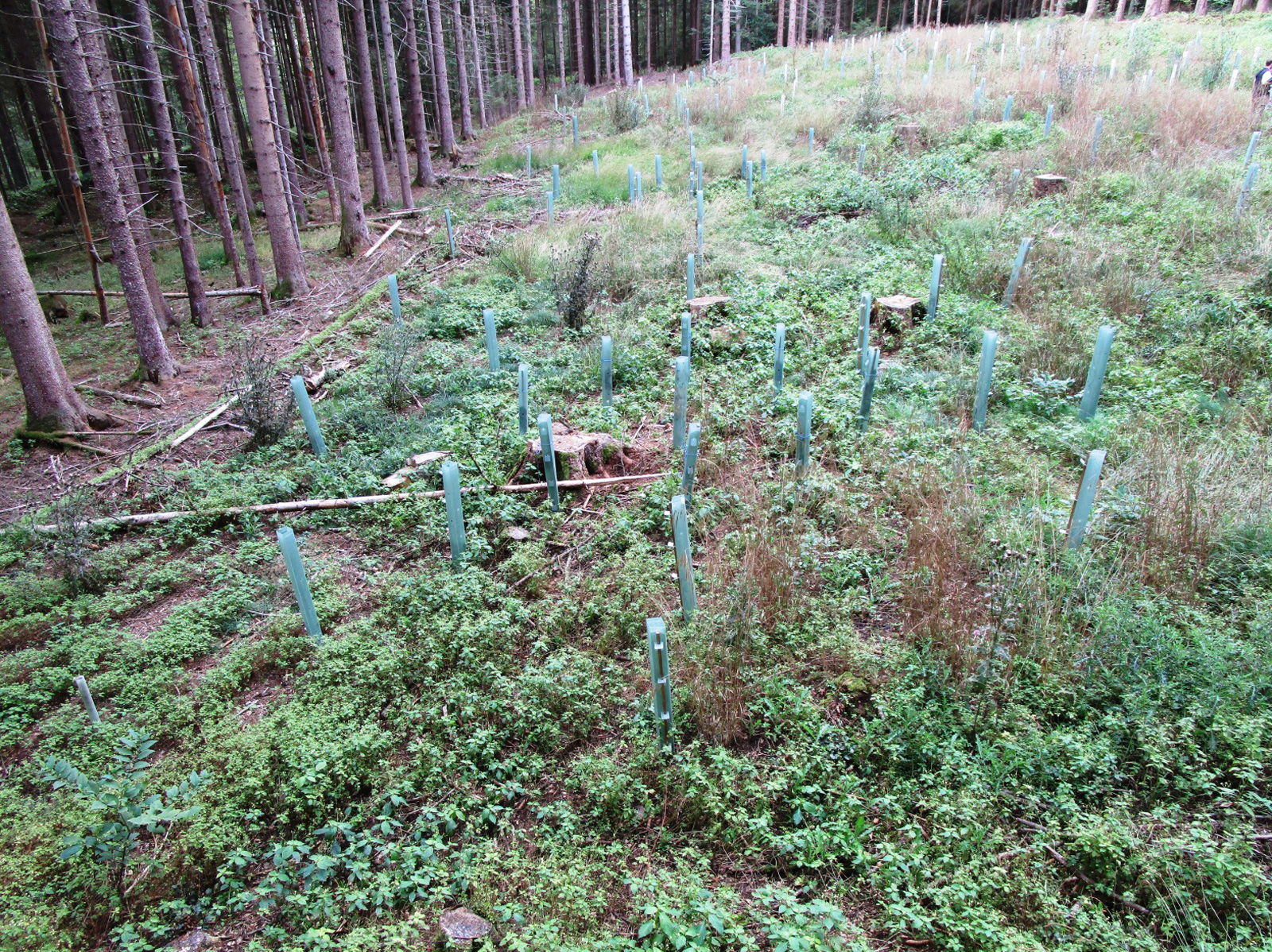
Fig. 6: The plants arranged in Nelder wheels are protected by tree shelters and easy to locate for tending operations. Photo: Wolfram Rothkegel (LWF)
Tending
In the event of significant losses within the groups, replanting should be carried out. Likewise, competing vegetation should be cut back as needed. Trees and shrubs standing too close must be bent/snapped, topped, or removed completely if they are crowding the introduced trees.
As the trees age, the desired characteristics in terms of vitality, quality, and stability become increasingly easier to recognise. If individuals of the potential main tree species show good characteristics, they are assisted through the moderate removal of competitors. With the onset of selective thinning, one candidate is finally selected per group. Competitors are removed as necessary.
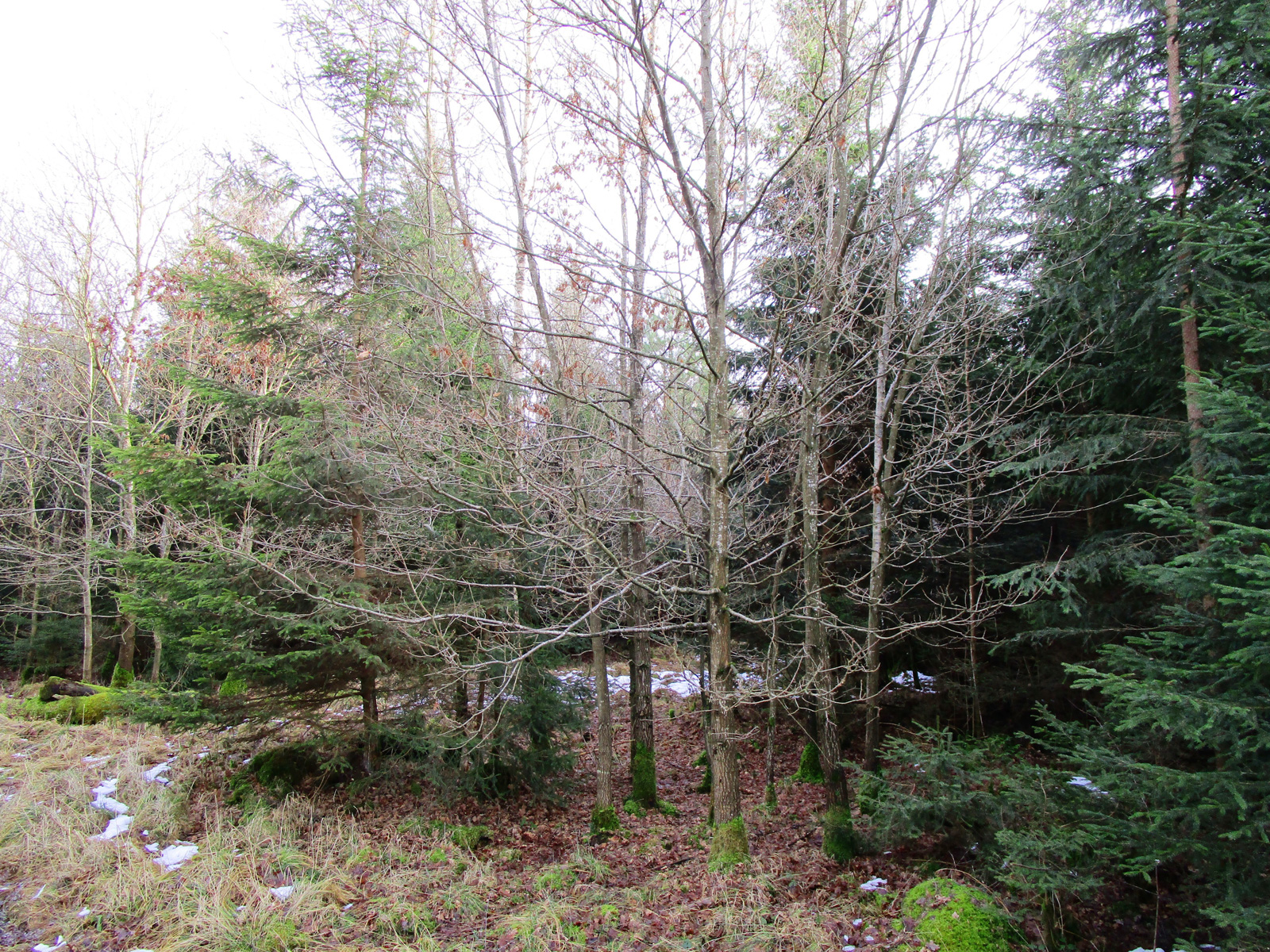
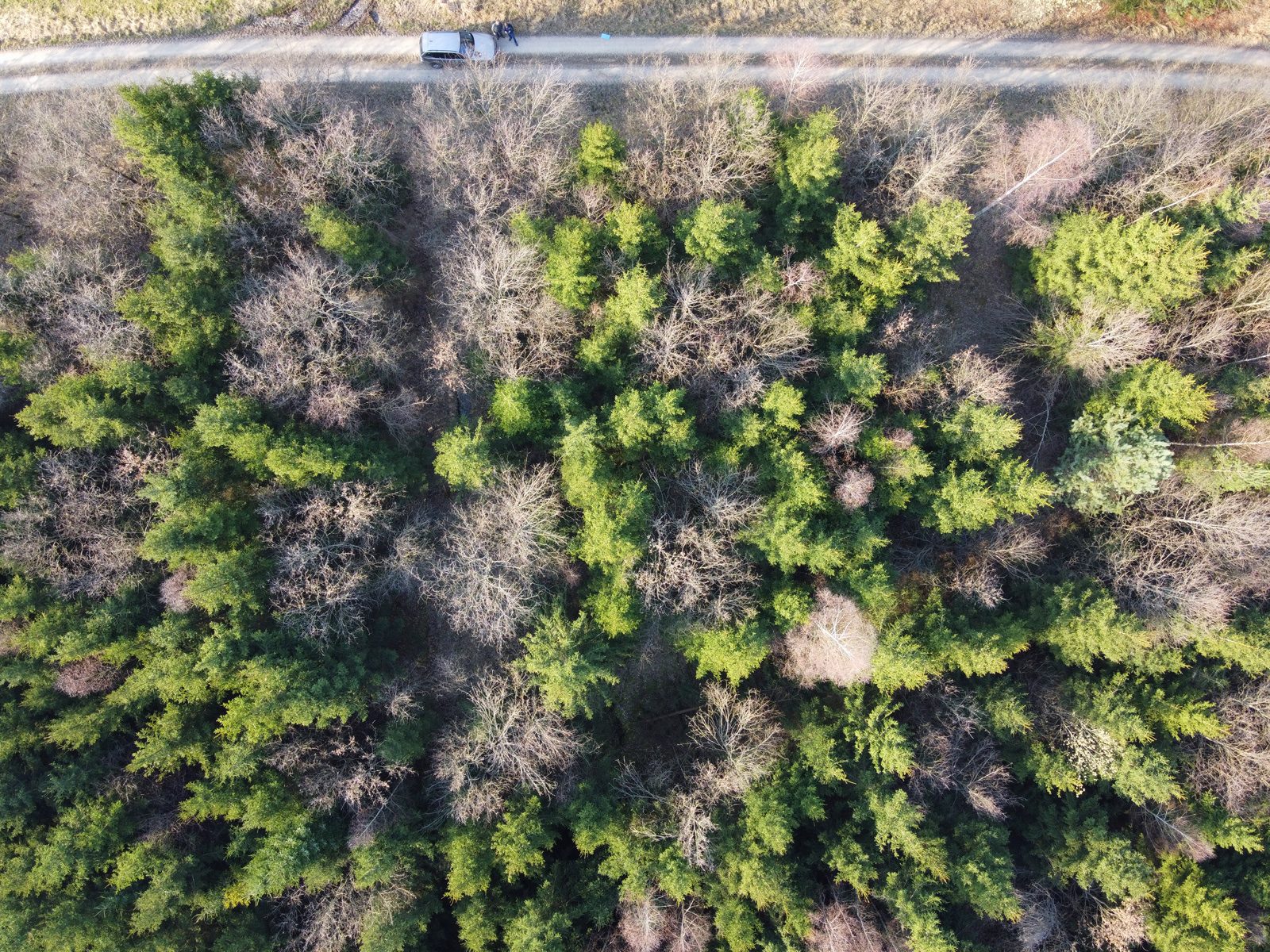
Fig. 7a/b: Examples of group planting. 25 years after planting, the oak groups can be clearly identified within natural spruce and birch regeneration. At the desired target tree spacing, oaks in line with the objective can now be selected and promoted. Photos: Wolfram Rothkegel (LWF)

