



Most deciduous trees prepare for the cold — and therefore water-scarce — season through autumn leaf coloration and leaf fall. The decreasing day length in autumn triggers this process, which is further stimulated by the first cool nights. To prevent the loss of chlorophyll, the green pigment essential for photosynthesis, the trees break it down within the leaves and reabsorb its valuable components. These nutrients are stored in the branches, trunk, or roots until the following spring. When new leaves emerge, the stored compounds are remobilized, and fresh chlorophyll is synthesized.
The Vivid Colors of Autumn Leaves
The colorful foliage of autumn is, in fact, the result of a gradual loss of color from the once-green leaves. During the growing season, the green pigment chlorophyll dominates in the leaves and masks all other pigments. As chlorophyll breaks down in autumn, the previously hidden pigments become visible: xanthophylls (yellow), carotenoids (yellow, orange, red), and anthocyanins (red, violet). Together, they create the often striking and spectacular coloration of autumn foliage.
Brown hues occur mainly in our native oaks, as their high content of tannins (polyphenols) oxidizes and leads to a brown coloration of the leaves. Among our native deciduous trees, yellow or yellow-brown tones predominate in species such as hornbeam, lime (small- and large-leaved), birch, poplar, and sycamore maple. Norway maple, wild service tree, and wild cherry often display impressive shades of yellow, orange, and red — nearly matching the color range of the American sugar maple (Acer saccharum), renowned for its autumn brilliance. The red oak (Quercus rubra), introduced from North America, also stands out with its intense red to reddish-violet foliage (Fig. 1). Even more vibrant red tones appear in related North American species such as the scarlet oak (Quercus coccinea) and the pin oak (Quercus palustris).
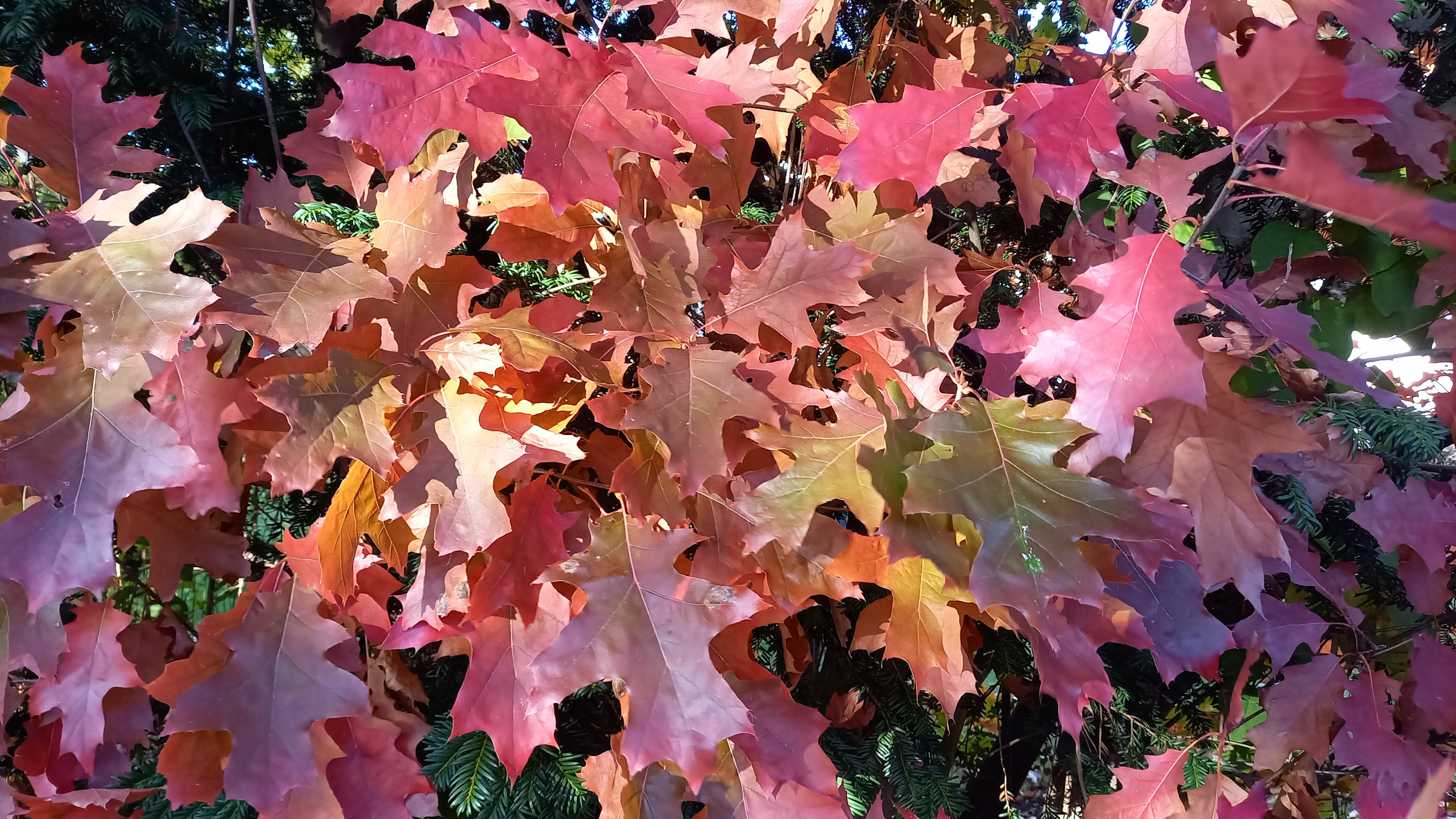
Fig. 1: Splendid autumn coloration of the red oak (Quercus rubra). Photo: Gregor Aas
Some native woody plants, such as alder, ash, and elder, shed their leaves while still green, without any color change.
After the tree has withdrawn valuable nutrients from its leaves, it forms a corky separation layer at the base of each petiole. This layer cuts off the leaf’s water supply and creates a natural breaking point. A light gust of wind is then enough to detach the leaf from the twig. At the same time, the cork layer seals the exposed tissue, preventing pathogens from entering.
Interestingly, some species — such as beech, hornbeam, and oak — often retain their withered leaves on the branches well into spring. In these trees, a true separation layer does not form. Instead, tyloses (cellular outgrowths) develop and block the conductive vessels that normally transport nutrients to the leaves.

Fig. 2: Splendid autumn colors at the Forestry Experimental Garden Grafrath. Photo: Martin Piepenburg
Green “Islands” in Colorful Leaves
A striking feature often observed on already colored leaves are sharply defined, bright green patches, known as “green islands” (Figs. 3 and 4).
But what causes them? In most cases, they are the result of leaf-mining insect larvae, such as leaf-miner moths. By feeding within the leaf, these larvae disrupt the vascular tissues, preventing the tree from breaking down chlorophyll in these areas.
Additionally, infestations by fungi, bacteria, and leaf-mining larvae often trigger increased cytokinin production. Cytokinins are plant hormones that delay leaf senescence, which allows the pathogens or larvae to access the leaf’s nutrients for a longer period.
Even gall-inducing insects on leaves, such as the beech gall midge (Mikiola fagi), produce various phytohormones — including auxins and cytokinin-like substances — that slow the aging of adjacent plant tissue. This results in the formation of green islands within the otherwise colored autumn foliage, providing an optimal environment for the development of larvae inside the galls.
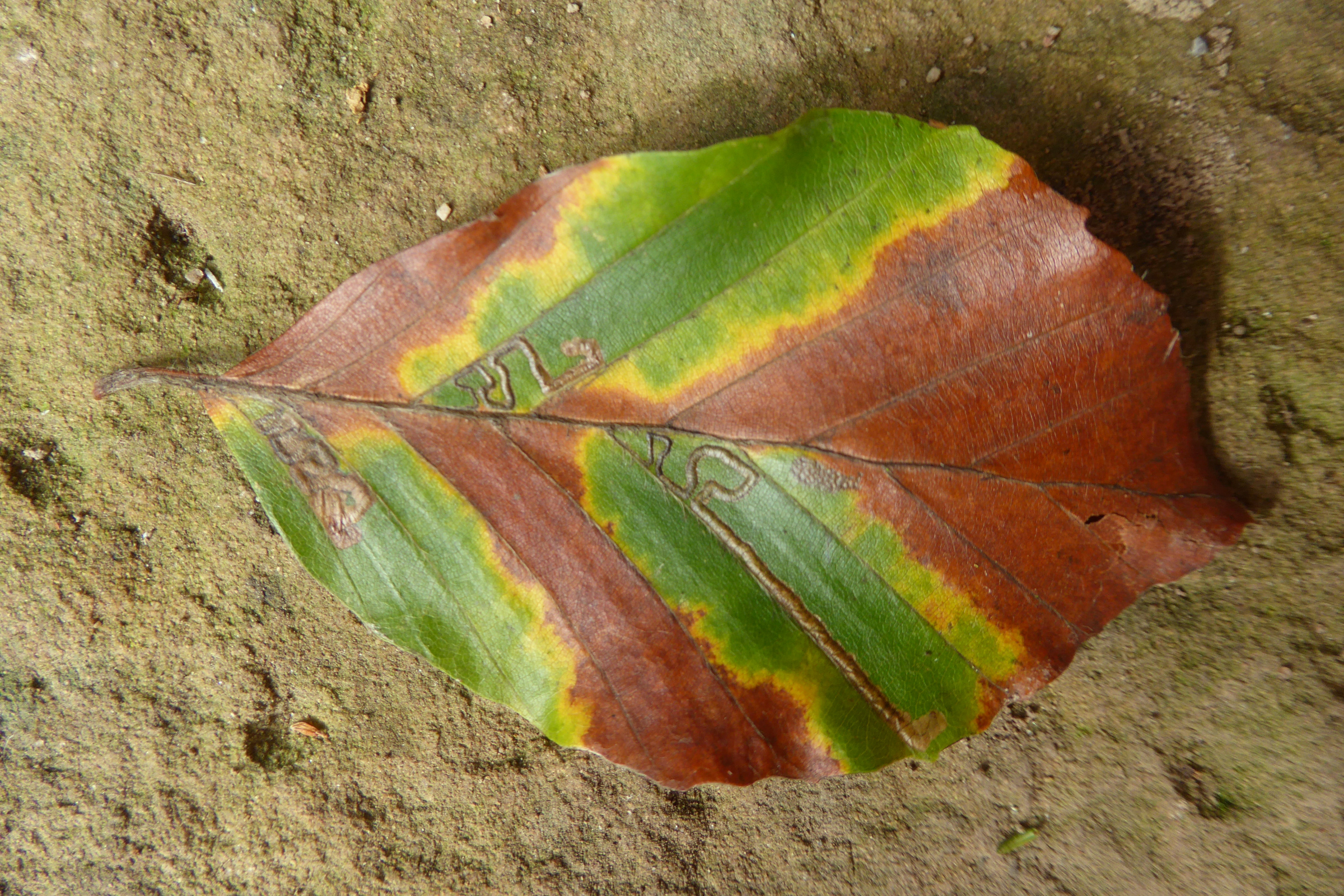
Fig. 3: Remaining green patches in otherwise already colored leaves are induced by leaf-miner moth larvae. Photo: Rudolf Malkmus
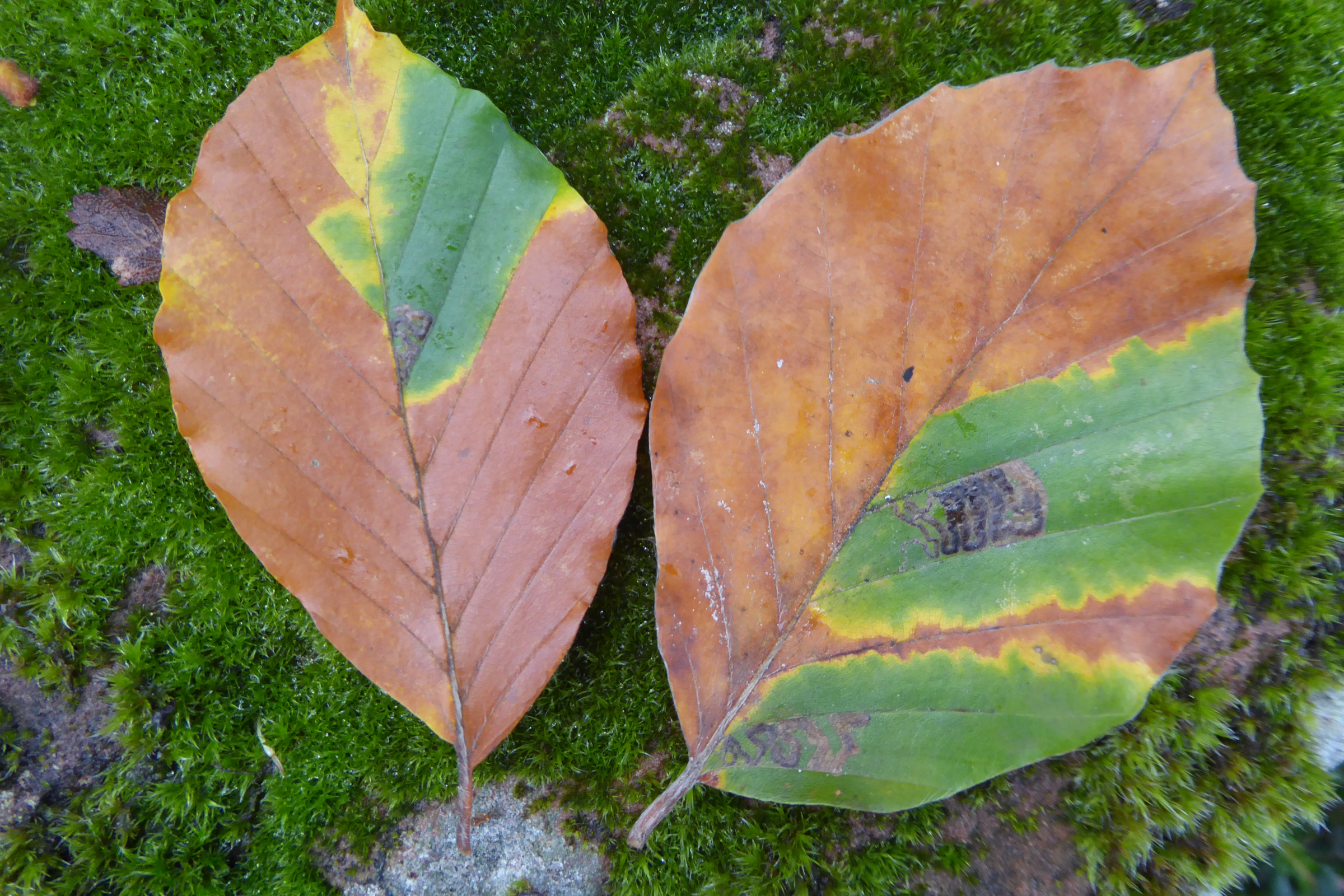
Fig. 4: Green “islands” in a beech leaf caused by leaf-miner moth larvae. Photo: Rudolf Malkmus
Autumn Leaf Fall as an Adaptation to Winter
The annual leaf fall in deciduous trees is an adaptation to the water scarcity of winter. To reduce water loss through evaporation from the leaf surface, trees shed their leaves during periods of limited water availability.
Leaf fall is not only an effective means to prevent water loss, but also serves as a kind of detoxification. Along with the fallen leaves, the tree disposes of metabolic by-products and environmental toxins accumulated in the leaves over the summer. Moreover, trees without leaves in winter are better able to withstand the weight of snow.
Autumn leaf fall is therefore not primarily caused by frost or strong winds, but is the result of an active physiological process that allows deciduous trees to prepare for the challenging winter period, when water uptake from frozen soil becomes the greatest limiting factor.