



The Forest Condition Survey in Bavaria has been carried out by the Bavarian State Institute of Forestry (LWF) according to the same procedure and on the basis of § 41a of the Federal Forest Act and Art.8 of the Bavarian Forest Act since 1983. The Forest Condition Survey is thus a central pillar of long-term forest environmental monitoring in Bavaria. The survey of forest condition takes place every year in July and August. It is carried out by specially trained freelance forestry experts and employees of the Bavarian Forestry Administration. The Bavarian State Institute of Forestry is responsible for the organisation, implementation and supervision of the survey.
As part of the Forest Condition Survey of 2024, the condition of around 17,000 trees at approximately 450 inventory points was assessed. To this end, the needle/leaf loss (NLL) is determined for each individual tree. This describes the foliage condition of leaves or needles in comparison to a normally leafy and healthy crown. The NLL is given as a percentage loss (in 5% steps). Needle/leaf loss is considered a symptom of reduced vitality in the individual tree. In addition to the crown defoliation, the Forest Condition Survey records any other visibly recognisable damage to the tree that has an influence on its vitality. This includes damage caused by biotic or abiotic influences, for example.
The most common tree species among the approximately 17,000 sample trees were spruce (approx. 6,500 trees), pine (approx. 3,400 trees), beech (approx. 2,500 trees), pedunculate and sessile oaks (approx. 1,000 trees) and fir (approx. 480 trees). Other tree species in notable numbers were sycamore (approx. 450 trees), black alder (approx. 300 trees) and European larch (approx. 300 trees). A total of 42 tree species or tree species groups were assessed in 2024.
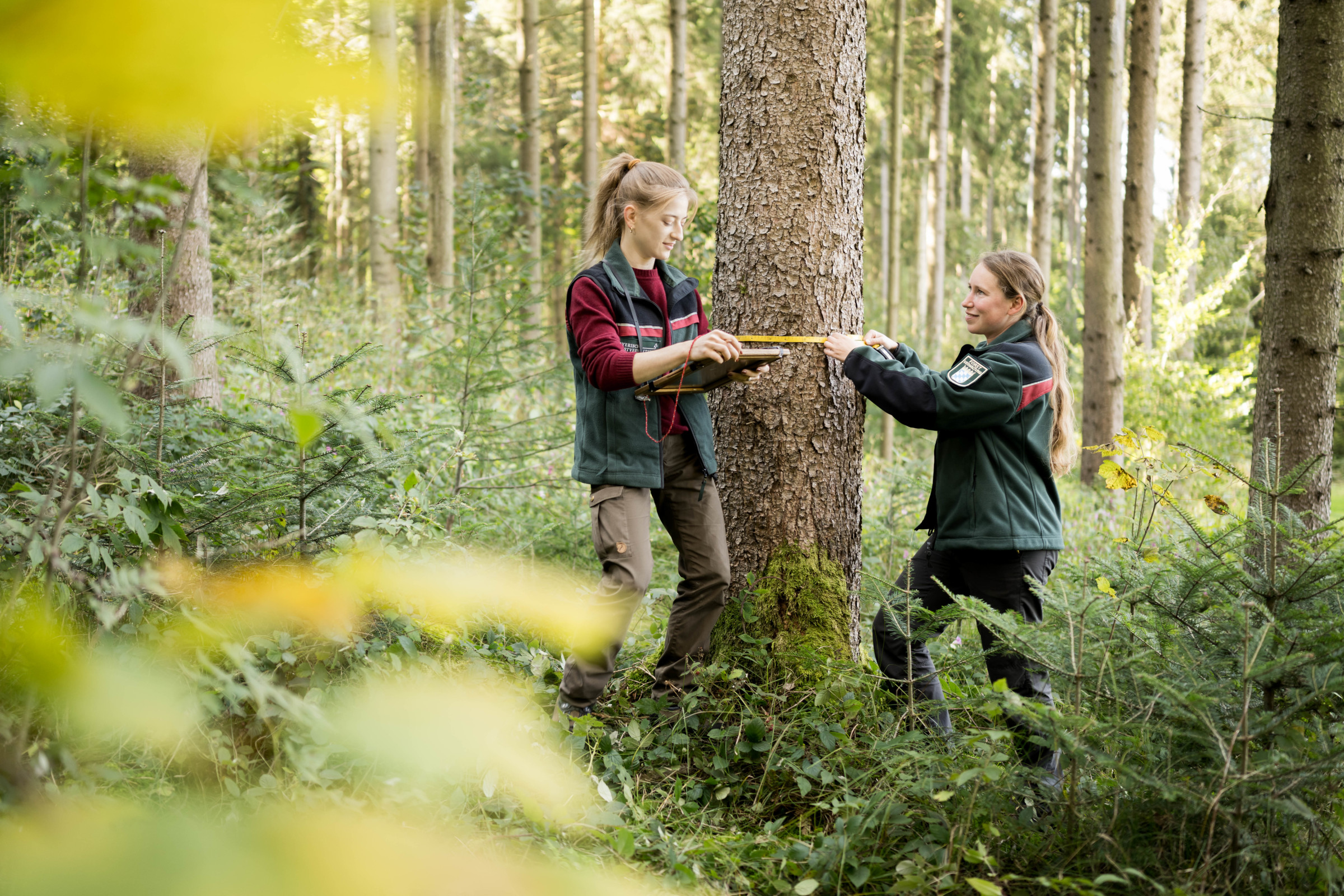
Fig. 1: In the Forest Condition Survey of 2024, the condition of around 17,000 trees at approximately 450 inventory points was assessed. Photo: Tobias Hase
Average needle/leaf loss remains at a high level
The average needle/leaf loss in 2024 across all tree species was 26.1 %, which is on a par with the previous year. Due to the favourable weather conditions, there was no further deterioration.
The average needle loss of the conifers surveyed was 27.3 %, which is 0.3 percentage points above the value determined in 2023. The average leaf loss of deciduous trees in 2024 was 23.8 %. This represents a decrease of 0.4 percentage points compared to the previous year’s figure (2023: 24.2%). In recent years, northern Bavaria has often recorded higher needle/leaf losses than southern Bavaria. This trend was also evident in 2024: Compared to the previous year, the average needle/leaf loss in southern Bavaria improved slightly, by 0.2 percentage points, while it deteriorated by 0.2 percentage points in northern Bavaria.
In both northern and southern Bavaria, the condition of the coniferous trees hardly changed in comparison to 2023. The condition of deciduous trees improved, especially in southern Bavaria.
In addition to the assessment of the average needle/leaf loss, a categorisation of the surveyed trees into damage levels (DL) is used to evaluate the damage situation. The categorisation divides them into 5 groups:
- Trees with no visible damage, DL 0 (NLL: 0–10 %)
- Trees with minor damage, DL 1 (NLL: 15–25 %)
- Trees with moderate damage, DL 2 (NLL: 30–60 %)
- Trees with severe damage, DL 3 (NLL: 65–99 %)
- Dead trees, DL 4 (standing dead with fine brushwood, NLL: 100%)
The proportion of trees with no visible damage (DL 0) was 17.2 % in 2024, which is around 5.6 percentage points higher than in 2023 (11.6 %). Trees with minor damage (DL 1) accounted for 45.3 % in 2024, which is 4.6 percentage points lower than in 2023. Trees with significant damage (DL 2-4) decreased slightly, by 0.9 % compared to the previous year (2024: 37.5 %, 2023: 38.4%).

Fig. 2: Average needle/leaf loss [%] per year across all tree species with linear regression line.

Fig. 3: Temporal comparison of the proportions of all tree species in the damage levels 0 (no visible damage), 1 (minor damage) and 2-4 (sum of significant damage) in the years 1998 to 2024.
Differentiated situation for the main tree species
The average needle loss for spruce remained constant across Bavaria compared to the previous year and was at a very high level of 25.1 %. In northern Bavaria, it decreased by 0.2 percentage points (2023: 25.3 %), while in southern Bavaria it rose by 0.1 percentage points (2023: 25.0%). The proportion of spruce trees with no or minor damage (NLL< 30 %) decreased by 1.6 percentage points across Bavaria compared to the previous year (2024: 63.9 %, 2023: 65.5%). The proportion of spruce trees with significant damage (DL 2-4) was 36.2 %, which corresponds to a year-on-year increase of 1.8 percentage points (2023: 34.4%).
The pine was the tree species with the highest average needle loss in Bavaria. Across Bavaria, it showed an average needle loss of 32.3 %. This represents an increase of 1.2 percentage points compared to 2023. Across Bavaria, the situation for the pine tree remained difficult compared to the previous year. The proportion of pines with no or minor damage (NLL <30 %) was 45.9 %. This figure is down 1.4 percentage points compared to the previous year. The proportion of pines with significant damage (DL 2-4) was 54.1 %, which represents an increase of 1.4 percentage points.
The fir, which was mainly surveyed in southern Bavaria, showed a decrease in average needle loss of 1.1 percentage points to 21.6 % compared to 2023. Needle loss has decreased, especially in lowland areas. The proportion of trees with no or minor damage (NLL < 30 %) was comparatively high throughout Bavaria at 74.6 %. It increased by 2.7 percentage points compared to 2023 (2023: 71.9%). Nevertheless, the proportion of fir trees with significant damage (DL 2-4) was 25.4 %.
The average leaf loss of beech trees decreased slightly compared to 2023. It amounted to 23.3%, which was 0.2 percentage points below the previous year's figure. There are differences between northern and southern Bavaria: In northern Bavaria, an average leaf loss of 23.0 % was recorded for beech. This corresponds to a decrease of 0.7 percentage points compared to the previous year (2023: 23.7%). In southern Bavaria, the average leaf loss was 23.6 %, which is 0.4 percentage points higher than in 2023 (23.2 %). In the dry regions of Franconia, the average leaf loss was 23.0 %. Compared to the previous year, this is a decrease of 1.2 percentage points (2023: 24.2%). Here, the beech may have benefited somewhat from improved conditions in terms of precipitation. The proportion of beech trees with no or minor damage (NLL <30 %) is 73.0 %. This is 3.8 percentage points more than in 2023. The proportion of significantly damaged beech trees (DL 2-4) is 26.9 %. This has thus decreased by 3.9 percentage points.
At 24.9 %, the average leaf loss for oak trees across Bavaria in 2024 remained unchanged compared to the previous year. There were clear differences between northern and southern Bavaria. In northern Bavaria, where both oak species occur, the average leaf loss was 24.7 % (2023: 24.2%). In southern Bavaria - where the results are based on a much smaller sample and relate almost exclusively to the pedunculate oak - leaf loss was 26.6 %; compared to 2023, this represents a decrease of 3.6 %. The highest average leaf loss was recorded in the dry regions of Franconia, at 28.2 %. Year-on-year, this represents an increase of 2.3 percentage points (2023: 25.9%). In the case of oaks, the proportion of trees with no or little damage (NLL <30 %) increased by 2.4 percentage points compared to the previous year, to 65.2 %. The proportion of oaks with significant damage (DL 2-4) is 34.8 %. In 2024, around 25.1 % of the oaks showed signs of feeding damage on leaves, mostly to a minor extent.
Fructification
The Forest Condition Survey also classifies the fruiting of the tree species (low, medium, high fructification), as high fructification can have an impact on the crown condition. Overall, however, the 2024 Forest Condition Survey did not reveal any increased fructification or mast across all tree species. Just over half of the trees surveyed in the 2024 Forest Condition Survey produced fruit (54.3 %). This is roughly the same level as in 2020, 2022 and 2023.
However, the fructification of the trees surveyed was essentially quite low. The proportion of trees with high levels of fructification was 4.1 %, while the proportion of trees with no or low fructification was 81.3 %. Of the main tree species, oak fruited most frequently (71.4 %), followed by spruce (63.0 %), beech (53.4 %), pine (47.6 %) and fir (38.9 %). For all main tree species, the proportion of trees with high fructification is less than 10 % (beech: 5.0 %; spruce: 4.9 %; pine: 1.0 % and fir 0.8 %). Figure 4 shows the development in fructification of beech as an example.

Fig. 4: Fructification of beech from 1993 to 2024.
Summary
The growing conditions for 2024 were more favourable than in previous years. Throughout the country, the water supply to forests was significantly better all year than in previous years. As a result, the average needle/leaf loss has remained largely stable and not deteriorated further. Nevertheless, the hot, dry summers of recent years are probably still affecting the vitality of the trees. Further growing seasons with higher precipitation are thus needed to strengthen the vitality of the trees and significantly reduce the loss of needles and leaves.
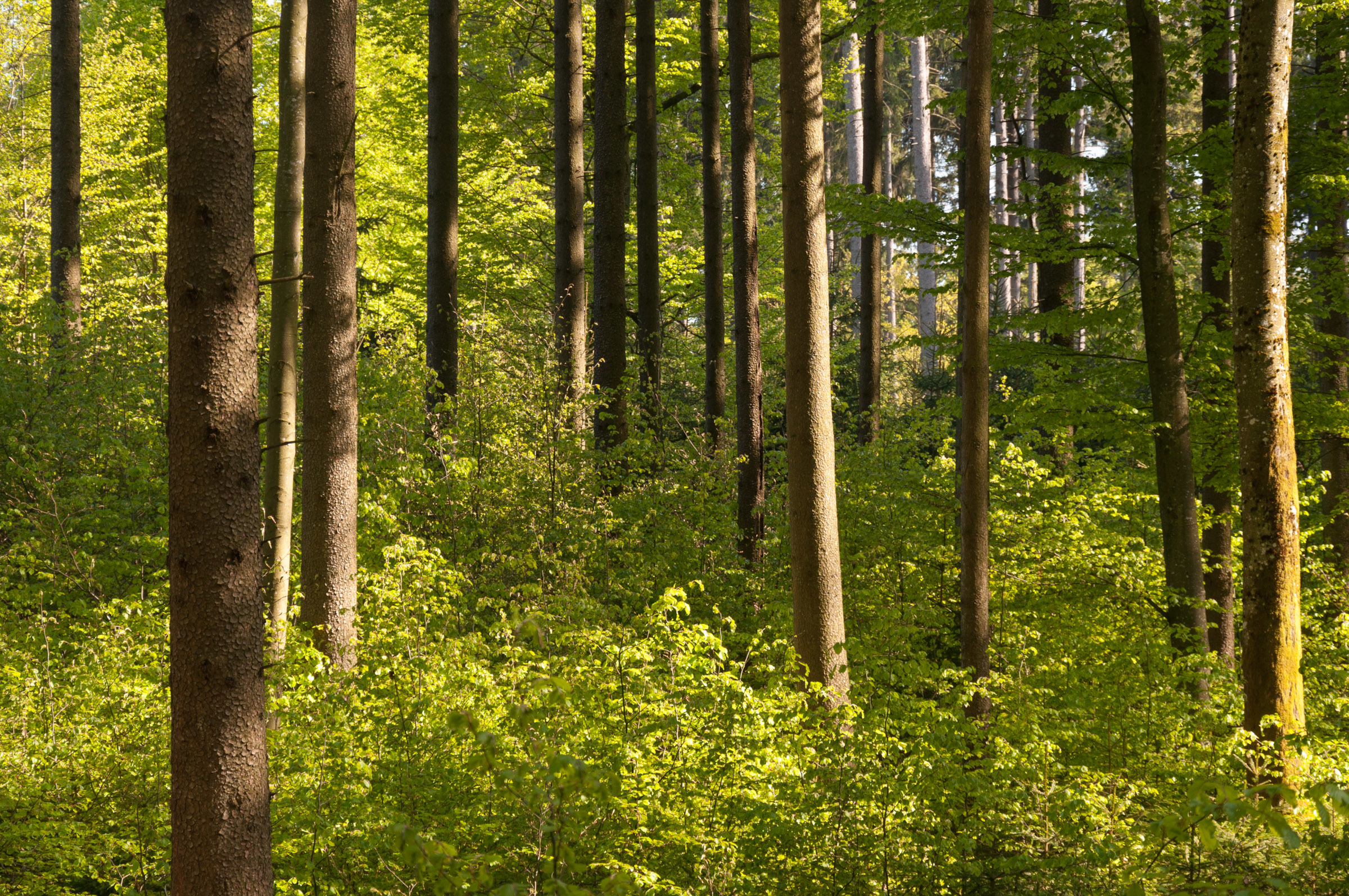
Fig. 5: The majority of the spruce trees show signs of at least minor damage, with 36.2% showing significant damage. It is thus worth implementing advance planting measures at an early stage. Photo: Gero Brehm (AELF Fürstenfeldbruck)