



Carbon storage in short rotation coppice plantations (SRC) depends on factors such as tree species, the rotation period and planting density. In this article, we will look at the carbon sequestration of the poplar clone Max 4 on the SRC trial area in Wöllershof in the Upper Palatinate, which was established in 1992. This often cultivated clone was planted at a density of 6,600 plants/ha for a five-year harvest cycle and at a density of 3,300 plants/ha for a ten-year rotation. In the oldest continuously managed plantation in Bavaria, it was possible to include five five-year and three ten-year rotation periods in the analysis.
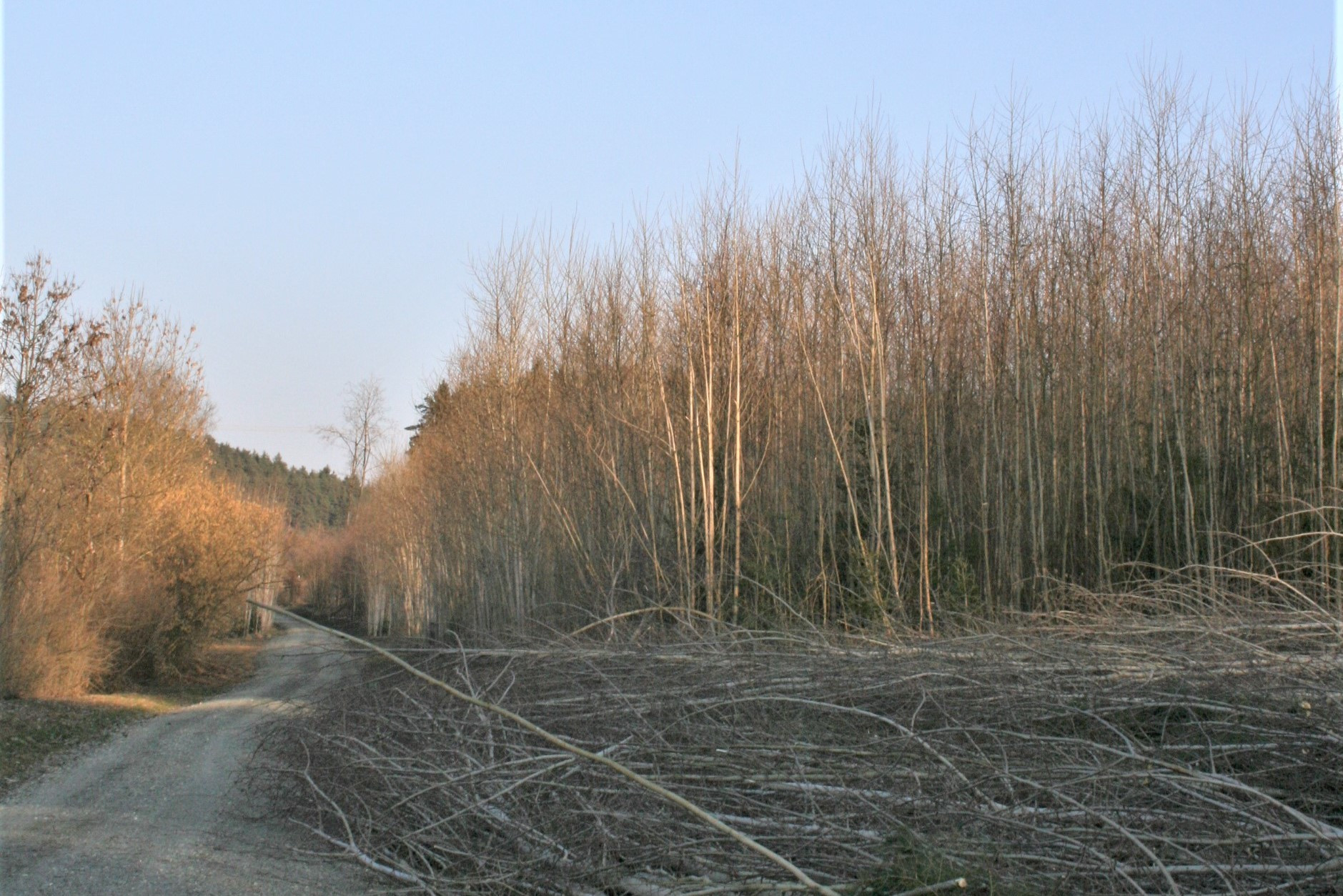
Fig. 1: How much carbon is stored in a SRC plantation? Photo: Bettina Widmann (LWF)
Biomass determination
The biomass stock was determined at the end of the rotation period in each case using a sampling method called the “mass line method”, developed by Kopetzky-Gerhardt. This method uses the close correlation between the diameter at breast height and the fresh mass of the tree. According to Röhle et al (2006), an allometric equation that only requires the diameter as an input variable is a suitable function for the calculation. The regular removal, measurement and weighing of sample trees before the harvests on various trial plots created a comprehensive data basis for the biomass functions of the cultivated clones. The standing biomass can thus be calculated once the diameters of all the trees on the harvest stands have been measured.
The calculation of the biomass development between harvests is based on data from Strobl (2007), who was able to draw on annual surveys of standing biomass in the first five years and use them to derive the percentage contribution of the individual growth years to the total biomass output. The yield data of the ten-year old Max clones were interpolated with the help of the biomass survey at the end of the ten-year rotation and the growth curves of the five-year old stand. It was assumed that if the number of plants were halved, the biomass growth in the first few years of growth would also be half of the growth determined in the five-year rotation.
Figure 2 shows the growth dynamics of the balsam poplar clone Max 4 in relation to the selected rotation period. The lower growth in the first rotation period is clearly recognisable. These initial difficulties are due to the root system not yet being developed and the strong competing vegetation. From the second rotation onwards, yields of over 60 tonnes/ha are achieved in the five-year rotation. In the ten-year rotation, the weak initial phase is somewhat mitigated by the longer standing time. But here, too, the second rotation is significantly more productive than the first rotation, with a biomass yield of 130 tonnes of dry matter/ha. With both rotation periods, the yields of the Max 4 poplar variety decrease after 20 years - in the fifth five-year rotation to 50 tonnes, and in the third ten-year rotation to 95 tonnes of dry matter per hectare. A similar development was observed by Pecenka et al. (2023), who found a decline in yields when growing Max 4 in a four-year harvest cycle after a maximum yield at 20 years.
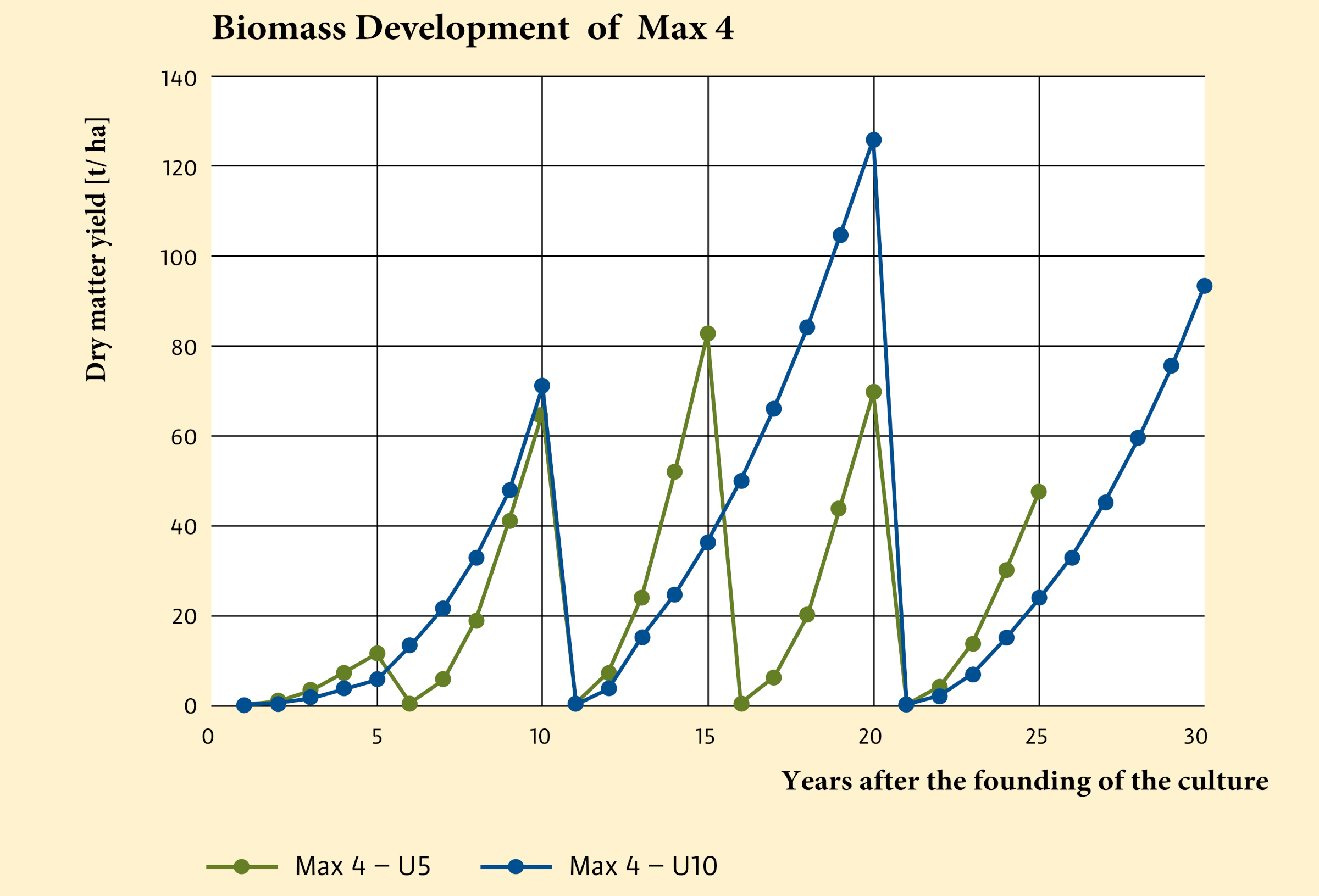
Fig. 2: Biomass development of the balsam poplar variety Max 4 in five- and ten-year rotations on the Wöllershof trial site in the Upper Palatinate.
Carbon sequestration
The calculation of carbon sequestration in the above-ground and below-ground wood biomass is based on the method of the [German Federal] Environment Agency. To derive the above-ground carbon sequestration, the dry mass determined is converted into carbon using a factor of 0.45. The below-ground biomass was determined using the above-ground carbon stock, based on the formula of Mokany et al. (2006).
- C sequestration above ground = 0.45 * biomass [t atro/ha]
- C sequestration below ground = 0.489 * C sequestration above ground0.89
When the end of the rotation period is reached, the stand is cut back to the stump, i.e. the above-ground biomass is removed. The underground biomass remains intact. Our calculations were based on the assumption that the root biomass remains stable after 10 years of operation and is unaffected by fluctuations in the above-ground biomass.
The dynamics of carbon storage in the woody biomass of a short-rotation coppice are shown in Figures 3 and 4 as a function of the rotation period. The maximum amount of carbon stored in the five-year rotation is 47 tonnes C/ha at the end of the third rotation, and in the ten-year rotation it is 67 tonnes C/ha at the end of the second rotation. On average, 17.08 tonnes of C/ha are stored in the five-year rotation in Wöllersdorf over an operating period on the area of 25 years. It should be noted that the growth on the Wöllershof trial plot was relatively low in the first rotation, at 11.5 tonnes atro/ha. This was due to difficulties encountered during the establishment of the trial plot. With the chosen planting pattern of 2.5 x 0.6 m, the trees were not able to close the canopy to darken the area between the rows in the first few years. As herbicides were not used, the accompanying vegetation that emerged immediately after planting represented strong competition for nutrients and water during the first rotation, severely impairing the growth of the trees.
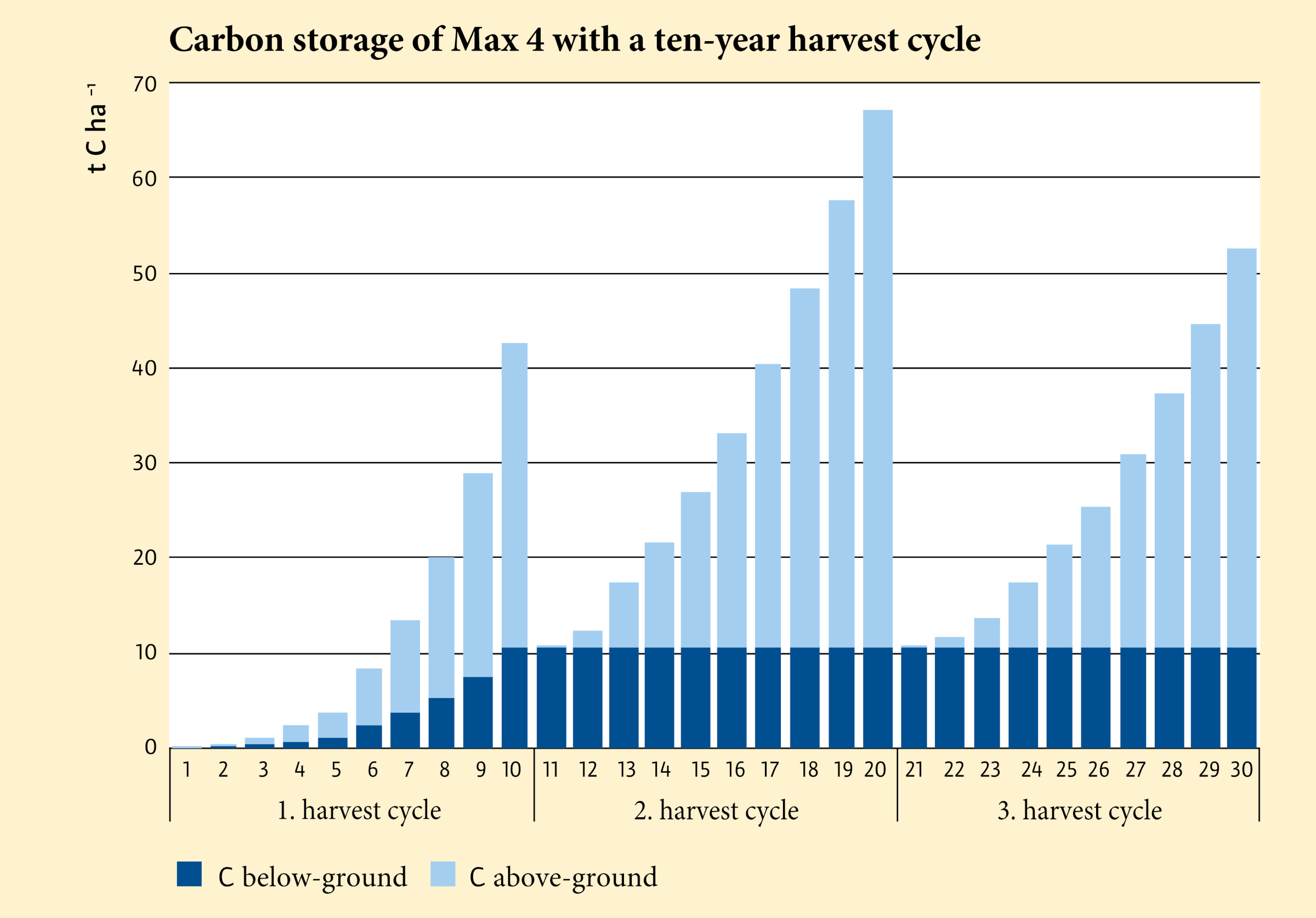
Fig. 3: Carbon storage in the above-ground and below-ground wood biomass in a short rotation coppice with a ten-year harvest cycle.
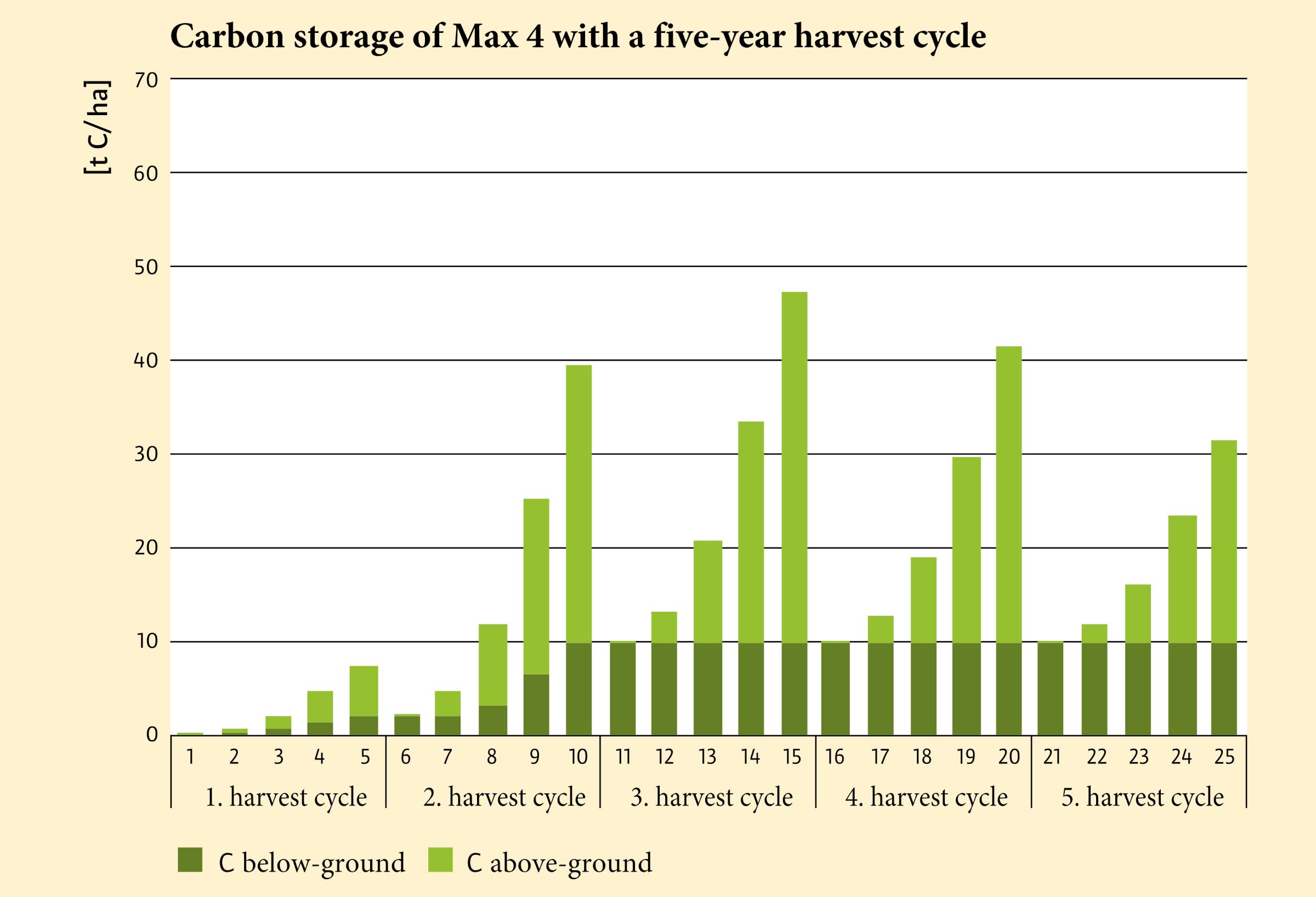
Fig. 4: Carbon storage in the above- and below-ground wood biomass in a short rotation coppice with a five-year harvest cycle.
A comparison with other SRC plantations shows that the growth performance in the first rotation period can be significantly higher. On an LWF trial plot with Max 4 in Lower Bavaria, for example, a yield of 42 tonnes atro/ha was achieved in the first five-year rotation - with biomass yields in the subsequent rotations comparable to those in Wöllershof. Provided the accompanying vegetation is managed successfully, an average carbon storage of 18.56 tonnes C/ha can therefore be assumed in the five-year rotation. In the ten-year rotation in Wöllershof, the average carbon storage is 24.11 tonnes C/ha, based on three rotations. Assuming a smooth establishment of the plantation, the average carbon storage capacity increases to 25.77 tonnes C/ha here. Short rotation coppice plantations left standing for a long time are thus not only economically viable in terms of establishment and conversion costs, but also result in the fixation of carbon in the biomass over a longer period.
Petzold et al. (2010) come to similar conclusions regarding the storage capacity of SRC plantations. In a ten-year poplar plantation, they determined stocks of almost 37 tonnes of C/ha in the above-ground biomass and 16 tonnes of C/ha in the below-ground biomass. According to the 2017 carbon inventory, forest areas in Germany store far higher quantities, averaging 113.69 tonnes C/ha (Thünen Institute 2017). As short rotation coppices are not forests, it is however better to compare their storage effect with that of agricultural land. The mean carbon stock in the biomass of annual crops on arable and horticultural land in Germany in 2021 was 6.58 t C/ha, well below the values determined here for SRC. If SRC were established on 1 % of the agricultural land in Germany with a 10-year rotation, an additional 11.7 million tonnes of carbon dioxide equivalent could be stored during this time - a significant quantity in terms of Germany's climate protection targets. The annual yields from wood utilisation could also be used to substitute fossil fuels or, if used as a material, could be added to the wood product store.
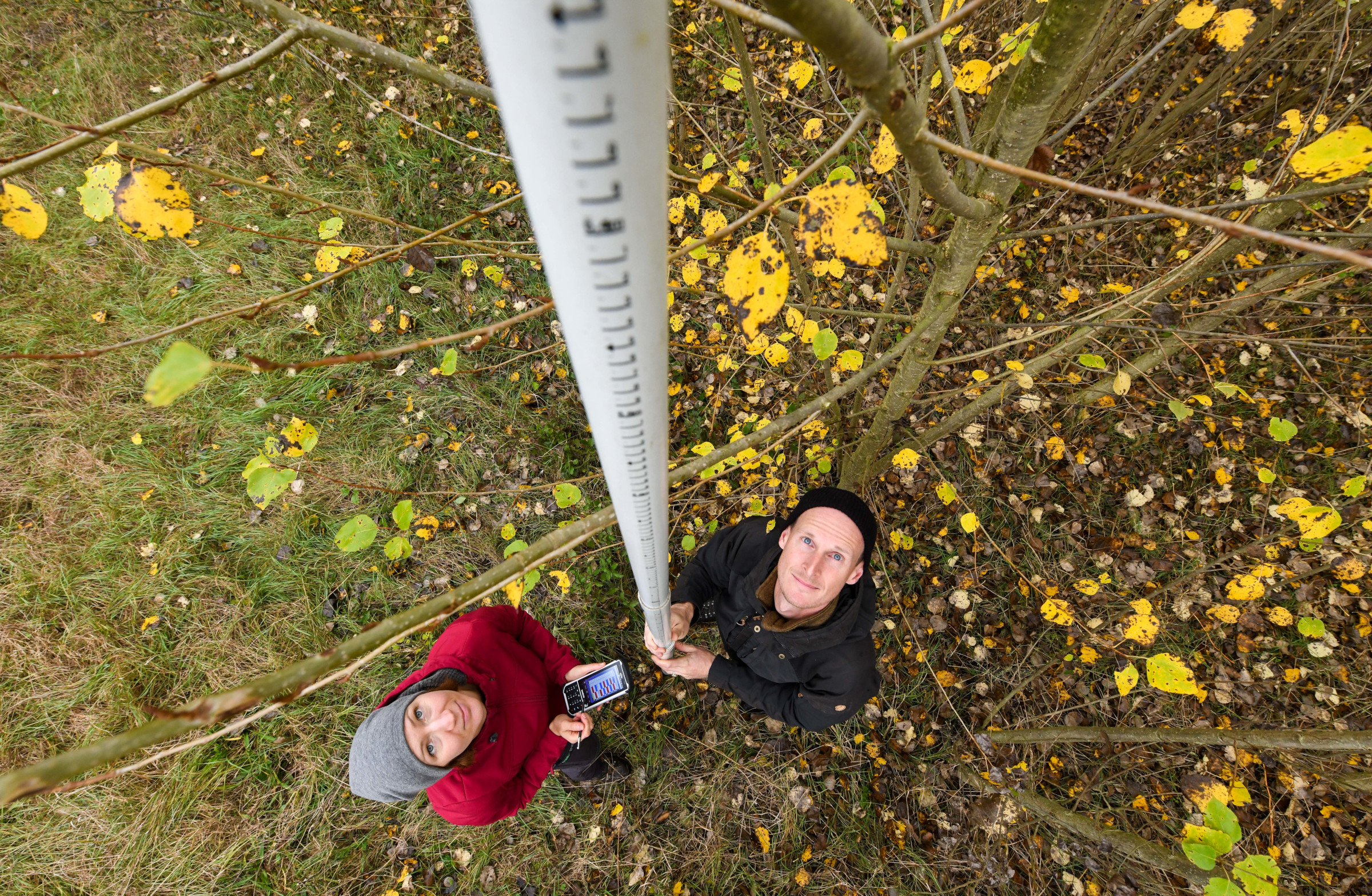
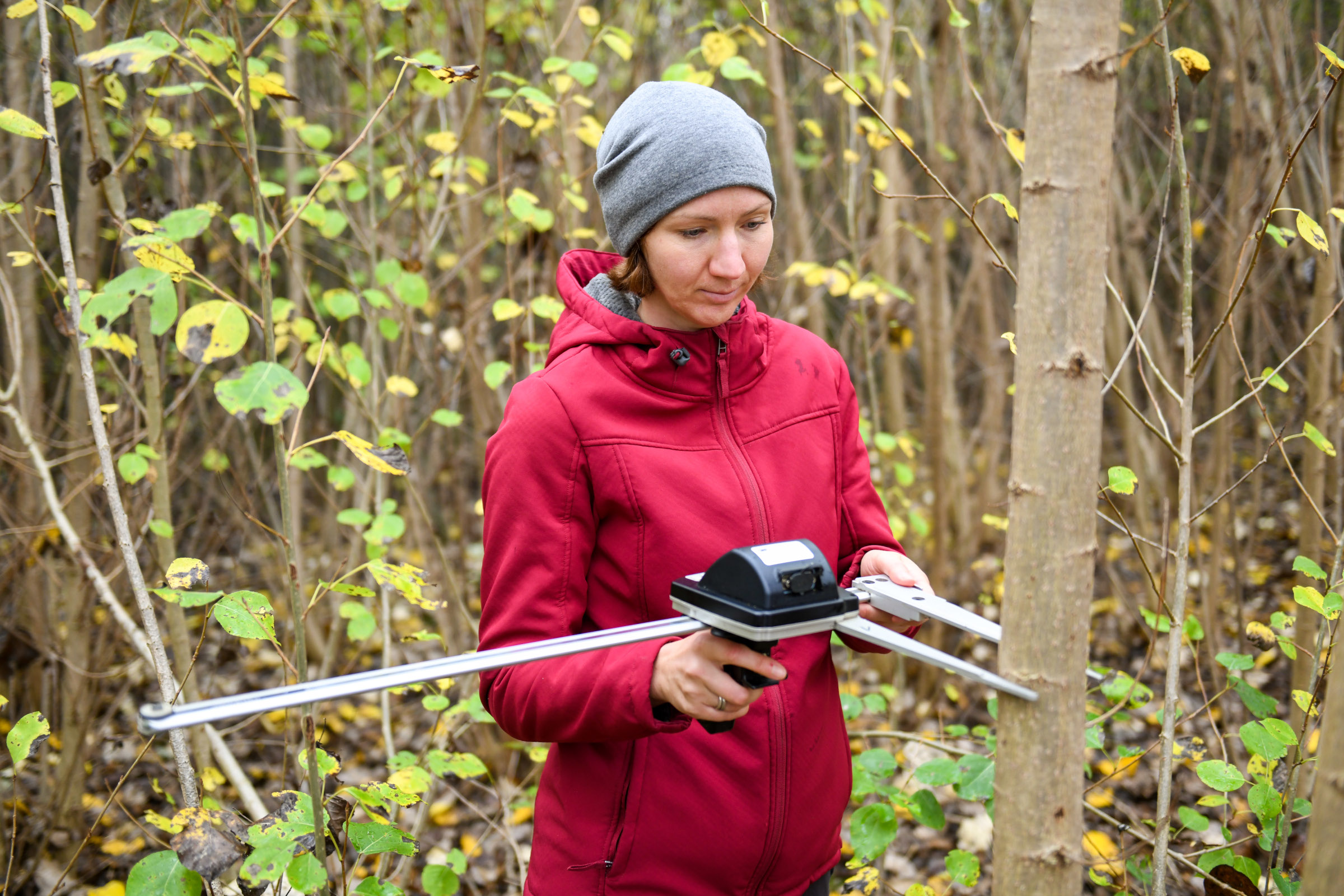
Fig. 5a and b: Extensive measurements in the trial areas provide the basis for the extrapolations. Photos: Tobias Hase, Bavarian State Ministry for Food, Agriculture and Forestry (StMELF))
Summary
Short rotation coppices are not only capable of producing fuel wood chips rapidly, but also of sequestering carbon in the above-ground and below-ground biomass on the site. If the plantation is used for more than 20 years, an average of 19 to 26 tonnes of carbon per hectare can be stored in the woody biomass. These values are far higher than the carbon sequestration of annual crops on fields and in horticulture.