



Storm damage and bark beetle infestations have left large open areas in the forest in recent years. If there is insufficient regeneration in the understory, thick accompanying vegetation usually spreads across these areas. This accompanying vegetation - usually grass, brambles and shrubs - often makes planting or sowing difficult and thus also hinders the establishment of new forests. To get to grips with this problem, such areas can be mulched or tilled over a large area. But is this method really effective - and what are the alternatives?
The preparation of heavily overgrown areas for planting increases the efficiency of the planting work, facilitates the subsequent tending of the forest plantation and, in extreme cases, makes reforestation possible in the first place. Depending on the density of the competing vegetation and the nature of the area, various working methods and machines can be considered for the preparation of the site. Forestry mulchers and forestry tillers are available on the market in various working widths and are suitable for attachment to various carrier vehicles. The spectrum ranges from single-axle implement carriers and small, radio-controlled forest crawlers with a working width of around 1 metre, to crane-mounted implements for forestry machines or excavators and large machines for agricultural tractors or heavy self-propelled vehicles with crawler tracks.
Big differences in working width and weight
The operating weights of the machines vary from 400 kg to over 20 tonnes. Numerous studies have shown that driving on forest soils and the associated soil compaction can have a negative impact on the root penetration of the soil and thus on tree growth. Nevertheless, under certain conditions the current PEFC and FSC certification systems allow extensive driving over the area for the purpose of establishing the plantation. Machine movement across the area should be as careful as possible and limited to what is absolutely necessary. Put simply, the wetter and more cohesive the soil and the higher the weight of the machine, the greater the risk of long-term damage to the soil structure caused by machines driving on it. In terms of soil protection, the mulchers and forestry tillers attached to crane booms therefore have a clear advantage, as driving is limited to the skid trail.
Devices with smaller working widths allow the surfaces to be worked in strips. This simultaneously creates space for subsequent planting and allows existing natural regeneration to be left in the unworked strips. In addition, deadwood and pioneer tree species can be left in the unworked strips. This could have a positive effect on ecology and water storage and serve as protection against excessive sunlight. This will be investigated in more detail in the coming years.
Apart from their working width, mulchers and forestry tillers also differ in the way in which they work. Mulchers usually have pendulum-mounted hammer flails as tools. The devices have skids and usually also a support roller for depth control. This allows them to work a few centimetres above the surface of the ground and they shred the vegetation including smaller branches. These devices cannot be used to clear logging debris or rootstocks.
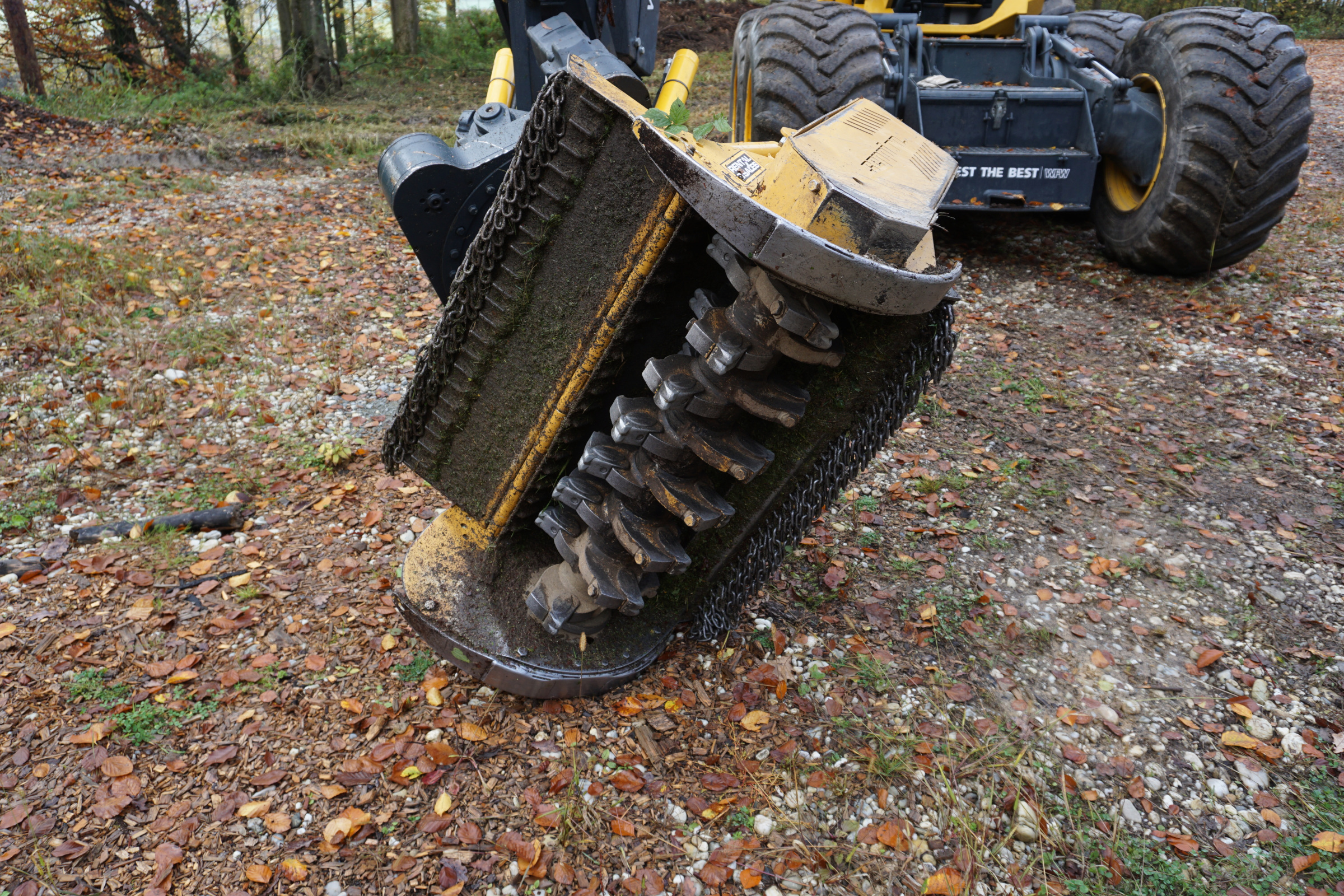
Fig. 1: Narrow forestry tiller attached to a harvester crane. Photo: Andreas Hohenadl (LWF)
Forestry tillers also turn rootstocks into wood chips
Forestry tillers have a solid rotor equipped with fixed tools. Depth control is usually achieved by means of lateral skids, which are height-adjustable. Thanks to their more robust working tools, these machines can shred logging residues and rootstocks and work them into the upper layer of the soil. The appliances are usually equipped with a hydraulically controlled feed flap. Large quantities of material including bulky material can be fed through the open flap to the tilling rotor and coarsely shredded. When the flap is closed, the processed material is retained in the machine for longer and shredded more thoroughly. Depending on the working depth and the amount of shredded vegetation and logging residues, the process leaves behind a thick layer of loose mulch material mixed with topsoil.
The specific effects of the substrate described here on the successful rooting and subsequent growth of the forest plants will be the subject of further study. So far there are also no results available to indicate whether the competing vegetation colonises the mulch layer again more intensively in the years after processing and possibly finds improved growing conditions there.
The regeneration must be planted in mineral soil to ensure that the plant is supplied with sufficient water and nutrients all year round. Accordingly, the mulch layer is removed from around each plant during the planting process. For this reason, it is advisable to keep the tilling depth as shallow as possible and to clear logging residues as thoroughly as possible after timber harvesting, as an excessively thick layer of mulch has a negative effect on productivity during planting.
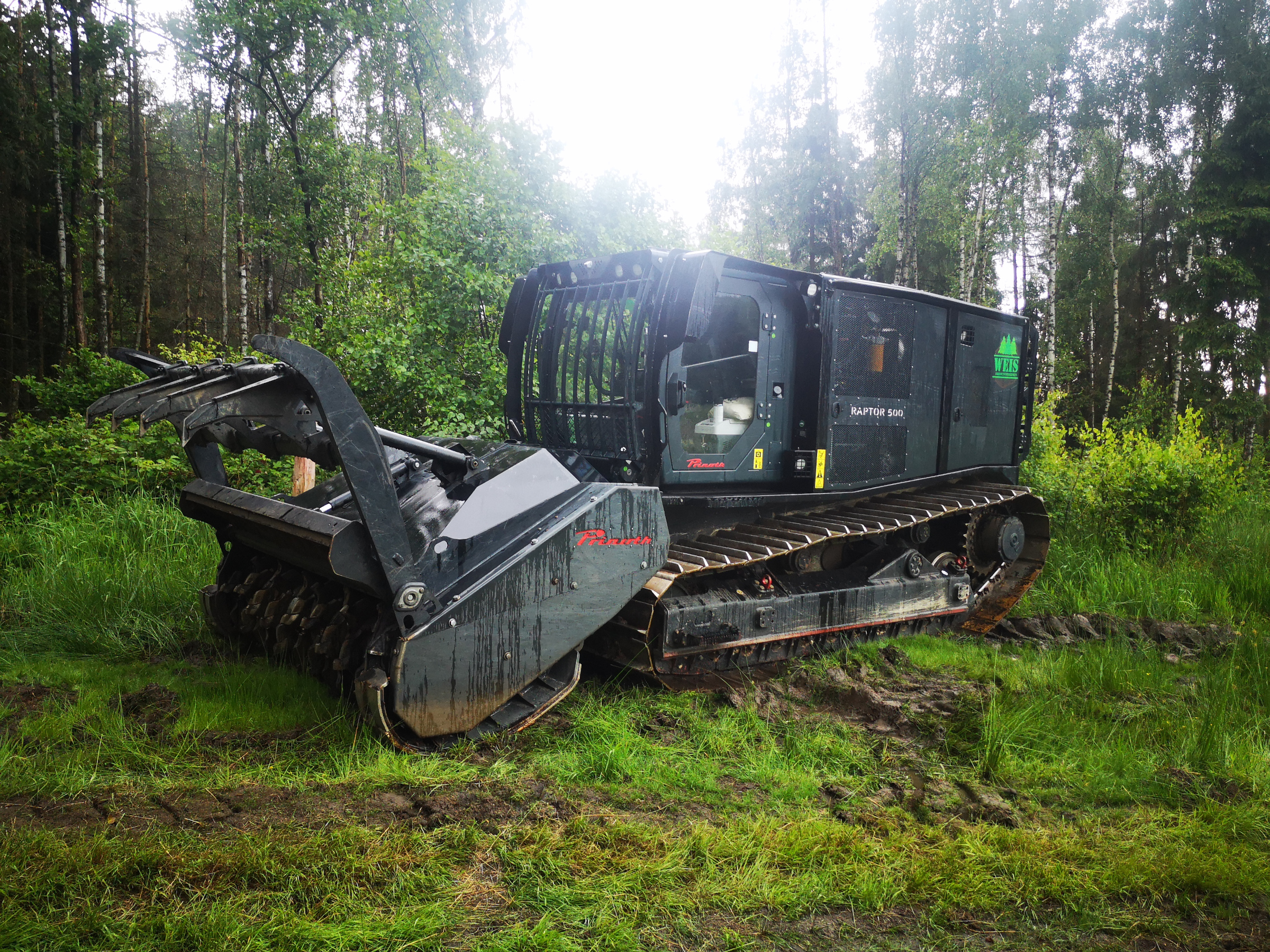
Fig. 2: Large self-propelled forestry tiller with an operating weight of approx. 21 tonnes. Photo: Andreas Hohenadl (LWF)
There are also alternatives that do not disturb the soil
Apart from the mulchers and tillers described above, there are other alternative methods for preparing the area. Depending on the initial situation and the size of the area, classical motor-manual methods using brush cutters or hedge trimmers (“Niedersächsische Kulturpflegetechnik” (NKT) (“Lower Saxon plantation tending technique”) may be an option. In addition, various types of clearing rakes and brush rakes can be attached to excavators and forestry cranes. Brush rakes are usually held by a log grab. They are suitable for removing logging debris and brambles from the area and concentrating them into piles or mounds. Clearing rakes are usually attached directly to the arm of the crane. This allows these devices to break up even a dense carpet of grass. This requires appropriate care on the part of the operator, as the mineral soil should not be disturbed.
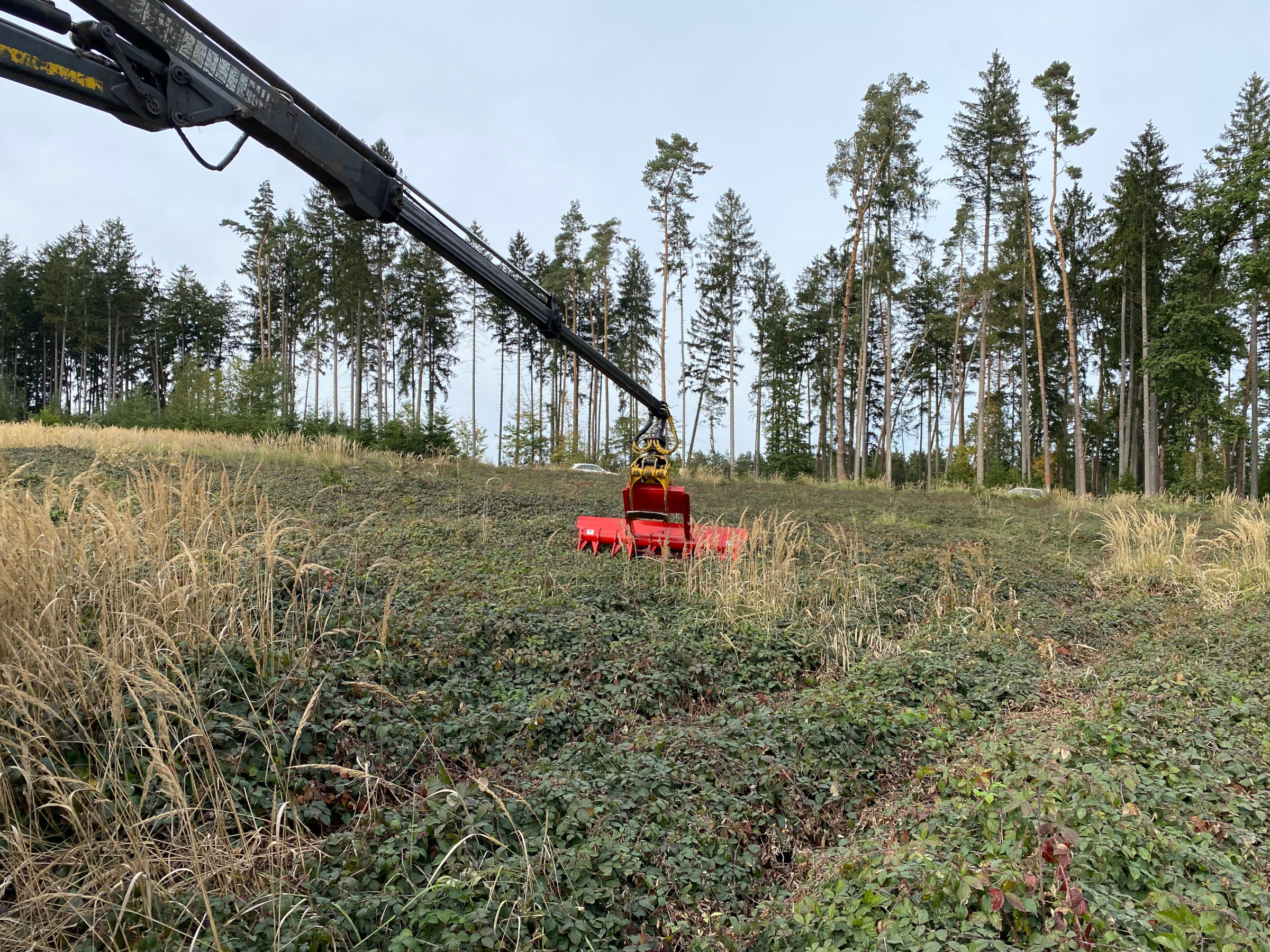
Fig. 3: Brush rake, attached to the timber grab of a forestry crane. Photo: Andreas Hohenadl (LWF)
The bottom line
The preparation of cultivation areas for subsequent sowing or planting is essential in many cases and makes the subsequent tasks of establishing and tending the plantation easier. Depending on the initial situation, the working methods for preparing the area must be selected in such a way as to minimise any negative effects on the soil structure caused by its being driven over or by any other disturbance of the mineral soil. This is the only way to create good growing conditions for a healthy and stable forest of the future.
When mulching or tilling to prepare for a plantation, particular attention should be paid to the protection of ground and shrub brooders. Rare animals such as the dormouse may also be affected. Such measures should therefore be carried out outside the breeding season and, if necessary, coordinated with the relevant forestry authorities in order to comply with legal requirements.