

A compilation of current results from FVA research in the context of the current state of knowledge should now help to close these gaps. The following article aims to clarify key questions of practical relevance on the overwintering of the spruce bark beetle.
Basics of overwintering biology
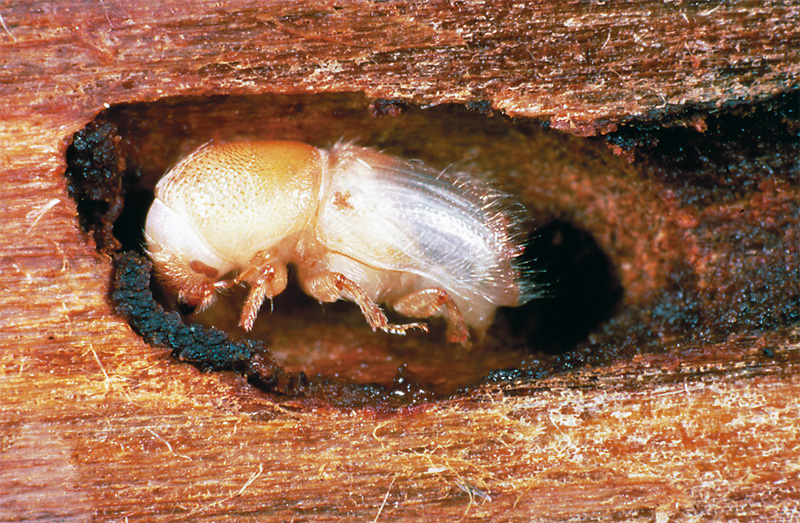
Like many other native insects, the European spruce bark beetle (Ips typographus) adapts to the adverse environmental conditions at this time of year with suitable overwintering strategies. The relevant form of hibernation for the spruce bark beetle is diapause (KOŠTÁL, 2006), i.e. a genetically programmed behaviour that is initiated in advance while conditions are still favourable. It involves a temporary scaling back of the vital functions of adult beetles, e.g. their metabolism, mobility and reproduction. In addition, they protect themselves with a kind of endogenous “antifreeze”, so that they can survive even severe frosts in winter without harm (after gradually adapting to the cold). Young beetles and the white (pre-imaginal) developmental stages (eggs, larvae, pupae), on the other hand, do not enter diapause. They continue to develop at temperatures >8°C even in winter. At the white stages, however, the probability of survival in frost is significantly reduced; a mortality threshold of approx. -5°C is assumed here (SCHOPF & KRITSCH, 2010). This means that winter mortality can in some cases contribute significantly to population regulation, not least in conjunction with possible fungal infections during warm, humid periods in the overwintering phase (FACCOLI, 2002; DWORSCHAK ET AL., 2014a). However, mortality rates can vary greatly even at local level, and are almost impossible to quantify on a large scale due to their complex causes.
When do European spruce bark beetles go into hibernation?
There are two types of diapause behaviour (SCHEBECK ET AL., 2022): Obligately diapausing beetles always go into hibernation after development, without mating. The environmental conditions are not relevant here. These beetles (of the first generation) therefore only mate in the following year - regardless of whether there is still sufficient time for breeding in the current year or not. Facultative diapausing beetles, on the other hand, only go into hibernation when the environmental conditions in the current year (day length, temperature) become unfavourable - facilitating several generations per year. The facultative type dominates in central Europe.
Based on a three-year experiment along an altitudinal gradient in the Black Forest (300-1,350 m above sea level), the FVA has now investigated for the first time under field conditions the influence of the two factors day length and temperature on the swarming and breeding behaviour of facultative European spruce bark beetles (HOFMANN ET AL., 2024). The study confirmed previous laboratory studies to the effect that day length has a major influence (DOLEŽAL & SEHNAL, 2007); from mid-August (day length = 14.7 h), both swarming activity and egg-laying by the beetles decreased significantly, irrespective of the temperature. Interestingly, however - and this finding is new - a certain proportion of beetles ignore the decreasing day length in late summer, and are encouraged by warm temperatures to fly and reproduce well into autumn. The maximum daily temperature required for this increases with decreasing day length and is approx. 25°C at the end of October (Fig. 1).

Fig.1: Schematic diagram showing the probability of European spruce bark beetle broods being established in late summer/autumn, depending on the date and maximum daily temperature; the darker the colour, the more likely the breeding sites are to be established; white = no breeding sites are established (Diagram: FVA BW/Kautz, Hofmann).
On the one hand, these findings show the complex interaction between the two factors of day length and temperature; and on the other hand, they also highlight the potential for climate change to extend the activity period of the beetles in autumn. The timing of the onset of hibernation is therefore extremely heterogeneous within European spruce bark beetle populations, and can vary from June/July (obligate group) via August (day-length-dependent facultative group) to autumn (temperature-dependent facultative group). Late broods are generally at increased risk of dying at the white stages in the event of early frosts below -5°C, although these are becoming increasingly rare as the climate warms up. In the winter of 2019/20, for example, white stages were seen to survive in Freiburg's municipal forest up to an altitude of 950 metres above sea level. Ultimately the populations benefit from the prolongation of the activity period, as this increases the number of generations per year and thus the density of the overwintering European spruce bark beetle populations.
Where do European spruce bark beetles overwinter?
As with the diapause type, the choice of overwintering site is also dependent on the climate or the resulting voltinism (i.e. the number of generations/year) of the bark beetle populations: univoltine populations (one generation/year) in cooler, northern latitudes or higher mountainous areas prefer to overwinter in the ground litter (better isolation), whereas bi-/multivoltine populations (two or more generations/year) overwinter primarily under the bark. Overwintering under the bark takes place either directly in the brood gallery or in hibernation tunnels (Fig. 2), which are created in the brood tree or neighbouring trees. If we examine all the studies on this topic to date, it is striking that the share of ground hibernators is relatively high, especially in Scandinavia (i.e. in colder climates with univoltine populations), and that in central Europe this proportion is <30%, and in most cases even <10% (Table 1). High beetle densities in the ground litter, as frequently reported for southern Germany in the past (e.g. FRANZ, 1950; WELLENSTEIN, 1954), do not in themselves provide any information about how they arrived in the litter (passive/active) or the ratio (bark/soil) of overwintering sites.
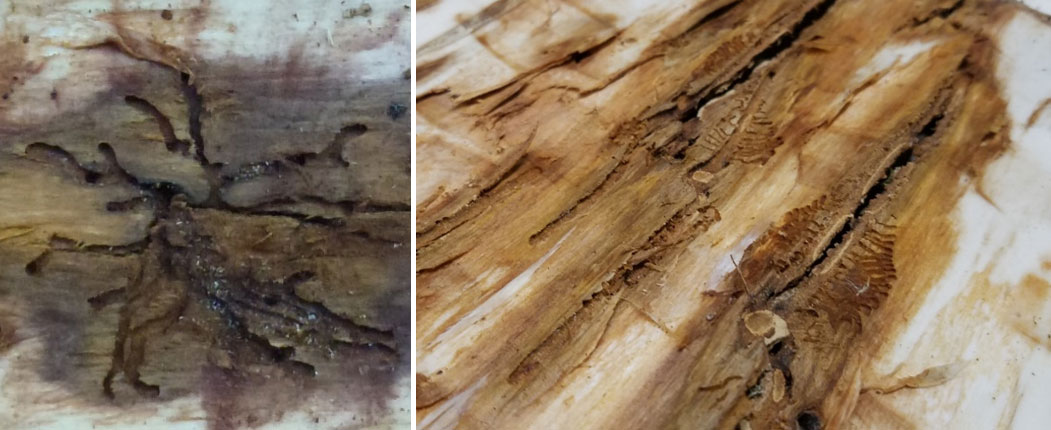
Fig. 2: Winter feeding with short, meandering tunnels (left; observed in early September 2020 at 1,000 m above sea level); and late breeding galleries (right; observed in late October 2022 at 600 m above sea level) (Photos: FVA BW/Hofmann).
Table 1: Overview of the ratio of bark-overwintering to ground-overwintering spruce bark beetles in Europe. The influence of voltinism on the overwintering site is evident; for references see DWORSCHAK ET AL. (2014b).
| Ratio in % Bark/soil overwinterers | Study area | Reference |
| Univoltine populations | ||
| <10 / >90 | Sweden | Weslien & Lindelöw, 1989 |
| <10 / >90 | Norway | Botterweg, 1982 |
| 50 / 50 | Switzerland 1,000 m above sea level. | Wermelinger et al., 2011 |
| Univoltine and bivoltine populations | ||
| 50 / 50 | Croatia >1,000 m above sea level. | Hrasovec et al., 2011 |
| 50 / 50 | Southern Sweden | Komonen et al., 2011 |
| >70 / <30 | Denmark | Harding & Ravn, 1985 |
| Bi- and multivoltine populations | ||
| >70 / <30 | Poland | Onysko & Starzyk, 2011 |
| >90 / <10 | Switzerland 500 m above sea level. | Wermelinger et al., 2011 |
| >90 / <10 | Lower Saxony (Germany) | Biermann, 1977 |
| >95 / <5 | Czech Republic | Zumr, 1982 |
It can therefore be assumed that the majority of overwintering beetles in Germany remain under the bark, even if they have already reached fully developed stages and are ready to fly in autumn. If the bark falls off over the course of the winter, the beetles are passively transported into the ground litter layer (DWORSCHAK ET AL., 2014b). Consequently, the proportion of ground-overwinterers increases over time. An FVA study of 83 overwintering trees in the Black Forest National Park (approx. 800 m above sea level) showed a clear dominance of trees with almost complete bark cover in October (89%, i.e. at this early stage, hardly any beetles had been transported into the litter layer passively with falling bark), and a decrease in this proportion to 66% by the following March (KAUTZ ET AL., 2023).
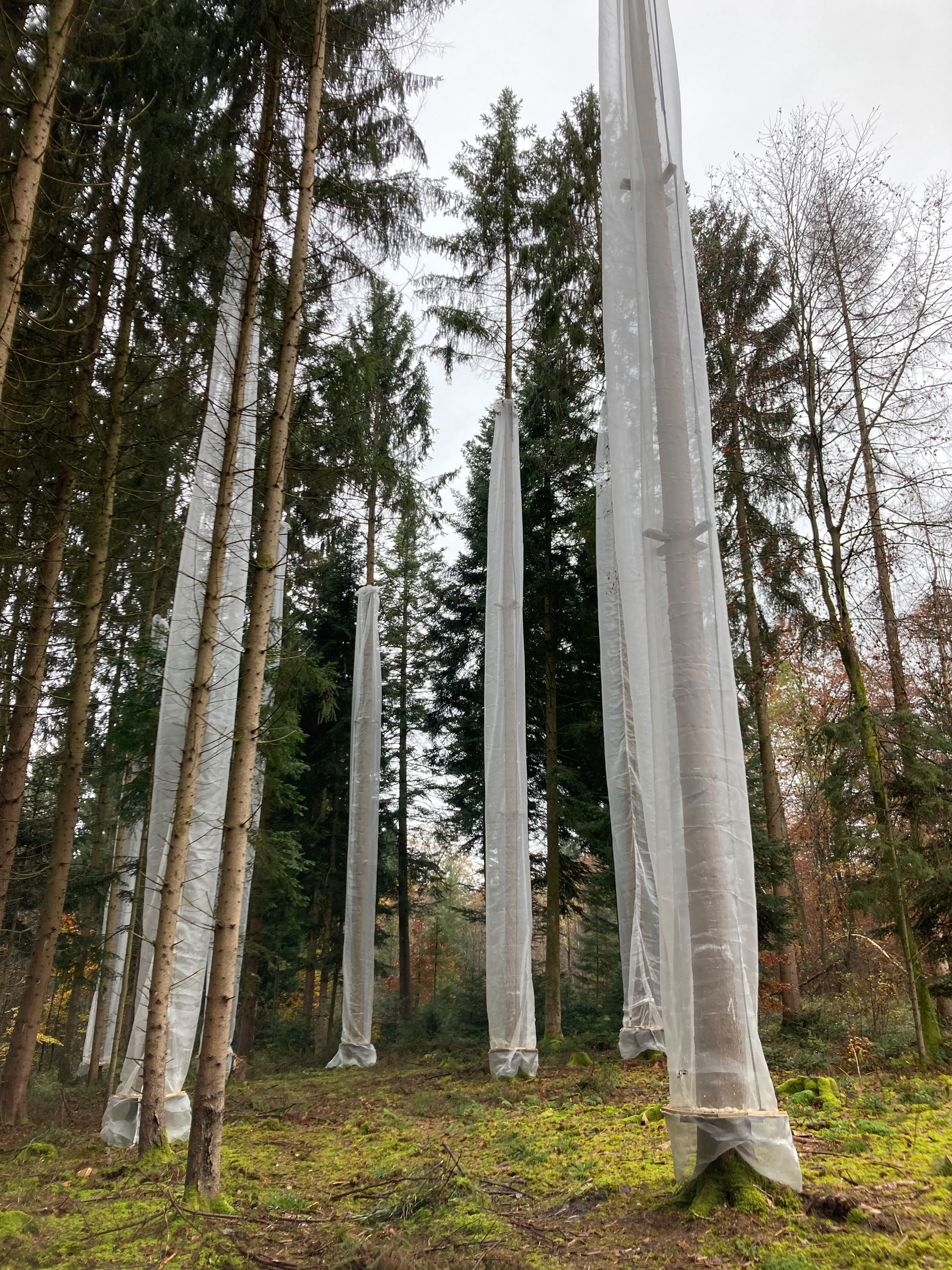
Fig. 3a: Experiment to determine the number of spruce bark beetle emerging from standing spruce trees during the winter months (All photos: FVA BW/Wonsack).
Do European spruce bark beetles actively leave the trunk in winter?
The phenomenon of beetles leaving the trunk as passive “passengers” on bark debris falling from standing overwintering trees is a decisive mechanism. However, the question also arises as to which extent spruce bark beetles can also leave the overwintering tree or stacked trunk actively during the winter months. Possible reasons for doing so include favourable temperatures and moisture conditions in the soil, competition for food, or a deficient nutrient supply within the trunk, the occurrence of natural antagonists. To investigate this question, the FVA conducted various experiments on trunk sections, log piles and standing spruce trees near Freiburg. In all cases, the samples were colonised with European spruce bark beetles from pheromone traps, or baited with pheromones in late summer, then wrapped in finely-meshed nets. The beetles emerging in autumn were counted (Fig. 3a-c).
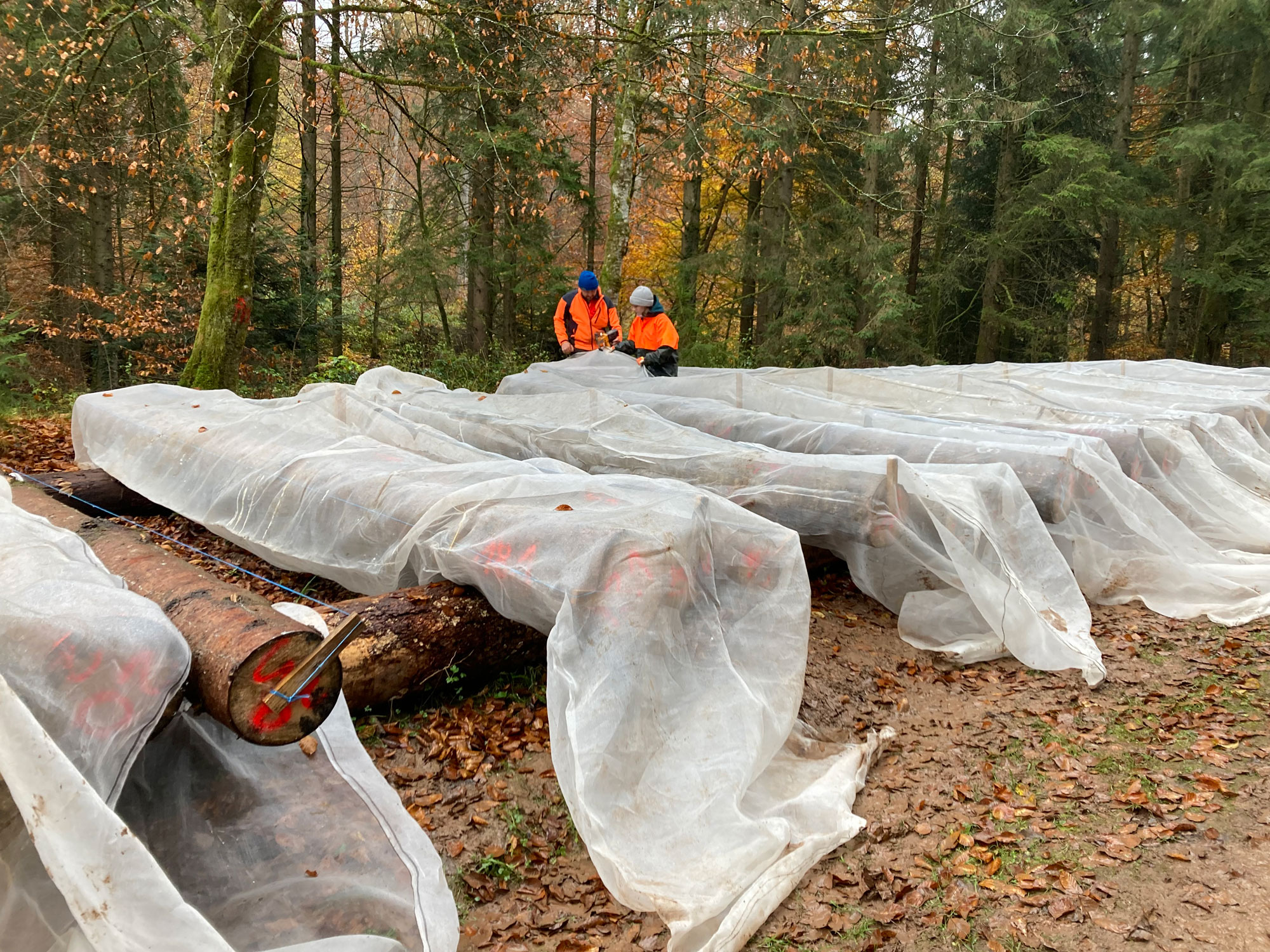
Fig. 3b: Experiment to determine the number of beetles emerging from lying trunk sections.
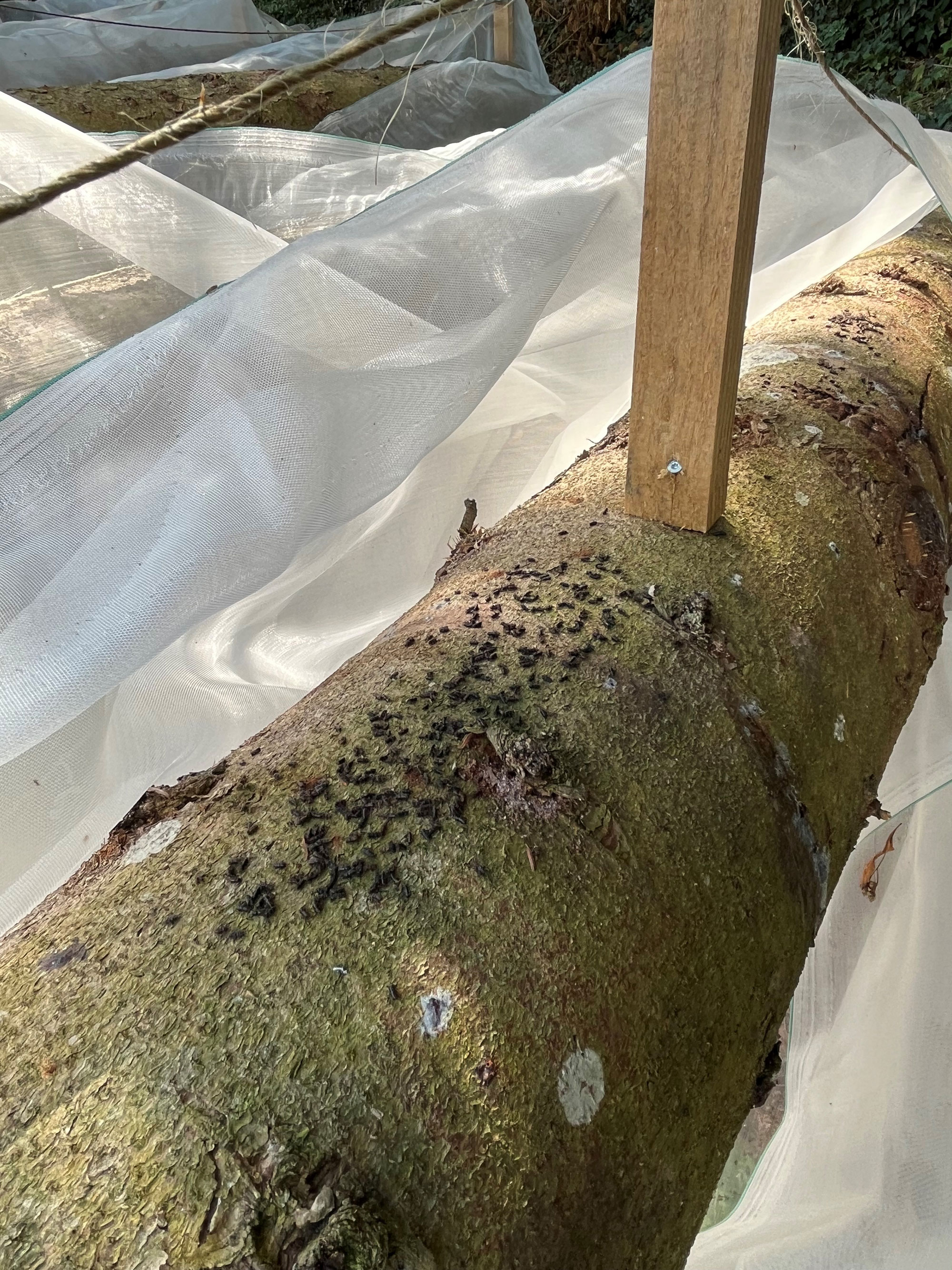
Fig. 3c: European spruce bark beetles prepared to colonise the trunk.
The average proportion of beetles actively leaving the samples in the period from November to March was between 5 and 62% (n = 79, 300-1,350 m a.s.l.; Tab. 2).
Table 2: Overview of the experiments on the proportion of spruce bark beetles leaving the samples in the winter half-year (November-March) after colonisation in late summer (mean ± standard deviation); the sample of standing and lying trees is reduced because of difficulties with colonisation.
| Year | Sea level [m above sea level] | Methods | Sample | Density of colonisation | Share [%] |
| 2021/22 | 300 | Log section (60 cm long) | 15 | Moderate | 21 ± 26 |
| 2021/22 | 600 | Log section (60 cm long) | 15 | Moderate | 27 ± 25 |
| 2021/22 | 950 | Log section (60 cm long) | 15 | Moderate | 20 ± 30 |
| 2021/22 | 1,350 | Log section (60 cm long) | 15 | Low | 5 ± 10 |
| 2021/22 | 300 | Standing tree (15 m long) | 2 | Low | 10 ± 1 |
| 2021/22 | 300 | Lying tree (3 x 5 m long) | 1 | High | 37 |
| 2022/23 | 300 | Standing tree (15 m long) | 6 | Low | 13 ± 1 |
| 2023/24 | 300 | Lying log (5 m long) | 10 | Moderate | 62 ± 9 |
There may be various reasons for the relatively high variability in the percentage of beetles leaving the samples (e.g. colonisation density, substrate quality and weather conditions), which cannot be quantified more precisely. However, the high proportion of beetles leaving the trunk after the first frost event is obvious (Fig. 4). This finding is consistent with a study conducted in the winter of 2022/23 on individual standing overwintering trees (WALD UND HOLZ NRW, 2023).

Fig. 4: Total number of beetles emerging from 10 lying 5 m-long trunks every 2 weeks, and measured air temperatures in the winter half-year of 2023/24; young and mature beetles were visually classified according to colour (Diagram: FVA BW/Hofmann).
When does the hibernation of the European spruce bark beetle end?
The diapause of the European spruce bark beetle, whether obligate or facultative, ends as early as mid-winter due to persistently low temperatures (DOLEŽAL & SEHNAL, 2007). After that, the warmer late winter days with temperatures >8°C are used for the development and regeneration of flight muscles and fertility. As soon as a certain sum of temperatures is reached and temperatures suitable for swarming prevail (>16.5°C; LOBINGER, 1994), the beetle can become active again in spring. Recent FVA experiments show that the day length has little influence on the starting date for swarming activity and the establishment of broods; rather, it is strongly dependent on the maximum daytime temperature and the sum of temperatures experienced after diapause (HOFMANN ET AL., 2024). As a consequence, the start will increasingly shift towards the beginning of the year as the months of February and March become warmer in the wake of climate change. Depending on the climate scenario (RCP 4.5 or 8.5), the start of swarming and infestation in south-west Germany towards the end of the century (2080-2100) will therefore be 2-4 weeks earlier than at present (2009-20). Counterproductive for the breeding success of such early broods are late frosts, which could decimate the white stages; however, this effect is considered to play a subordinate role, as these late frosts rarely reach the necessary lethal temperatures (e.g. several nights below -5°C).
Conclusions for management in autumn and winter
Bark beetle management is not only advisable during the activity period of the European spruce bark beetle, but also beyond it. Especially when management capacities reach their limits - i.e. in summers with exceptional infestation levels and rapid beetle development - measures taken in autumn are still relevant, as they effectively limit the overwintering population density and thus significantly reduce the risk of infestation in the following year. Simply put, the European spruce bark beetle loses its speed advantage over management in the winter months.
The findings presented here with regard to the temperature-dependent start and end of the activity period are also incorporated into the new phenology model PHENIPS-Clim (JENTSCHKE, 2024) developed at the FVA. This means that, for the first time, both late breeding, e.g. in September or October, and the start of swarming in spring can now be forecast almost to the day. These forecasts are already available for the whole of south-west Germany in a 1 km grid (FVA bark beetle portal). They support forest managers in the planning of the implementation of management measures.
What should be done in the winter months? - The most important things at a glance:
- Regular infestation surveys should be continued in autumn; periodic surveys are also advisable in winter if infestation rates are high.
- Searches for bore dust should be continued in September (or October if necessary) during and after warm periods, even if bore dust will now be less common and other signs of infestation (crown discolouration, needle drop, bark drop) are more prevalent.
- The earlier overwintering trees are treated (preferably in autumn), the more effective the measure will be; otherwise, more and more beetles will fall off with the bark and/or actively leave the tree for the ground litter.
- For these reasons, infested logpiles with beetle broods should also be removed as quickly as possible and before the first frost; if this cannot be guaranteed, pre-flight spraying with an approved plant protection product may be expedient as a last resort during this period (i.e. once all other options have been exhausted).
- Storm and snow damage from the winter results in excellent breeding material for the overwintered beetles in the following spring; damaged trees should therefore be rendered unsuitable for breeding (e.g. by debarking) or removed from the forest as a precaution before swarming and infestation begin.
- It should be possible to react flexibly to the temperature-dependent start of swarming and infestation in spring; from this point at the latest, sanitary measures carried out on overwintering trees become ineffective; instead, regular surveys for fresh infestation must be resumed.
![[Translate to English:]](/assets/_processed_/3/4/csm_einfarben_brutbaeume_b7d6232292.webp "[Translate to English:]")