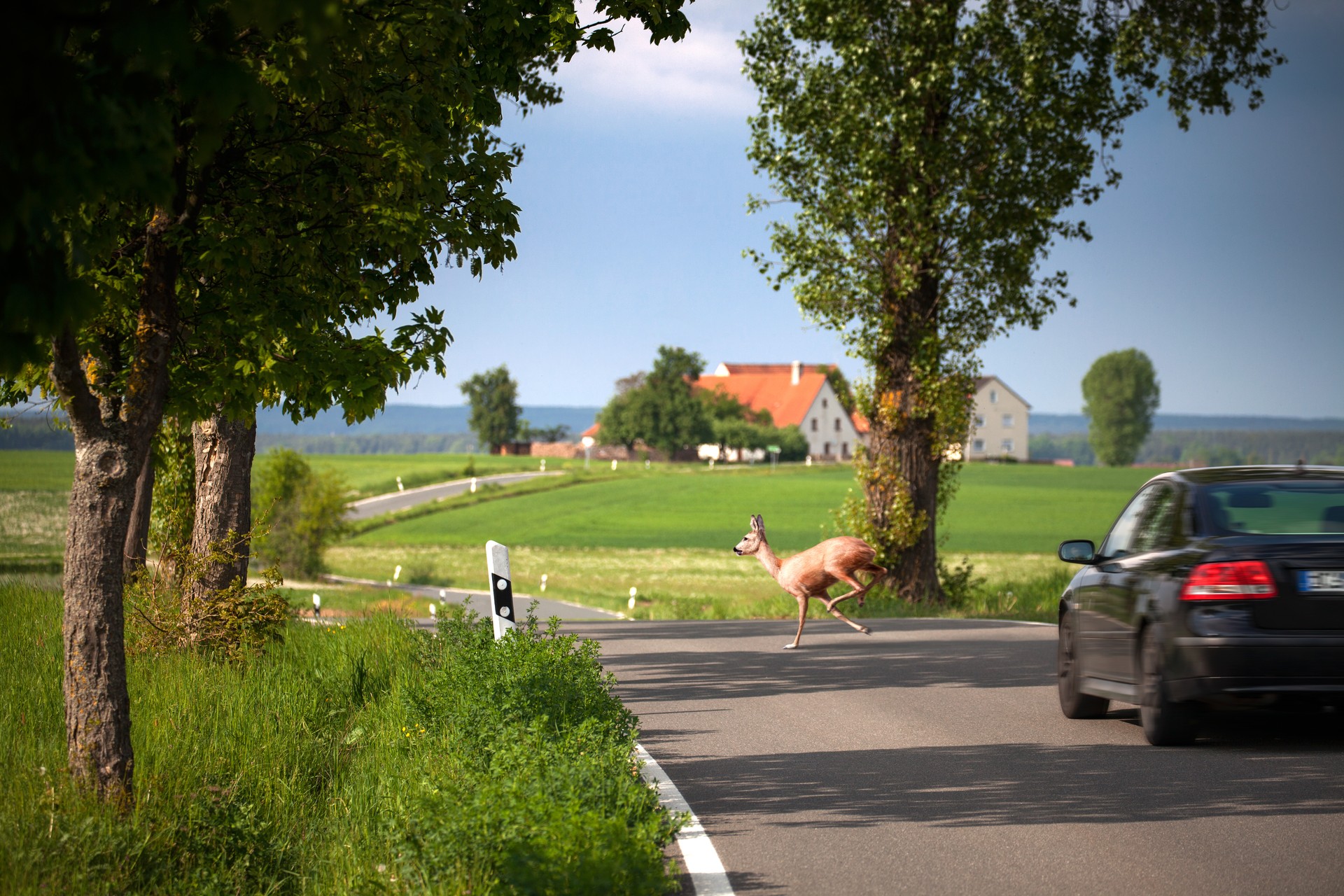


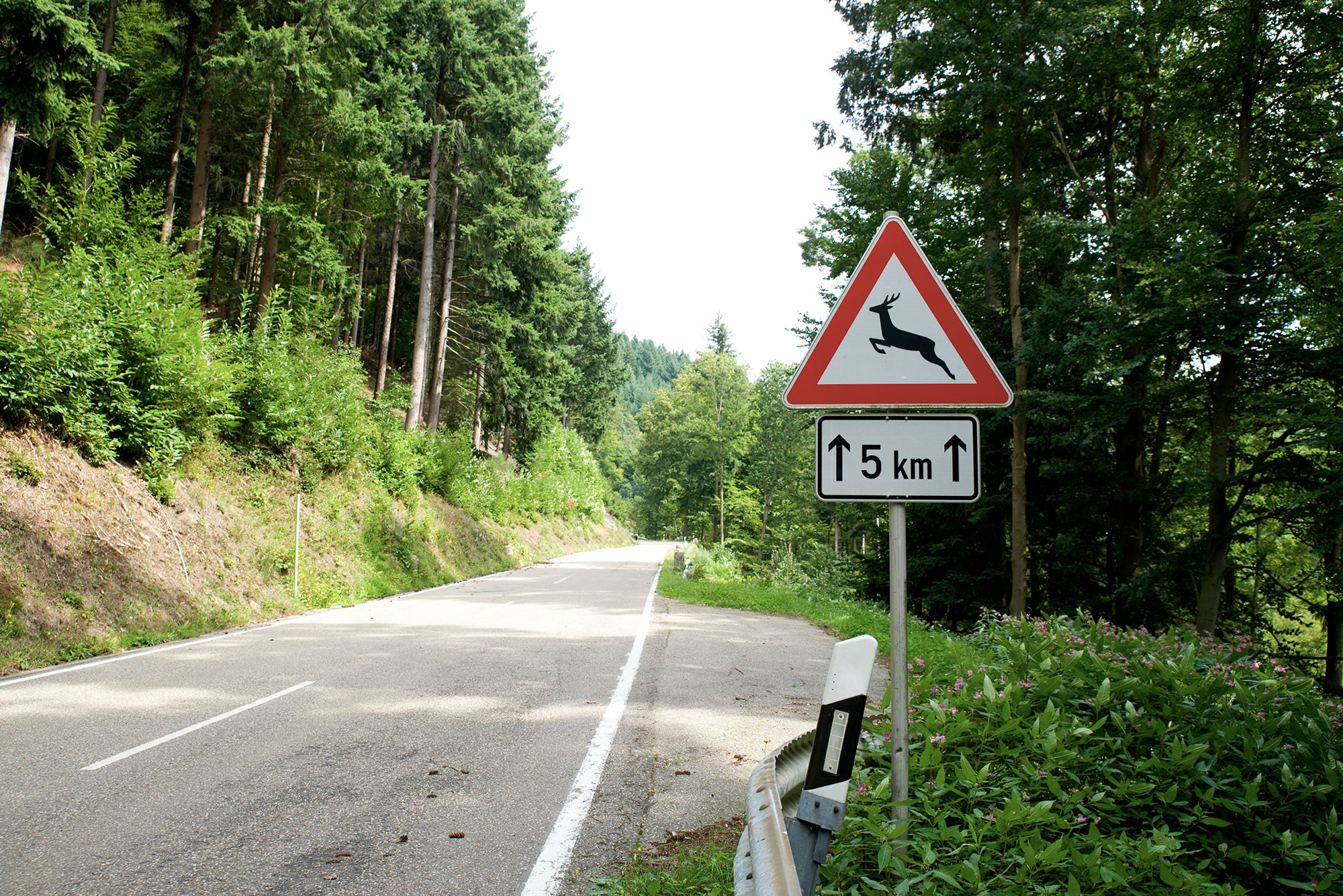
Fig. 1: Wildlife Warning Sign! (Photo: VRD - stock.adobe.com)
The highly developed, dense transport network, the growing number of vehicles, and the increasing total distance travelled are leading to a steady increase in habitat fragmentation [8, 7]. This also increases the risk of vehicle collisions involving wildlife, which have been consistently high for years [2]. The detailed description of the location, where the wildlife-vehicle collision occurred is absolutely essential for the implementation of effective mitigation measures to combat the enormous number of wildlife-vehicle collisions. However, collisions with wildlife have up to now neither been recorded on a comprehensive basis, nor according to a standardised system.
In an analysis of all accidents using data from official accident statistics on main state roads, the proportion of accidents involving obstacles on the carriageway (which includes all wildlife-vehicle collisions) is stated at just 1% [4]. The number of unrecorded accidents is therefore considered to be much higher. The German Hunting Association [Deutscher Jagdverband] estimates the number of unrecorded wildlife-vehicle collisions to be around 1 million per year, while the authors of a Portuguese study [3] speak of 3 million wild animals being killed by road traffic in Germany each year.
Documentation of wildlife-vehicle collisions
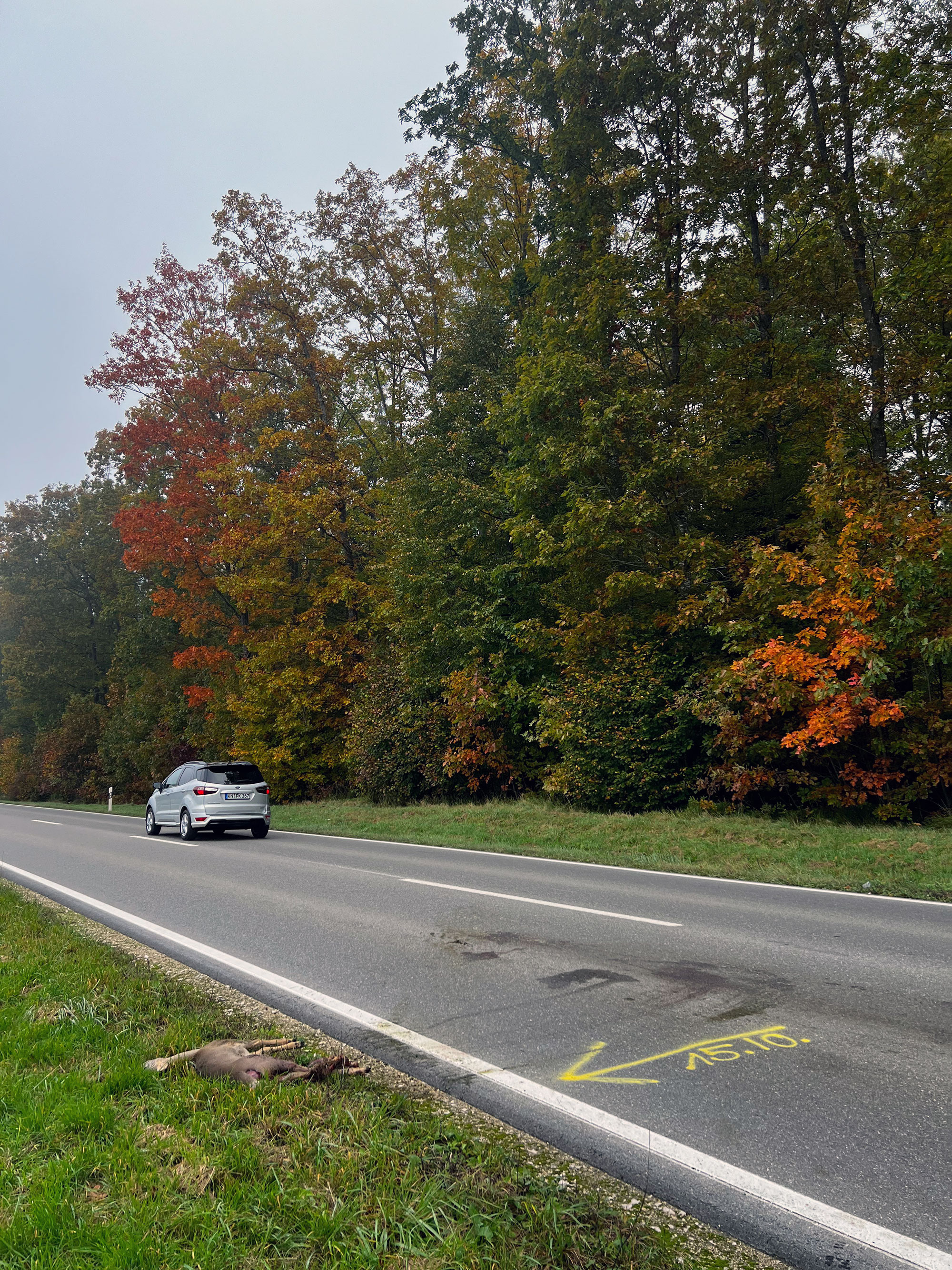
Fig. 2: Dead roe deer at the side of the road - on the tarmac the police marking with the date of the accident is visible (15.10.) for the hunter responsible for the area. (Photo: FVABW/Märtz)
Until now, wildlife-vehicle collisions have been reported in various ways and usually only by the people involved. On the one hand, these are the people who want to have the damage to the vehicle reimbursed by their car insurance and the police who are called to the scene of the accident; and on the other hand, it is the hunters and also local foresters who document wildlife-vehicle collisions in their hunting records. If a driver has no comprehensive insurance for wildlife wildlife-vehicle collision, for example, or if only minor damage has been caused to the vehicle, or if a criminal or administrative offence has been committed, e.g. drunk driving, accidents involving wildlife have up to now only rarely been reported to the police in Baden-Württemberg. As a result, only a fraction of the wildlife-vehicle collisions that have occurred have in fact been documented [1]. In hunting records, accidents involving wildlife may well have been documented, but without specifying the coordinates. Another means of documentation, the “Tierfundkataster”, a register of animals found dead on roads, allows for the exact recording of a wildlife-vehicle collision, but the system is based on voluntary input.
The reporting channels also vary: local residents often contact the hunters or local foresters directly, without informing the police. In other cases, the police or the municipality are notified, but not the hunter. This, therefore, leads to different numbers of wildlife-vehicle collisions on a given stretch of road. And it is rarely possible to find all reported wildlife-vehicle collisions in one set of statistics.
“Wildlife Portal” for hunters vs. “Euska” system for police
With the introduction of the “Wildlife Portal” on 1st of April 2023 in Baden-Württemberg, it is now mandatory for the first time to document wildlife-vehicle collisions directly in a central online portal, giving precise details about the location, animal species, time and date (www.wildtierportal-bw.de). Since 28th of April 2021, police stations have also for the first time been documenting wildlife-vehicle collisions involving only material damage, without personal injury (category 5), in the police’s internal Euska system. With this change, comprehensive data on wildlife-vehicle collisions, including the geographical location and location-specific knowledge, is now for the first time available for Baden-Württemberg.
However, the data on wildlife-vehicle collisions are thus stored separately in two independent systems. All collisions that occur in a hunting district, including those recorded by the police, must appear in the hunting statistics as fallen game. It must, therefore, be assumed that all wildlife-vehicle collisions recorded by the police also appear in the hunting statistics. However, a local and temporal comparison of the data recorded by hunters and the police for the 2022/2023 hunting year on wildlife-vehicle collisoins does not reflect this consequence. No collisions recorded by the police has a counterpart recorded by hunters involving the same animal species within a 50 metre radius and within two hours before or after the collision was recorded by the police. It remains to be seen how this trend will develop in the future and to what extent the two systems will converge in terms of data accuracy.
Since the start of the documentation of wildlife-vehicle collisions involving only material damage by the police in April 2021, the number of wildlife-vehicle collisions recorded by the police each year has averaged at about 21,000, while the Wildlife Portal has on average recorded 24,000 yearly. Roe deer is the animal most frequently involved in vehicle collisions in both recording systems, followed by red foxes and badgers/wild boar.

Fig. 3: Wildlife-vehicle collisions from the Wildlife Portal (left) and the police (right) showing the average number of collisions involving wildlife per animal species per year. The ungulates roe deer, red deer and fallow deer are grouped together in the police documentation.

Fig. 4: Distribution of road stretches with high numbers of wildlife-vehicle collisions (WUS) in 2021 (red) and 2022 (blue) in Baden-Württemberg based on the Euska system (police-recorded). Road stretches with high numbers of wildlife-vehicle collisions occurring in both years are highlighted as constant over two years (black with yellow border). A road stretch with high numbers of wildlife-vehicle collisions in this context is defined as a stretch of road where at least 6 collisions involving wildlife occurred per year, with a maximum distance of 200m between them (s. Final report Märtz and Brieger, 2023).
Using the police data, it was possible to identify road sections in Baden-Württemberg with particularly high numbers of wildlife-vehicle collisions (Fig. 4). These are shown in an interactive map on the FVA website.
The wildlife-vehicle collision data recorded in the Wildlife Portal is already improving the scientific assessment of the occurrence of wildlife-vehicle collisions. Not only can annual trends in wildlife-vehicle collisions be mapped, but with the professional expertise of hunters, it is now, for example, possible to map annual trends separately for animal species and their age and sex (Fig. 5). This reveals long-suspected correlations, such as the fact that the incidence of collisions involving roe deer follows the reproductive cycle, and that roe deer of different sexes and ages are affected to varying degrees by wildlife-vehicle collisions at different times of year.
Geo-referenced information on the location of collisions involving wildlife can also be used to make mitigation measures more effective. Based on information on when, how many, and which wildlife species are involved in clusters of collisions involving wildlife, recommendations for mitigation measures can be developed more specifically, and tailored to the relevant stretches of road. It is, therefore, essential to have as complete a picture as possible of the wildlife-vehicle collision situation. The example of the Böblingen district shows that the stretches of road with clusters of collisions involving wildlife documented by the police and hunters differ greatly from one another (Fig. 6). A detailed view shows this for a small section of the district in which few wildlife-vehicle collisions were recorded by the police. If only these wildlife-vehicle collisions recorded by the police were looked at, this would not be highlighted as a road stretch with high numbers of wildlife-vehicle collisions
![emporal course of the number of accidents per day involving roe deer, differentiated for bucks, does/yearlings and fawns over the course of the year. The categorisation according to biological season is based on [5].](/assets/FVA/Lebensraum_Wald/Wenn_die_Strasse_zum_Abschuss_beitraegt/WU_imJahr_Reh_Altersklassen_EN.png)
Fig. 5: Temporal distribution of the number of vehicle collisions per day involving roe deer, differentiated for bucks, does and fawns. The categorisation according to biological season is based on [5].

Fig. 6: Distribution of wildlife-vehicle collisions recorded by the police (blue) and by hunters (black) for the district of Böblingen in 2021 and 2022. Roads are shown as grey lines, a railway line as a black dashed line, and towns or villages are pink.
The bottom line
In the analysis of wildlife-vehicle collisions, it is essential to know the exact location of the collisions, in order to identify hotspots and respond with appropriate preventive measures. It is, additionally, important to improve the communication between the police and hunters when it comes to wildlife-vehicle collisions. Hunters should always be informed of wildilfe-vehicle collisions that happened in their hunting area. A pilot project with the Ravensburg and Reutlingen police headquarters enabled the police to access the Wildlife Portal until the end of September 2024. This allowed them to look up the contact details for the responsible hunter in the event of a wildlife-vehicle collision. The feedback was consistently positive. At the same time, wildlife-vehicle collisions have to be documented as precisely as possible with the location, date and time, by both the police and hunters. One vision for the future would be to document wildlife-vehicle collisions in a shared database operated by both the police and hunters. This would greatly simplify the work of the police and the hunting community, and contribute to a huge improvement in the data available on wildlife-vehicle collisions in Baden-Württemberg.