



As part of a large-scale joint project of the Bavarian State Research Centre for Agriculture (LfL), the Technical University of Munich (TUM) and the Bavarian State Institute of Forestry (LWF), research was conducted to find out which factors influence the use of mown meadows by roe deer does and fawns, and which methods are suitable for rescuing wild animals.
The project was divided into four sub-projects:
- Green Wave (TUM): This sub-project investigated the relationship between the birth dates of roe deer fawns and the spatio-temporal development of plants in spring.
- Doe behaviour (LWF): The focus here was on the roe deer does’ choice of habitat for fawning and rearing their fawns, as well as the factors that influence their behaviour before, during and after giving birth.
- Fawn behaviour (TUM): A better understanding of the behaviour of fawns is essential in order to derive suitable protective measures to prevent deaths during mowing.
- Detection and deterrence (LfL): In addition to addressing wildlife biology issues, this sub-project tested and evaluated the use of technical aids for safeguarding wildlife.
The close links between these sub-projects meant that comprehensive insights could be gained into the behaviour of roe deer during the fawning season, and possible protective measures for fawns.
Sub-project 1 (TUM): Green wave
Sub-project 1 focused on the birth dates of roe deer fawns and their dependence on the spatio-temporal development of plants in spring.
Wildlife rescuers support researchers
For the best possible and most precise description of the distribution of roe deer fawn birth dates, extensive data is essential. We are grateful to active participants in fawn rescue in Bavaria for helping us to collect a large set of data. Sightings of fawns and fawn-free areas could be reported via the online form “LimeSurvey” and the citizens' portal “Wildtiere in Bayern” (Wildlife in Bavaria), as well as by e-mail and fax. In contrast to systematic or random sampling, the data collected in this way may be distorted: the wildlife rescuers only recorded data when searching areas during mowing measures. Nevertheless, this extensive data is very valuable. In order to make optimum use of it for the “Green Wave” study (the name of the sub-project refers to leaf budding and the beginning of the vegetation period), various modern statistical methods from the field of artificial intelligence (machine learning) were tested in order to be able to derive the correct fawn birth dates and their distribution.
Figure 1 shows a comparison of systematic and mowing-related survey methods and their influence on the modelled distribution of the birth dates. Our simulation study showed that data collected during mowing measures can distort the correct distribution of birth dates by an average of almost five days. With our modern approaches, we were able to reduce this distortion. These results were confirmed by tests on Bavarian data and by comparison with the fawning times of radio-tagged roe deer does (Kauffert et al. 2023).
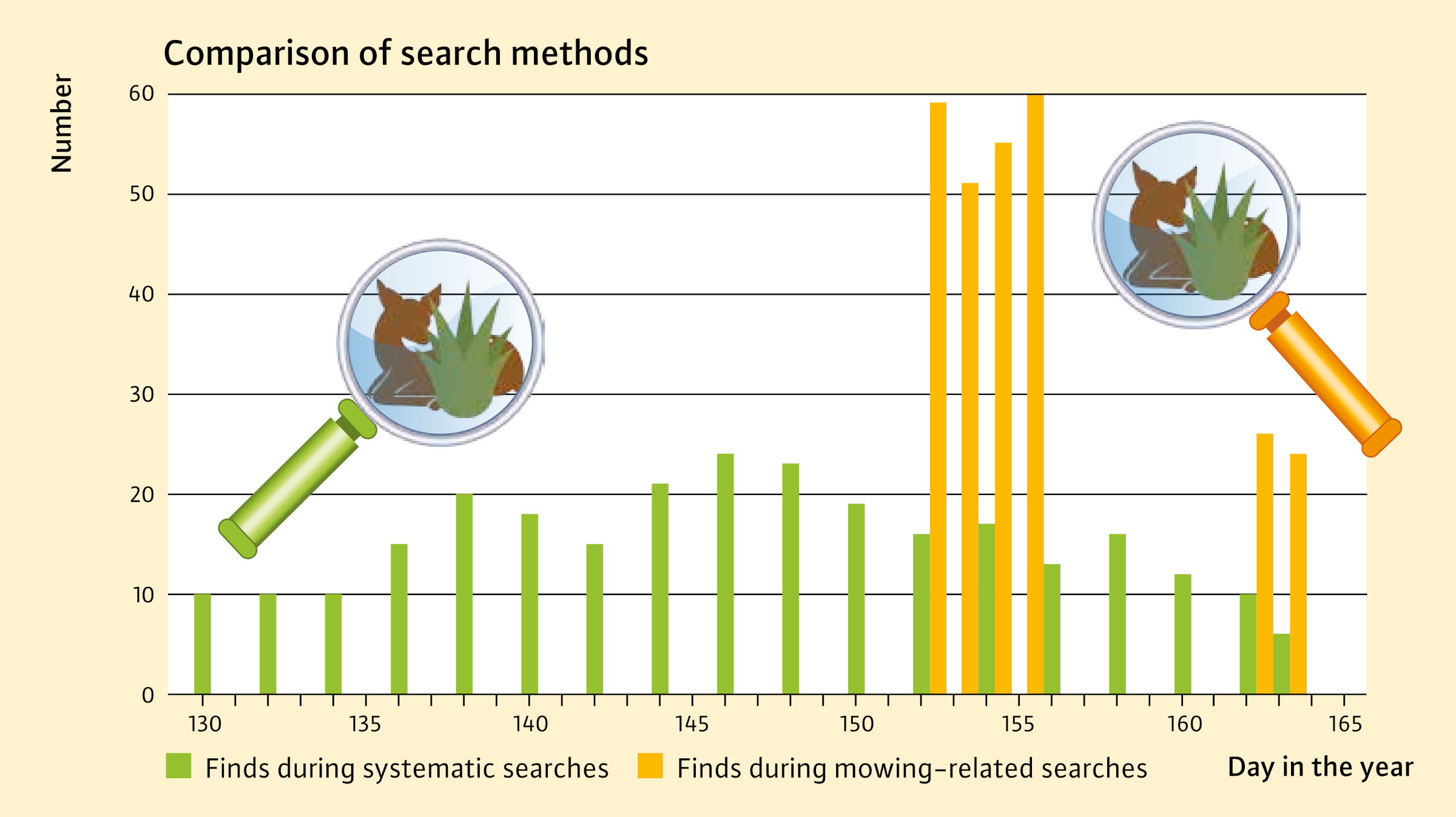
Fig. 1: Presentation of the study concept using simulated data: Comparison of the effects of systematic searches and mowing-related searches on the distribution of fawn finds. Source: Kauffert et al. 2023, modified
Fawning times in Europe
Fawn birth dates vary depending on the region. Studies show that these variations depend not only on latitude and altitude, but also on the local plant phenology and food availability (Peláez et al. 2020). In our large-scale European study, we investigated fawning dates in relation to seasonality and variations in climate and plant growth. In addition to the expected later birth dates at higher altitudes and further north, we were able to demonstrate for the first time a trend towards earlier births from east to west in Europe, which is due to the more temperate climate of the Atlantic.
Embryonic diapause as the key to adaptation?
Among all ungulates, the roe deer has a unique reproductive strategy. After the rutting season in July/August, the blastocyst undergoes a so-called diapause, during which cell growth slows down considerably. It is not until winter (November - January) that the embryo finally implants itself and begins to grow more rapidly. This delayed implantation could be the decisive factor for more flexible birth dates under changing environmental conditions. Despite the variation in fawning dates in Europe, their short-term adaptation to environmental influences remains controversial. To complicate matters further, the exact causes and processes of the end of the diapause in roe deer are not yet fully understood (Van der Weijden et al. 2021). In collaboration with the Wildlife Biology and Wildlife Management Working Group at the TUM, we found indications for the first time that, at population level, the end of the embryonic diapause may be influenced by environmental factors. A longer vegetation period in the year of the rutting season increases the likelihood of the embryo implanting earlier in the autumn/winter, meaning that the fawn could also be born earlier.
Sub-project 2 (LWF): Doe behaviour
As described in the first sub-project, various factors influence the timing of fawning within a population. In the second sub-project, questions relating to the behaviour of the does were addressed. In particular, we investigated how the does choose their fawning and rearing habitat and where their preferred fawn bedding sites are located. We also explored the factors influencing the behaviour of the does before, during and after fawning, and what effects deterrence methods might have.
The perfect bedding-down site
Detailed knowledge of where the fawns’ bedding-down sites are located in open country could make the search before mowing much more effective. To this end, data from across Bavaria were analysed at two levels in collaboration with the Ecoclimatology department at the TUM: at the landscape level (= choice of rearing habitat by the doe) and at the field level (= exact choice of bedding-down site of the fawn). At the landscape level, it was found among other things that fawns were more frequently bedded down on meadows in structurally rich landscapes. If many fields in the surrounding area had already been mown, the probability of fawns being found in the still unmown areas increased considerably. At the field level, i.e. when choosing the specific bedding-down place within the field, the fawns favoured bedding-down places that were further away from roads and forests. Sites with good visual cover were preferred, so that fawns were less likely to be seen by predators (Baur & Kauffert et al. 2023, LWF-aktuell 3/2024). In short, the doe decides on the choice of field and favours structurally rich landscapes; the fawn decides where exactly to lie within this field and tends to avoid roads, paths and forest edges.
Behavioural changes at birth
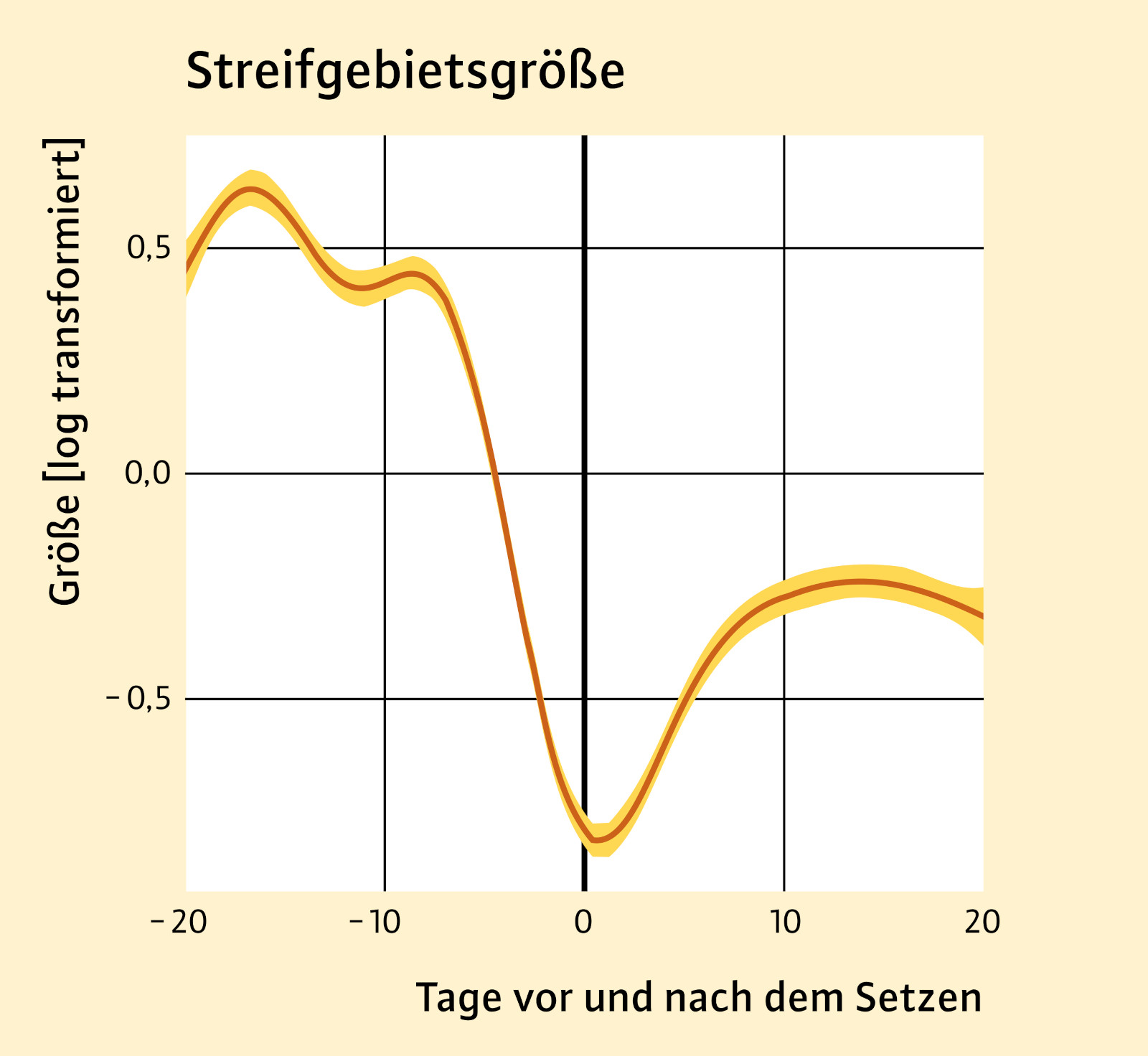
Fig. 2: Change in size of home range (in ha) of the radio-tagged roe deer does 20 days before and after fawning, centred around the date of fawning (= day 0).
In three study areas in Middle Franconia and Upper Bavaria, does were caught and fitted with telemetry collars. These regularly recorded GPS positions, making it possible for the spatial use and behaviour of the does to be studied. In general - and therefore also during the fawning season - the tagged animals showed a high degree of individuality in their behaviour. Nevertheless, we were able to identify at least one pattern: a few days before fawning, the does moved significantly less. For fawning and in the first few days thereafter (bonding phase), the does reduced the size of their home range by almost 70 % (Figure 2).
Insights into habitat use
By linking the GPS positions with geodata describing the habitat, preferences in habitat use could be identified. Only minor differences were found in the three phases studied: before, during and after fawning. The does preferred to give birth within their usual home range, i.e. they tended to fawn in a habitat they were familiar with. In practice, this means that if a doe is regularly observed in an area before fawning, there is a high probability that it will also use this area for rearing its fawn and that fawns will have been deposited in these areas. This site fidelity indicates that all of the doe’s requirements in terms of protection and food availability are already being met there before she gives birth. Before, after and during the fawning period, the radio-tagged does spent most time in the forest. Before fawning the does were more frequently to be found in open country than after the birth of their fawns. This is astonishing, as the cover potential was theoretically better in open country than in the forest.
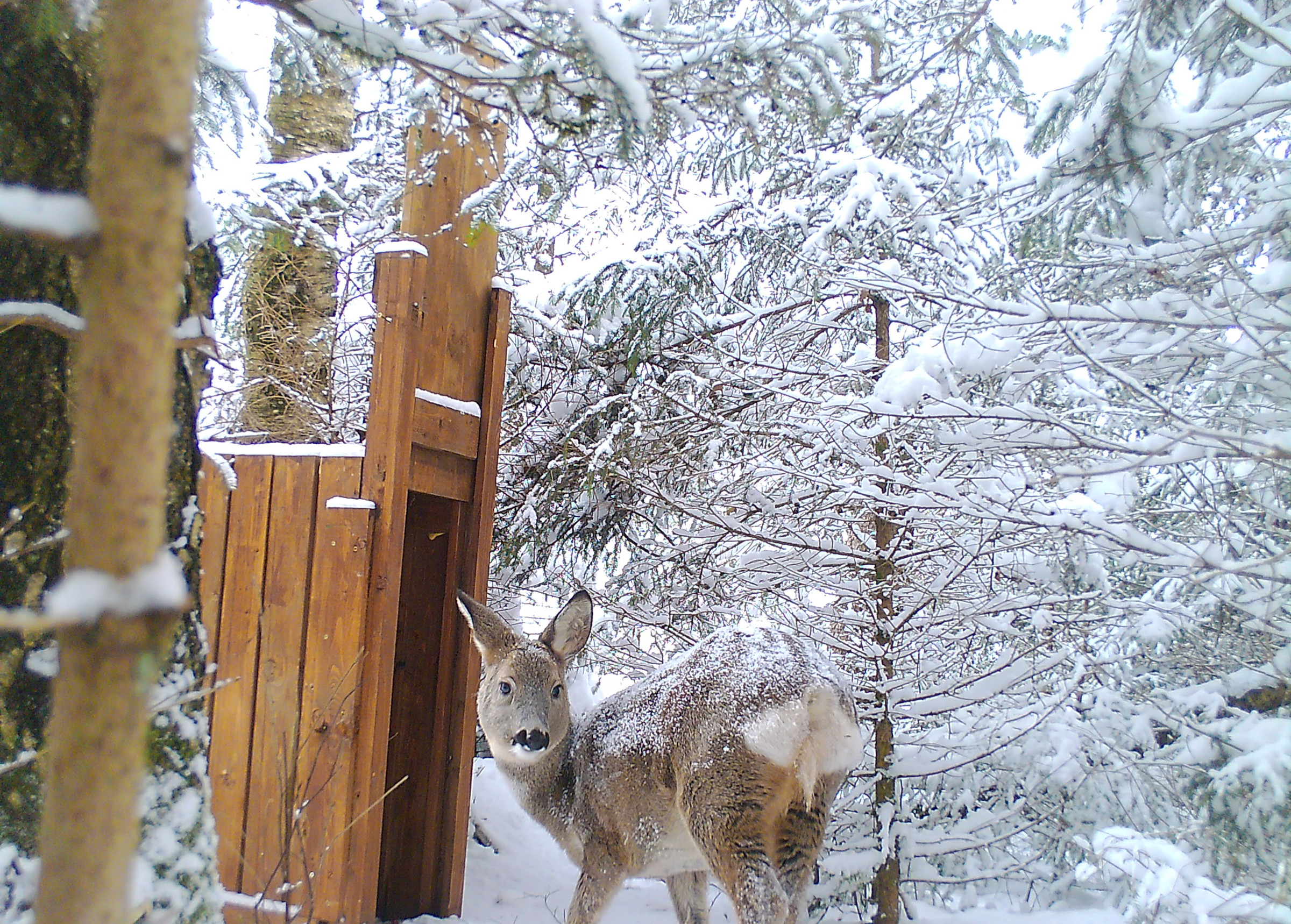
Fig. 3: So that behaviour of the does during the fawning season could be studied, they were caught using a box trap like the one here and fitted with a telemetry collar. This doe was somewhat sceptical and first checked her surroundings. Photo: LWF
The art of caring for its offspring
Apart from the choice of rearing habitat, a further factor that influences the survival and development of fawns is the doe's caring strategy. The roe deer fawn is a “hider”, which means the doe and fawn are separated. The trick for the doe is not to betray the fawn’s hiding place to predators and still be close enough to the fawn to defend it if necessary. Based on recorded telemetry data of does and their fawns (see third sub-project), the does’ caring strategies were analysed for the first time. Our results show that contact between does and fawns was strongly orientated towards the activity patterns of the does, and took place mainly in the morning and evening hours. In the first 14 days of life, fawns also spent more time in unmown grassland than their mothers. The does, on the other hand, spent more time in the forest than their fawns. During mowing measures, we therefore recommend also searching for fawns in areas where no does have been observed before. It is not unlikely that they have left their fawns in open country and are themselves standing a short distance away in the forest.
Reactions to deterrence methods
Do does still venture on to areas with wildlife deterrents to collect their fawns? The experiments (n = 34) showed that the does did not react in relation to the distance from the area with wildlife deterrents. The home ranges of the does only increased slightly for a short time. After just 24 hours, however, no differences were discernible. This suggests that it was not the deterrents themselves, but the human presence during their installation and removal that had a disruptive effect. We were unable to confirm that roe deer completely avoided the areas with deterrents.
Sub-project 3 (TUM): Fawn behaviour
A better understanding of fawn behaviour is essential if we are to derive measures to reduce mowing deaths.
Fawning time and growth
To determine the fawning period in Bavaria, the age and sex of 1,500 fawns were recorded between 2020 and 2023, their body measurements were taken, their weight was determined, and the number of siblings was documented. The age of fawns on the day they are found can be determined accurately in fawns in their first week of life based on the condition of the umbilical cord (Jullien et al. 1992). In older fawns, age can only be estimated on the basis of their behaviour and coat colour, and therefore no exact date of birth can be assigned. In order to determine the age of these fawns, they were marked with ear tags and 148 fawns were additionally fitted with GPS tracking collars. The telemetry collars made it possible to relocate the fawns easily for the purpose of re-recording their weights and body measurements in order to document their development. A linear model (GLMM) was used to analyse the growth of the roe deer fawns on the basis of recaptures (2022). The median date of birth - the day by which 50 % of the fawns had been born - was day 135 of the relevant calendar year, i.e. 15 May. Compared to earlier studies in the same areas, the roe deer fawns were born around two weeks earlier in the 2020-2023 period than reported by Rieck (1955) (Figure 4). Rieck (1955) determined 1 June as the median fawning date (day 152) for the period from 1938 to 1945. Our results show that 95 % of the fawns had already been born by 1 June (comparative studies shown in Figure 4).
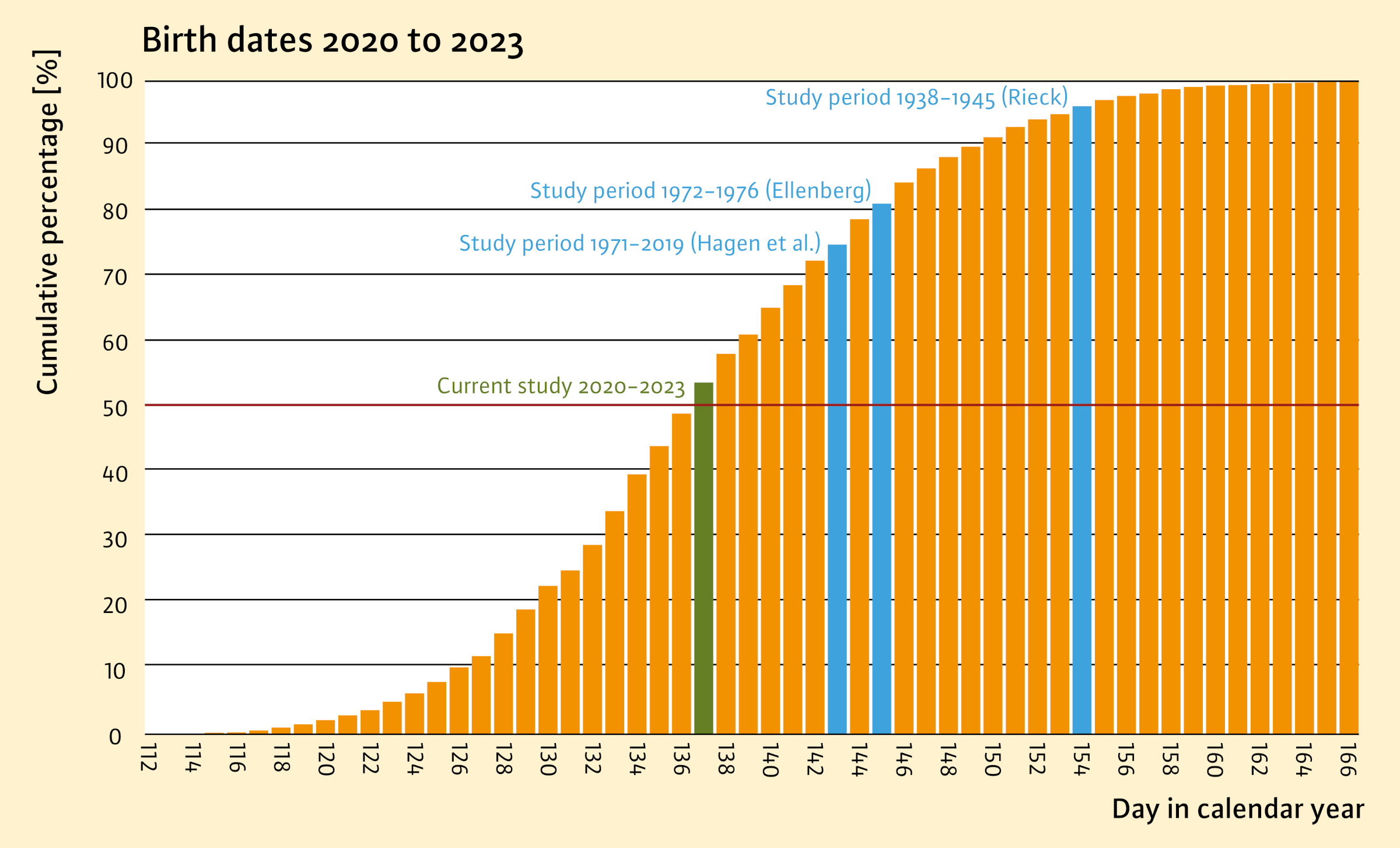
Fig. 4: Cumulative percentages of birth dates 2020 to 2023. The red line marks half of all births (50 %). The green bar shows the median date of birth in the current study; the blue bars show the dates of comparable studies in relation to the current study from Stehr et al. 2024 (in review).
Reaction to game deterrents
Game deterrents are also used to scare fawns out of areas that are to be mown. In practice, there are many different game deterrent models. A total of 107 trials were carried out to investigate the effect of the deterrents. Most took place on grassland, followed by cereal fields, whole-plant silage fields and set-asides/fields left for game. The “plastic sack” (see Figure 7), “LARS game rescuer”, “smoke detector” and “removal/scaring out” deterrence methods were tested over a period of 24 hours. A total of 36% of the trials were successful: in these cases, the fawn left the area permanently. The plastic sack method achieved a success rate of 32%, LARS game rescuer 35%, and the smoke detector showed the best success rate at 50%. However, the fawns often left the areas where they had been disturbed for a short time, but returned within the trial period (Figure 5). 12 hours after the end of the trial, 50 % of the fawns were already back in the disturbed area. The results show that deterrents can primarily be used as a support measure, and they must be set up immediately before mowing. The age of the fawns, the vegetation and the number of deterrents had no influence on the success of the trial or on the time at which the fawns left the trial area for the first time.
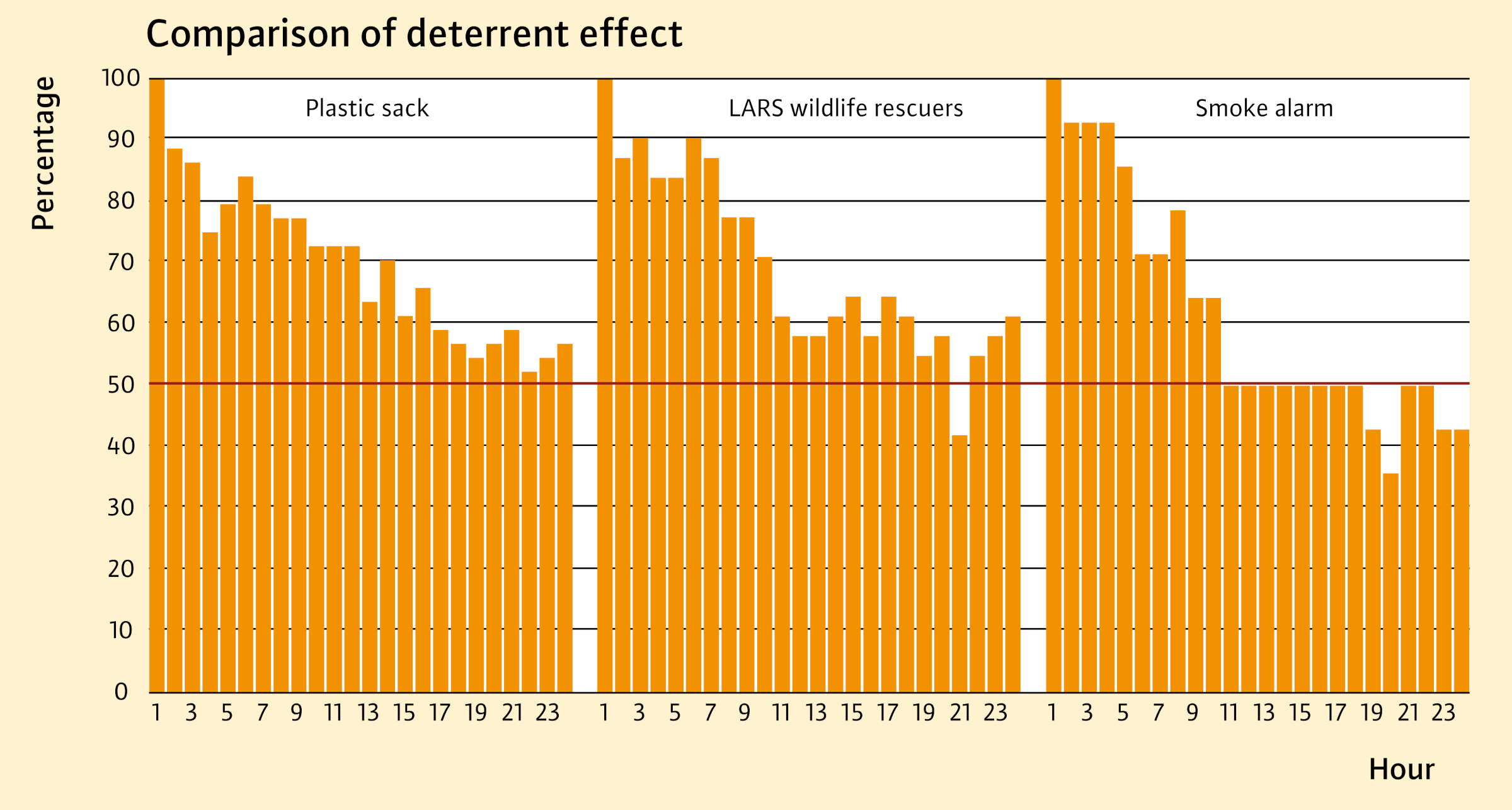
Fig. 5: Comparison of the effectiveness of the deterrence between the test methods
Behavioural changes in the roe deer fawns
In the first few weeks of life, fawns are left hidden by their mothers. In order to determine the point at which fawns begin to increase their radius of movement, we analysed their “step lengths” (distance between two GPS points) for the first time using data from fawns fitted with GPS-transmitters. The fawns' collars recorded their position every hour during the first 8 weeks of life. In order to analyse the distribution of the step lengths over time, these were grouped into weekly intervals. From the fourth week of life, the step lengths increased significantly and the fawns began to extend their radius of movement and become more active. This provides insights into behavioural changes in fawns during the dangerous first weeks of life when spring mowing takes place.
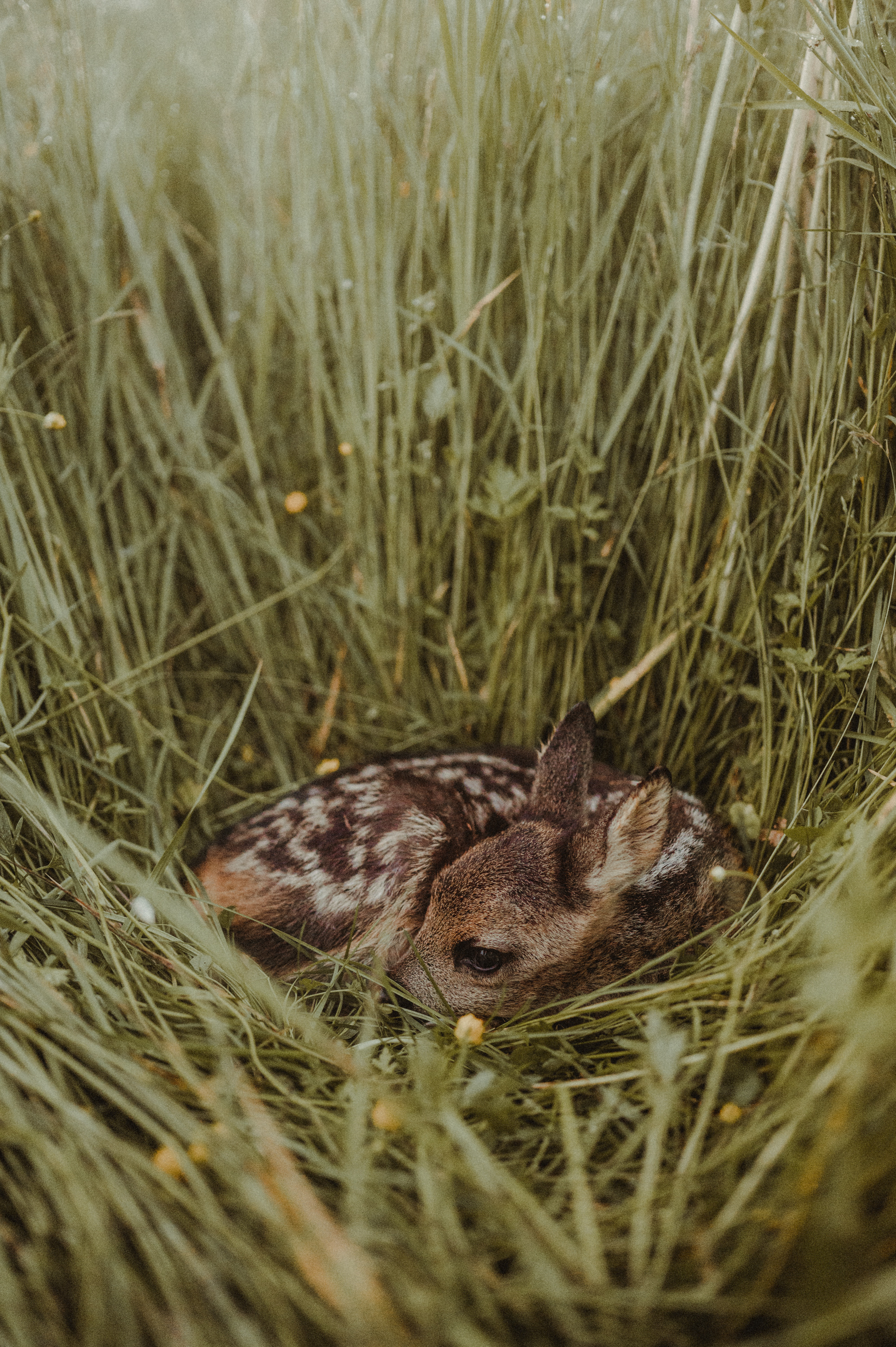
Fig. 6: Roe deer fawn, hidden in the grass. Photo: Alissa Lüpke
Sub-project 4 (LfL): Detection and deterrence
As well as addressing wildlife biological issues concerning the behaviour of roe deer during the fawning season, the LfL project team also focused on the testing and use of technical aids in the context of wildlife rescue.
Legal background
Both at federal level and in some cases at state level, there are legal requirements for the protection of fawns and wild animals during mowing. These requirements are to be found in the areas of animal welfare law, hunting law and nature conservation law. Firstly, the [German] Animal Welfare Act (TierSchG) stipulates at national level that the killing of vertebrates without good reason is prohibited. This includes accidental killing through mowing. Secondly, the Federal Hunting Act (BJagdG) specifies that the tracking, pursuit and trapping of wild animals are considered to be components of hunting, and that the consent of the “person authorised to hunt” is thus required in all cases when searching for and rescuing fawns. In terms of nature conservation law, there is currently no uniform federal regulation, but there are state-specific regulations that generally prohibit mowing from the outside of an area inwards for areas above a certain size. In Bavaria, for example, this applies to areas larger than 1 hectare.
Toolbox measures
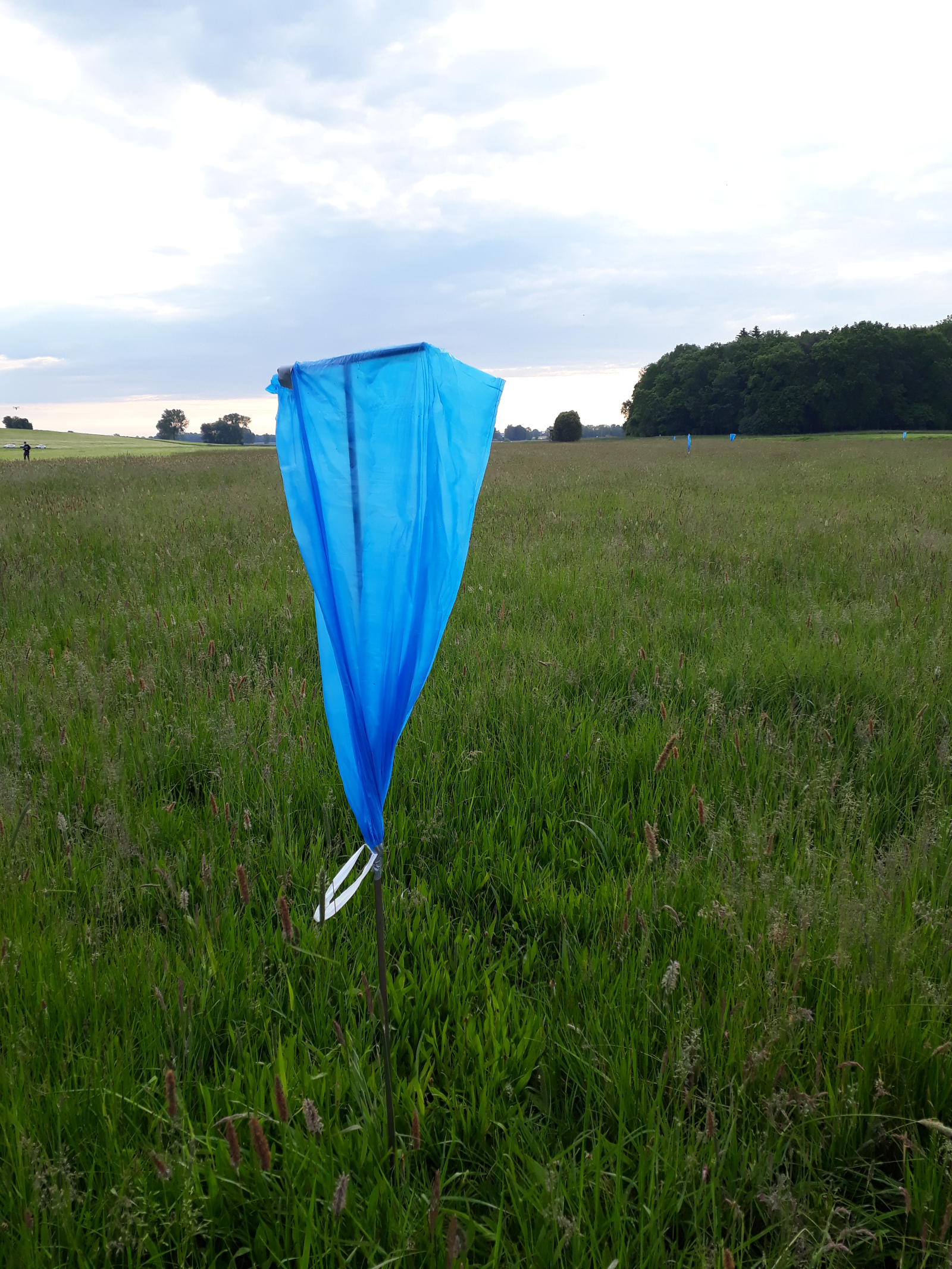
Fig. 7: “Plastic sack” deterrence method. Photo: Sophie Baur (LWF)
When mowing grassland and forage areas, farmers should therefore take appropriate measures to protect roe deer fawns and wildlife and, if necessary, make adjustments during mowing. The measures currently available are summarised in the LfL’s mowing etiquette guidelines “Mäh-Knigge der LfL” (available online (German only)) .
When implementing measures to protect roe deer fawns and wildlife, care must be taken to ensure that they are appropriate for the wild animals present in the area, the area itself, the vegetation to be mowed and the planned time of mowing, and that they take into account the available resources such as the number of wildlife deterrents or personnel available. One of the key factors for successful wildlife protection is timely and clear communication between all parties involved.
Phases of the fawning season
The fawning season is divided into three periods, during which different measures and combinations of measures promise success. In the first phase (until around mid-May), it is mainly young animals that are still hiding bedded down in the grass that are to be found in the areas. In the third phase (from around mid-June), on the other hand, the animals to be found are mainly animals that already flee. In the first phase, measures to track down, secure and rescue the animals are thus more likely to be successful, whereas in the third phase, measures to drive the animals out during mowing are more successful. The second phase (end of May to beginning of June) is the most difficult phase for wildlife protection, as fawns exhibiting both forms of behaviour are present in the areas. It is advisable not only to implement various different measures before mowing, but also to have a cascading series of measures in place, so that corrective action can be taken in the event of an incident during mowing.
In general, however, no measure can completely prevent the death of wild animals during mowing. Figure 8 provides an evaluation of various criteria. In the event that, despite all measures, a fawn has fallen victim to the mower, it is important to search for other fawns in the immediate vicinity (radius approx. 50-80 metres), as roe deer does usually give birth to twins, and the second fawn is often nearby.
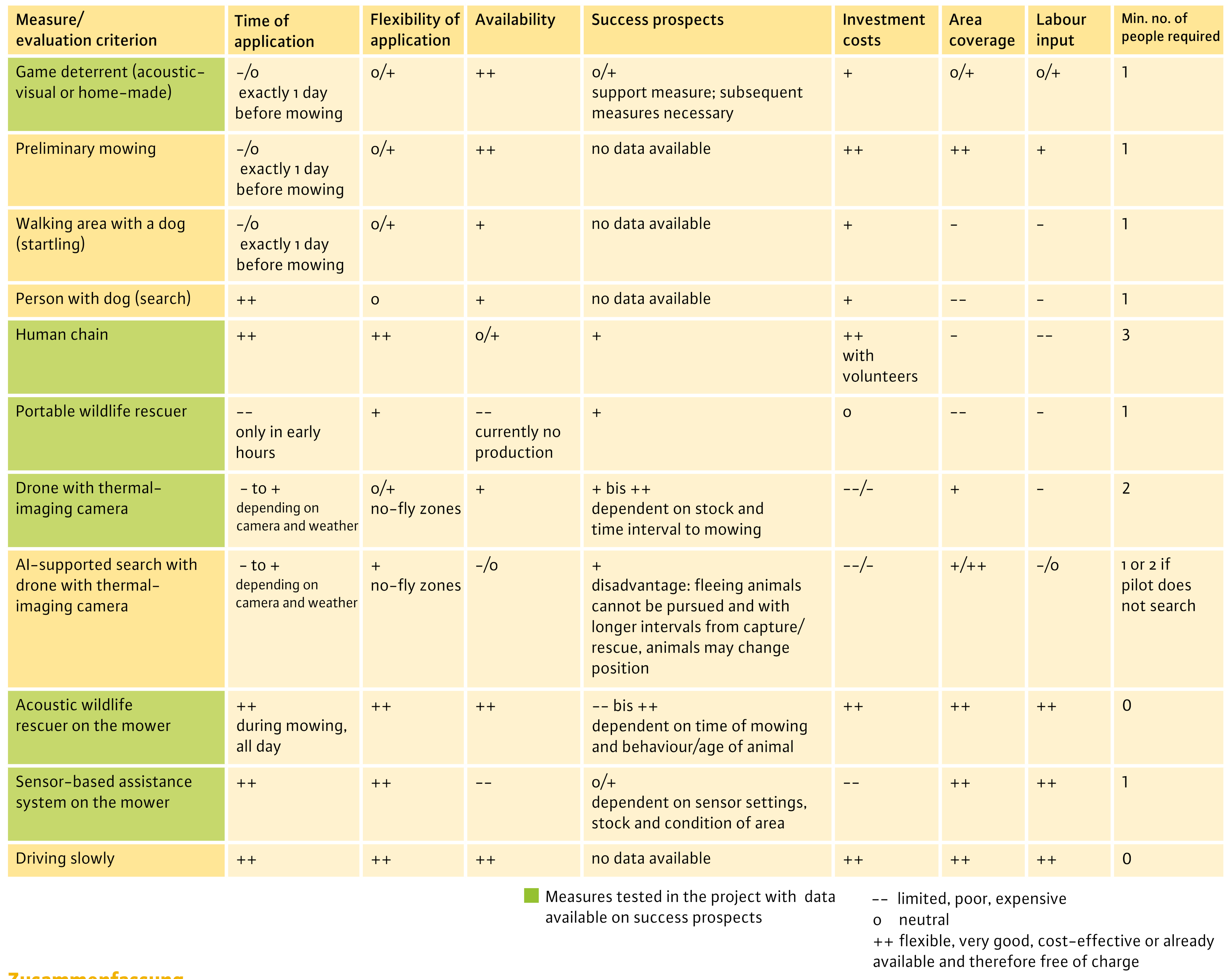
Fig. 8: Evaluation of various roe deer fawn protection measures.
Summary
Although fawns are born within a short time frame, their development and the associated behavioural changes pose challenges for wildlife rescuers at different times. Fawns are particularly likely to be found in richly structured landscapes and dense vegetation, and appropriate measures should be planned for mowing. The research project carried out jointly by the LfL, LWF and TUM was able to provide important insights into the behaviour of the wild animals and examined various technical methods. In addition, it should not be forgotten that roe deer fawns are not the only young animals - wildlife rescue also applies for other species. The data collected could also be used for future analyses and applications such as the creation of a background base map for risk scenarios.
In addition to this overview, further results have been and will be published in specialist journals and linked on the respective websites of the project partners.
The project “Reducing mowing deaths among roe deer fawns - wildlife biology risk profile and the effectiveness of detection and deterrence measures” was funded by the Bavarian State Ministry of Food, Agriculture, Forestry and Tourism (running time: 01.01.2020 to 30.06.2024, funding reference no. A/19/17) and carried out in cooperation with the Bavarian State Research Centre for Agriculture, the Technical University of Munich and the Bavarian State Institute of Forestry.
