



One objection that is repeatedly raised against the assumption of climate neutrality in the use of wood for energy is the slow growth of trees. For example, Ter-Mikaelian et al. (2015), Norton et al. (2019) and SRU (2020) refer to periods of decades to centuries that are required for the CO2 released during wood combustion to be offset by tree growth. This is referred to as the “carbon payback time”.
But how fast is the carbon cycle in the forest really? This can be calculated very easily using the results of forest inventories. We will limit ourselves here to the wood with a diameter of at least 7 cm (“Derbholz”) and leave out the much faster turnover through leaf growth and litter. We converted the timber stock of the forests and the annual wood growth based on the results of the national forest inventories with the tree species-specific densities into dry mass, and converted this in turn into the mass of carbon. To do so we averaged the growing stock from the beginning and end of the sample period (2002 and 2012). If the stock is divided by the growth, this results in a calculated turnover time of the wood mass and thus also of the carbon in Germany of 29.7 years, with a range of 26 to 34 years in the different federal states.
Figure 1 suggests that the lower the stock in the forest is, the shorter the turnover time. This correlation also seems to be confirmed when the development of the German national inventory data is analysed over several periods. In the federal states in the former West Germany, the calculated carbon turnover between 1987 and 2002 took just 25.6 years. Between 2012 and 2017, it was 31.6 years for Germany (derived from the carbon inventory).

Fig. 1: Calculated turnover time of carbon (stock/annual increment) in forests by federal state and on average in Germany as a function of the amount of carbon in the standing stock with a diameter > 7 cm (“Derbholz”).
Against this method of calculation, it can be argued that in almost all federal states during the inventory period under review, the growth was greater than the losses. The losses include trees that died as well as trees extracted for use. If the losses had been greater, the growth increment would possibly have been lower and the carbon turnover time might thus also have been longer. For this reason, the stock was also divided by the mean of growth and loss on a trial basis. On this basis, the turnover of carbon in Germany's forests then took 32.2 years between 2002 and 2012, and the differences between the federal states were smaller (coefficient of variation of 5 %). A correlation between carbon stock and turnover time is then no longer discernible.
Many are lost early; just a few store a lot
The turnover of the total carbon in the forests within just three decades will probably also surprise many foresters. After all, forest managers think in terms of rotation periods of 80 to 200 years, depending on the tree species. So how can we explain the fact that the carbon cycle is so much shorter than the harvesting age of many trees? Firstly, it should be made clear that this is a calculated turnover time. In fact, some of the carbon does of course remain in the forest area over the entire lifespan of a tree. However, for this to happen, the retention time of another part of the carbon must be much shorter if we are to arrive at an average of three decades.

Fig. 2: The allocation of the wood volume of a 120-year-old spruce with a DBH of 50.7 cm to the periods in which the wood was formed.
Let us consider a tree plantation: Depending on the tree species, it is recommended that 2,000 to 9,000 trees per hectare are planted. With natural regeneration, there are sometimes several tens of thousands of plants per hectare at the beginning of the stand’s development. In the competition for light, water and nutrients, most of these plants gradually disappear naturally or are removed in the course of young growth tending measures or thinning. Only a few hundred trees remain until the final harvest. This means that the carbon contained in the plants remains for just a short period of time in the living biomass, and not over the entire growth period of the forest stand. Let us then consider the growth of a single tree that remains in the stand until the final harvest: We used the SILVA simulation programme to model the development of a spruce stand on a good site. We then took a closer look at the development of the tree that, at 120 years old, came closest with its diameter at breast height to that of the stem of mean basal area in the stand. Figure 2 shows which proportions of the wood volume of this tree were formed in which age range. 52 % of the wood volume was added during the last 30 years. This means that more than half of the carbon contained in the timber (Derbholz) had not been fixed for more than 30 years. Only a fraction of the carbon was consistently bound in the tree throughout the 120 years.
Now you might think that if so much carbon is only sequestered when the trees are quite old, you could simply leave the trees standing longer and thus significantly increase the storage capacity of the forests. However, this only considers the individual tree, and ignores its interaction with its neighbours. It does not reveal the effect that leaving some trees standing may have on the loss of other trees and thus on the storage capacity of the stand. The carbon turnover time does not tell us anything about the quantity of the carbon turnover during this time. Nor does it tell us how much society should use from this cycle for material use, energy use, or in order to build up stocks in the forest. However, the slow growth of trees is not suitable as an argument for denying the climate neutrality of sustainable timber use.
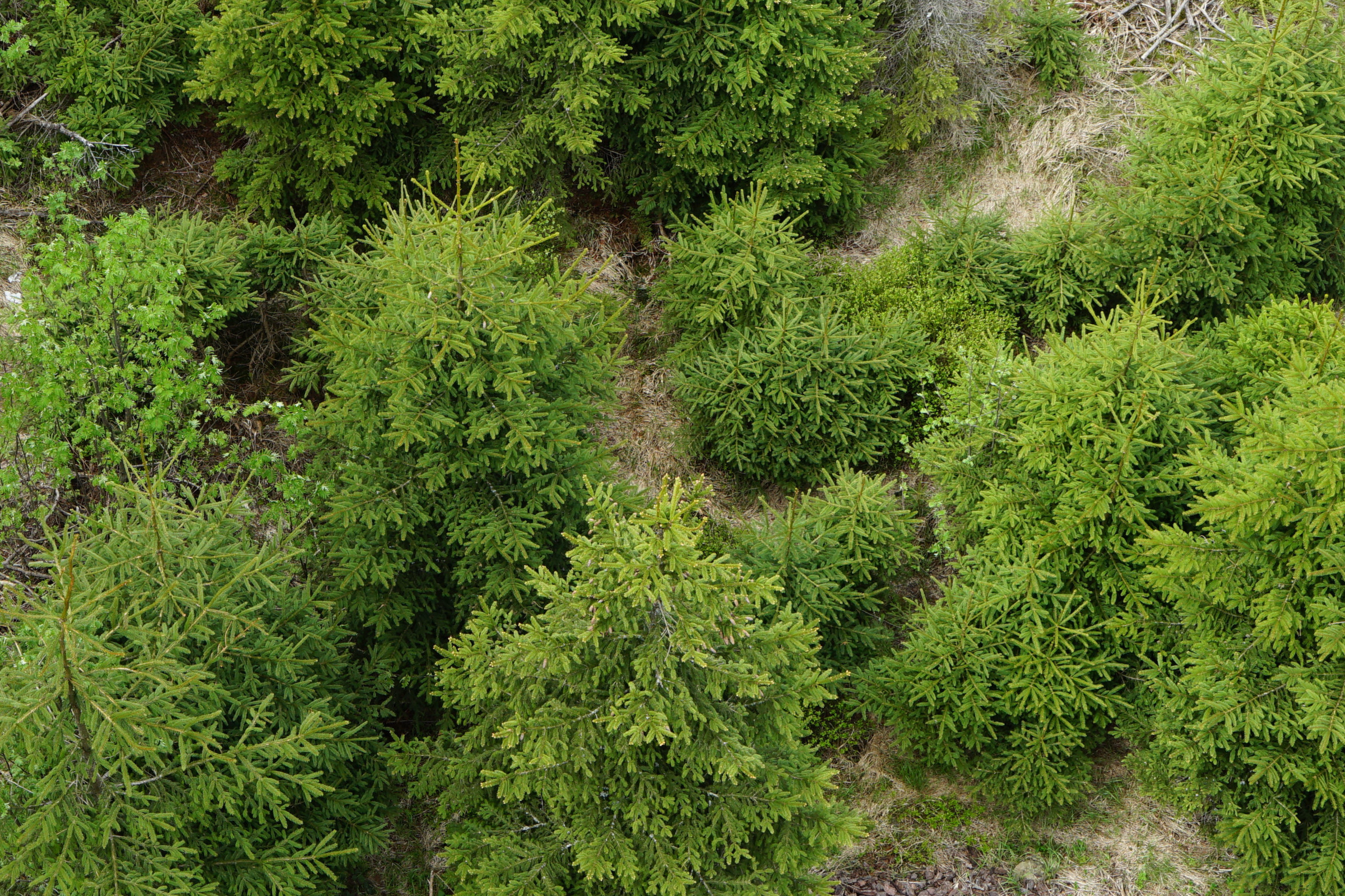
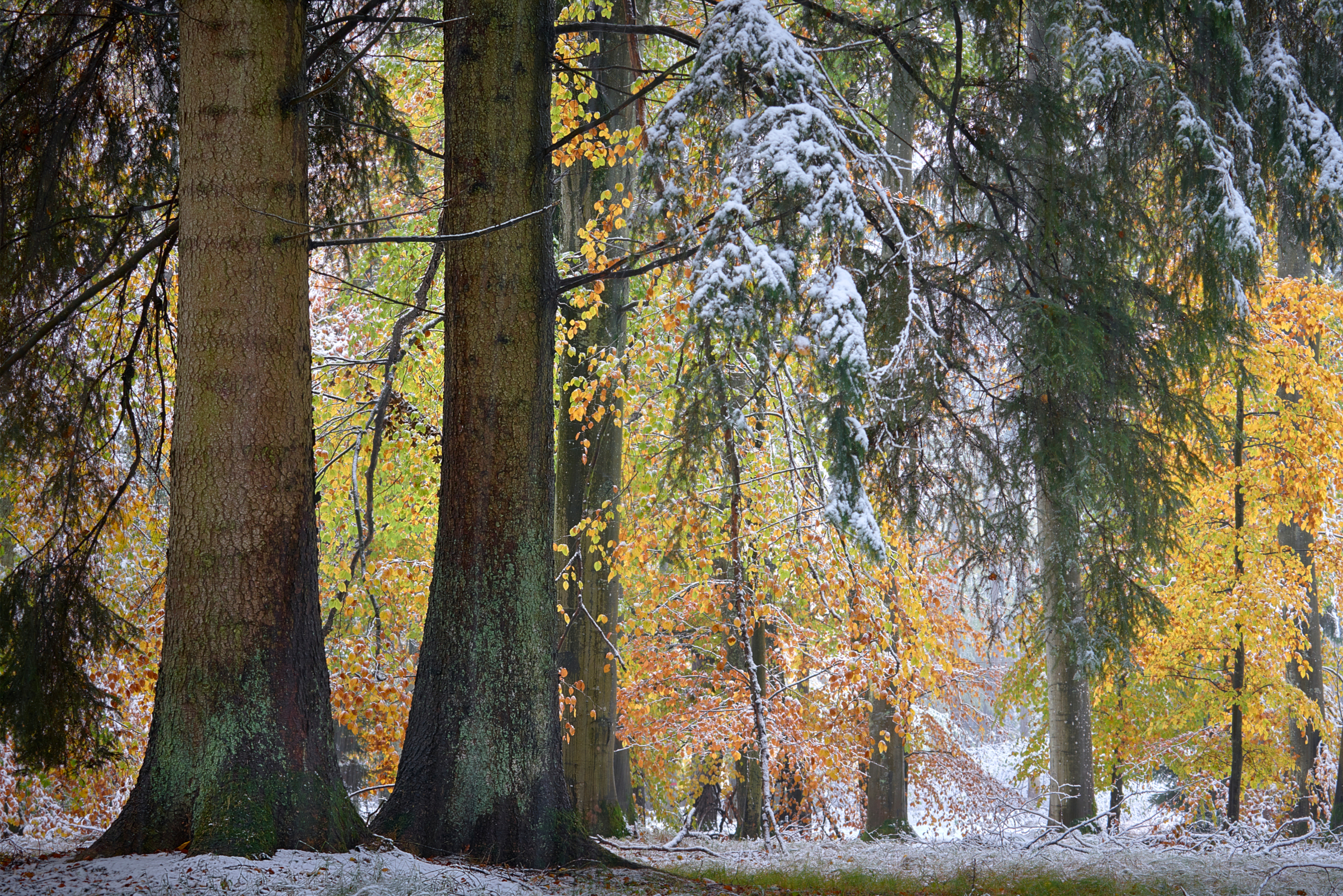
Fig. 3a and b: From many small trees, only a few large specimens remain in the life of the stand. Photos: Michael Friedel, Michael Ammich
Summary
One frequently raised objection to the climate neutrality of wood use for energy is the slow growth of trees. It would take trees decades or even centuries to bind the quantity of CO2 released during combustion. On the basis of inventory data, it is shown that in Germany, the entire carbon sequestered in the growing timber (Derbholz) of forests is replaced mathematically speaking within just three decades. The fact that the carbon cycle is much faster than the usual rotation periods of forest stands in Germany is explained by the loss of many trees over the course of the stand's life and the large proportion of wood growth that takes place in the last phase of the trees' lives. However, the carbon turnover time does not tell us anything about the quantity of the carbon turnover during this time and how much society should divert from this cycle for its various utilisation needs.
