


An example: Imagine walking through a beautiful forest on a sunny day. The path is beautiful, and you are looking forward to the rest of the route. Suddenly you find yourself at a barrier. A banner has been suspended across the path, with warnings such as “Danger to life!” or “Caution! Tree felling in progress!”. You are quite obviously being prevented from continuing on your way. What now? How do you proceed? Do you turn around and go back? How do you find an alternative route? Let’s be honest: Who hasn’t been annoyed by an unexpected road block and secretly cursed those responsible?
Similar situations occur outside the forest, too, in fact anywhere where passersby are inconvenienced by operational works. Accompanying communication can help defuse the situation, reduce the potential for irritation and protest, and perhaps even achieve understanding. This is what we call successful “Communications for operational sites”.
Many forest owners and foresters agree that the public’s willingness to accept forestry operations is declining. Especially near towns and cities and in areas that are popular with tourists, the demands for recreation are high, and calls for unspoilt nature are loud. Effective communications for operational sites are particularly important here, as protests are likely.
The Forestry Department at the Office for Food, Agriculture and Forestry in Tirschenreuth-Weiden in the Oberpfalz region (AELF TW) has developed a set of signs with interchangeable elements, and a banner for use as a barrier to defuse such situations. The goals are to explain the need for the forestry measure, to foster understanding, and to reduce irritation among forest visitors.
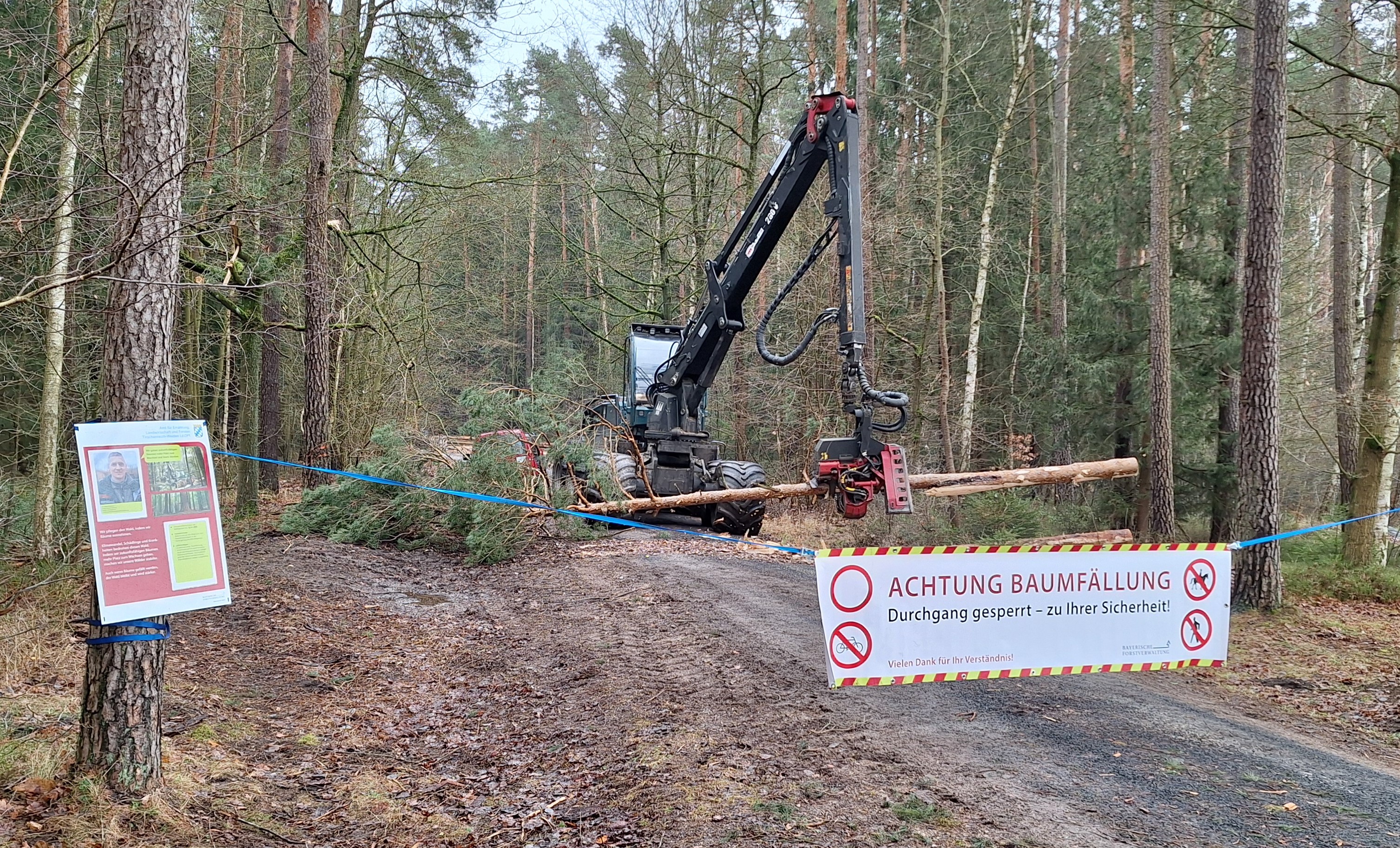
Fig.1: Set of signs with interchangeable elements and barrier banner. Photo: Martin Gottsche
The information sign - made to last and adaptable
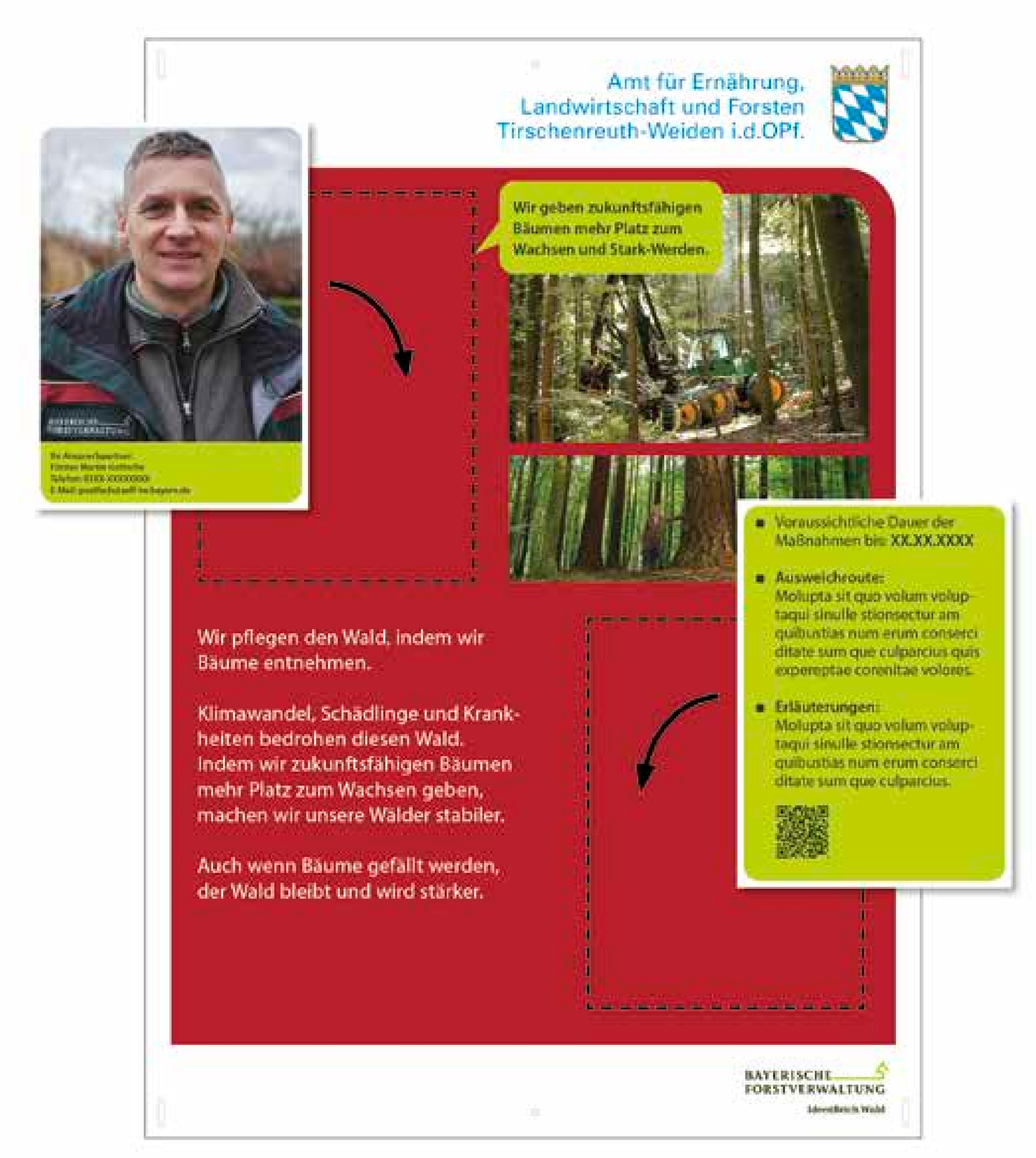
Fig. 2: The sign provides explanatory and reassuring information in the form of text and images. It explains the purpose of the measure, emphasises its justification, and provides information on the duration of the measure and on alternative routes in order to reduce disruption or restrictions for visitors. Photos: Mathias Jantsch, Bernd Stangl (Portrait)
The sign developed (Figure 2) is an aluminium sandwich panel (Dibond). Holes and slots allow it to be fastened with tension belts or screws. The format is DIN A1 (59.4 × 84.1 cm), which is large enough to be seen from a distance of several metres, and small enough to fit in any car. The material is weatherproof and lightweight.
The layout has been implemented by the graphic designer of the Bavarian Forestry Administration in accordance with the corporate design specifications of the Forestry Administration. The red used, for example, is the “forest education red”. Here, however, the red stands for warning and is designed to attract attention.
The visualisation on aluminium Dibond includes logos and theme-specific photos, a simple explanatory text, and a text-filled speech bubble. One image visualises the operational measure - it is truthful, but not off-putting. A second illustration shows the result achieved - giving a glimpse into the positive future. On the subject of forest tending, for example, a harvester is shown in action. This is complemented by a picture of a well-tended mixed forest with a person shown leaning against a thick Douglas fir.
The aluminium Dibond sign is topic-specific: separate signs are required for different topics (e.g. forest road construction). Two empty areas serve as placeholders for interchangeable, laminated A4 sheets. For these there is an MS PowerPoint template in the corresponding design, allowing for quick and easy customisation. The information sheets can be attached with double-sided adhesive tape or self-adhesive laminating film.
Information tailored to the situation
One of the two (interchangeable) laminated information sheets is found to the left of the above-mentioned illustrations of the measure. It shows a person with a speech bubble containing a short key message. This gives the forestry measure a “human face”. In our example, the person is a district forester of the Bavarian Forestry Administration, responsible for the implementation of operations in a municipal forest. His uniform tells us that this is a professional, and that the measure is authorised and technically justifiable. His name and function are given below the photograph. Further contact details, such as the direct professional contact data of the relevant contact person or details of an intermediary, e.g. a functional mailbox, appear below that. This ensures that objections, fears and displeasure quickly reach “those responsible for the operational site”. Ideally, the latter can react quickly, before negative reports are published, e.g. in newspapers or as posts on the internet. This allows prejudices and unfounded accusations to be intercepted before they escalate into public protests.
There is space at the bottom right for a second laminated sheet: This could include information on the expected duration of the closure, the background to the specific measure, alternative routes, etc. A QR-code could however also be added, leading to a website with further information. One possibility here would be a digital map providing an alternative route for a map app.
The closure is to last only a few days and is necessary to fell dangerous trees. An alternative route makes it easy to connect to the planned route. The information shows that the concerns of forest visitors are being taken seriously and that the measure is justified.
The barrier banner - protecting people from danger, without threatening them with consequences
The banner (Figure 3) measures 0.8 m x 3.0 m and its design matches that of the sign. Metal-reinforced eyelets allow it to be attached to neighbouring trees with ropes so that it spans the forest road.
The banner uses symbols to indicate that the area is off limits, so that even people who cannot read the text are clearly warned. The aim is to ensure that everyone understands that the area is off limits. The text should not be threatening. Instead, it should communicate the closure clearly and in a friendly manner: “Caution! Tree felling in progress! Path closed - for your safety!” and “Thank you for your understanding!”. It is clear that this is a service for the safety of road users. People’s acceptance is appreciated.
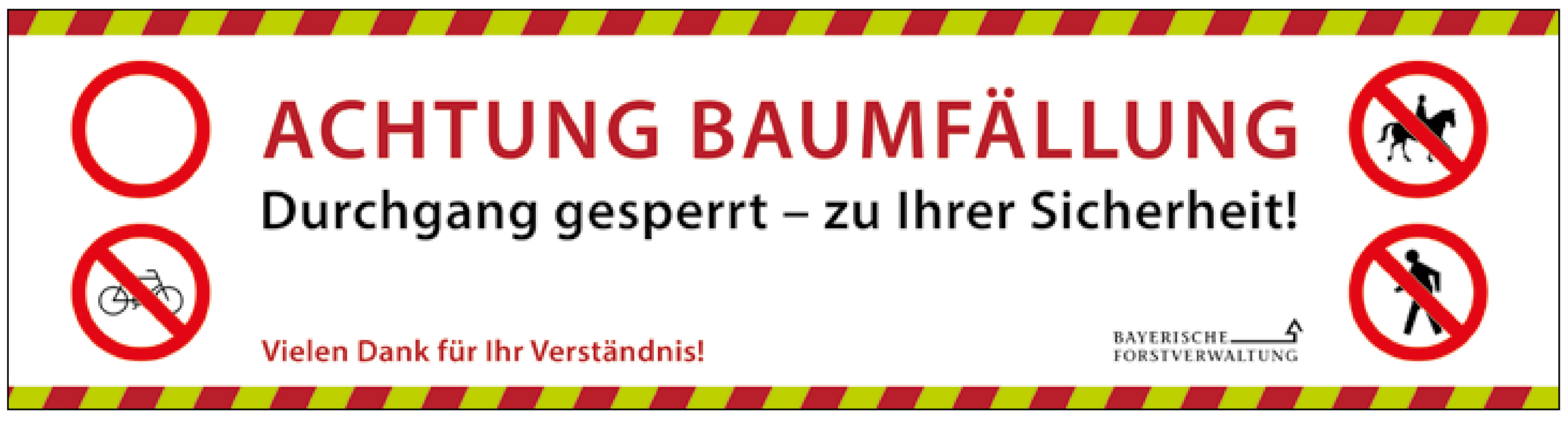
Fig. 3: The banner clearly communicates the restriction, without emphasising the fact that access is forbidden or the negative consequences of non-compliance.
Further communication measures
In addition to direct communications at the operational site - i.e. at the actual barrier in the forest - communication before and after the forestry measure is often also useful. In some places, citizens and relevant associations are invited to preliminary discussions, or excursions and opportunities for dialogue are offered directly on site in the area where the measures are to be carried out. The reasons for a specific measure can also be communicated in newspapers and via social media. A report on the results can be published afterwards. This involves considerable effort on the part of forest managers, but it is one that is necessary to secure the support of the general public. However, the barrier itself, the actual operational site, is the real “hotspot”, and this is where signs and banners come in.
Further themed signs are currently being developed at the AELF in Tirschenreuth-Weiden in the Oberpfalz region. Upon request, forestry associations in the district receive customised templates for targeted communication of the measures they are planning.
The production costs depend on the number of units ordered. If ten units are ordered, a sign costs around €50 and a banner around €75 - including VAT in each case. There is a small additional cost for the laminated A4 pages to be glued on to the sign. Depending on the procedure, tension belts, pegs, screws and ropes are required for erecting and fastening the signs. No financial support is provided. The more stakeholders do to encourage acceptance and understanding of sustainable forestry, the better.