



Methodically, the investigation was carried out by means of repeat surveys on exactly retrievable permanent plots. In the 1980s and early 1990s, some very extensive vegetation surveys (forest stand, ground vegetation) and mappings of bird species were carried out in the Wettersteinwald Natural Forest Reserve. As a result, there is some existing historical documentation of the flora and fauna here, covering lower to upper subalpine zones. This can be referred to for repeat surveys. The Wettersteinwald reserve is particularly suitable for this purpose, as a fixed and permanent grid (100 x 100 m) of sample plots was set up when the initial inventory of the reserve was carried out. This grid was used for the surveys of forest structures and species groups. At the time, the centres of these grid fields were permanently marked. This means that the original sites surveyed can easily be found again, even after several decades. It was in fact possible to successfully relocate the majority of the inventory points in the field in 2021. Repeat surveys of the forest structures could thus be carried out at 21 grid points, repeat mappings of birds at 48 grid points, and repeat surveys of forest floor vegetation at 17 grid points. The changes in forest structure over time are presented and discussed below.
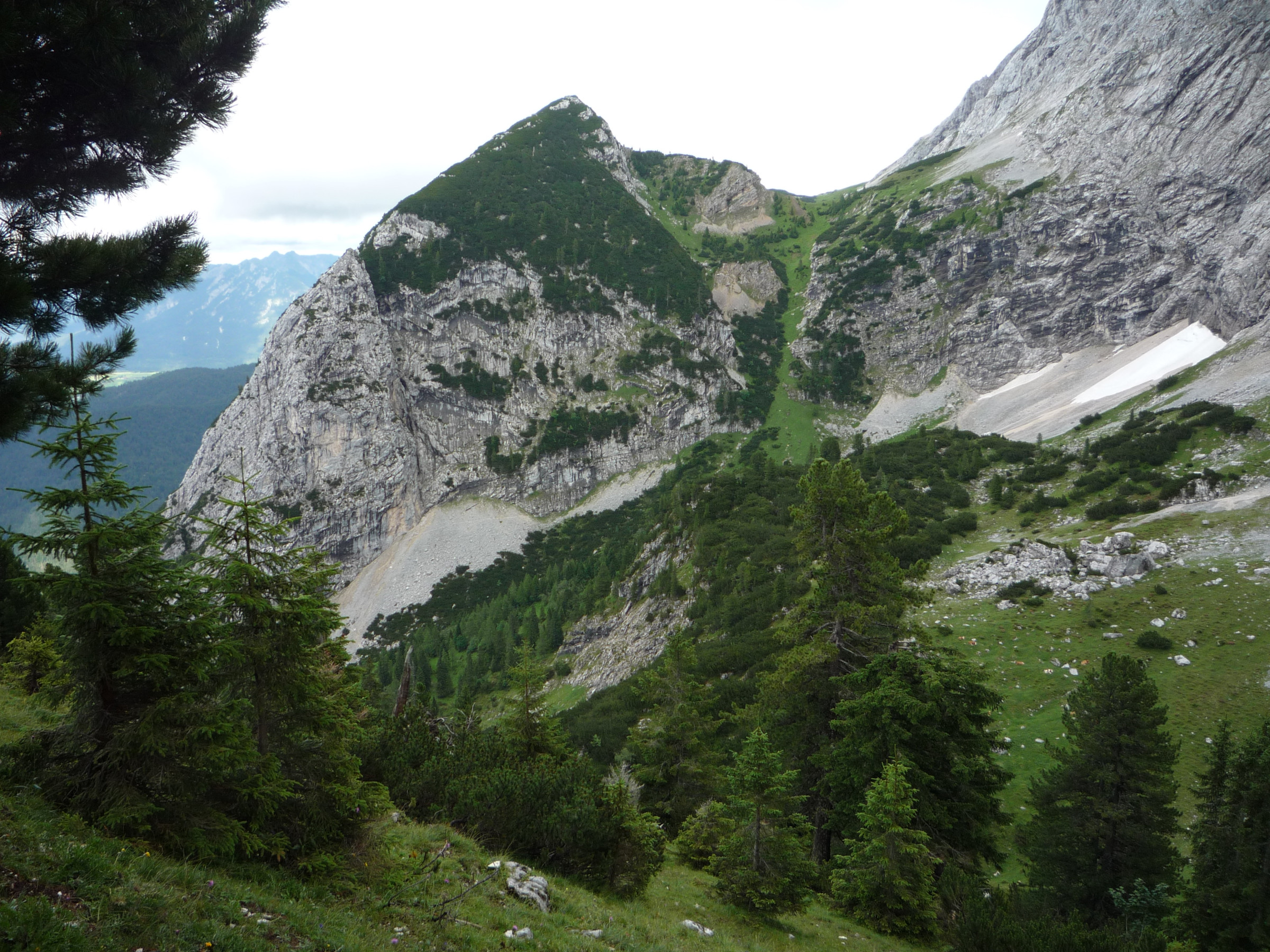
Fig. 1: Larch-stone pine forest in the Wettersteinwald Natural Forest Reserve. In addition to the old Swiss stone pines, lots of young spruce trees can be discerned in the tree layer. Photo: Thomas Kudernatsch (LWF)
The Wettersteinwald Natural Forest Reserve
The Wettersteinwald Natural Forest Reserve is south-east of Garmisch-Partenkirchen in the Wetterstein mountain range. At altitudes between 1,390 and 1,850 m above sea level, it is the highest natural forest reserve in Bavaria. It is divided into two areas, which are separated from each other by the rocky crags of the Kämikopf mountain. In the lower, very shady and more moist (subhygric) area, spruce dominates the forest stands. The leading forest community on the superficially decalcified mixed loams there is the lower subalpine base-rich silicate spruce forest (Homogyno alpinae-Piceetum adenostyletosum alliariae). In the upper areas, on the other hand, the forest stands are stocked with high proportions of Swiss stone pine (Pinus cembra) and mountain pine (Pinus mugo). These are a relict occurrence of the carbonate-larch-stone pine forest community (Vaccinio-Pinetum cembrane). They are closely interlinked with areas of mountain pine, low-nutrient grasslands and pastures (alpine meadows), screes, and rocky areas.
It is evident that the study area is already severely affected by the effects of climate change if we consider the temperature development on the nearby Zugspitze mountain. Since the 1980s, a significant increase of almost two degrees in the annual mean temperature has been measured there (Figure 2). Forecasts for the next 50 years also predict that the Alps will experience twice as much warming as the neighbouring lowlands, so that massive impacts on the ecosystems and ecological communities of the mountain forests are to be expected. The Wettersteinwald Natural Forest Reserve, with its historical documentation of flora and fauna, is thus a suitable object of study for observing and analysing the consequences of climate change for our high-altitude forests.
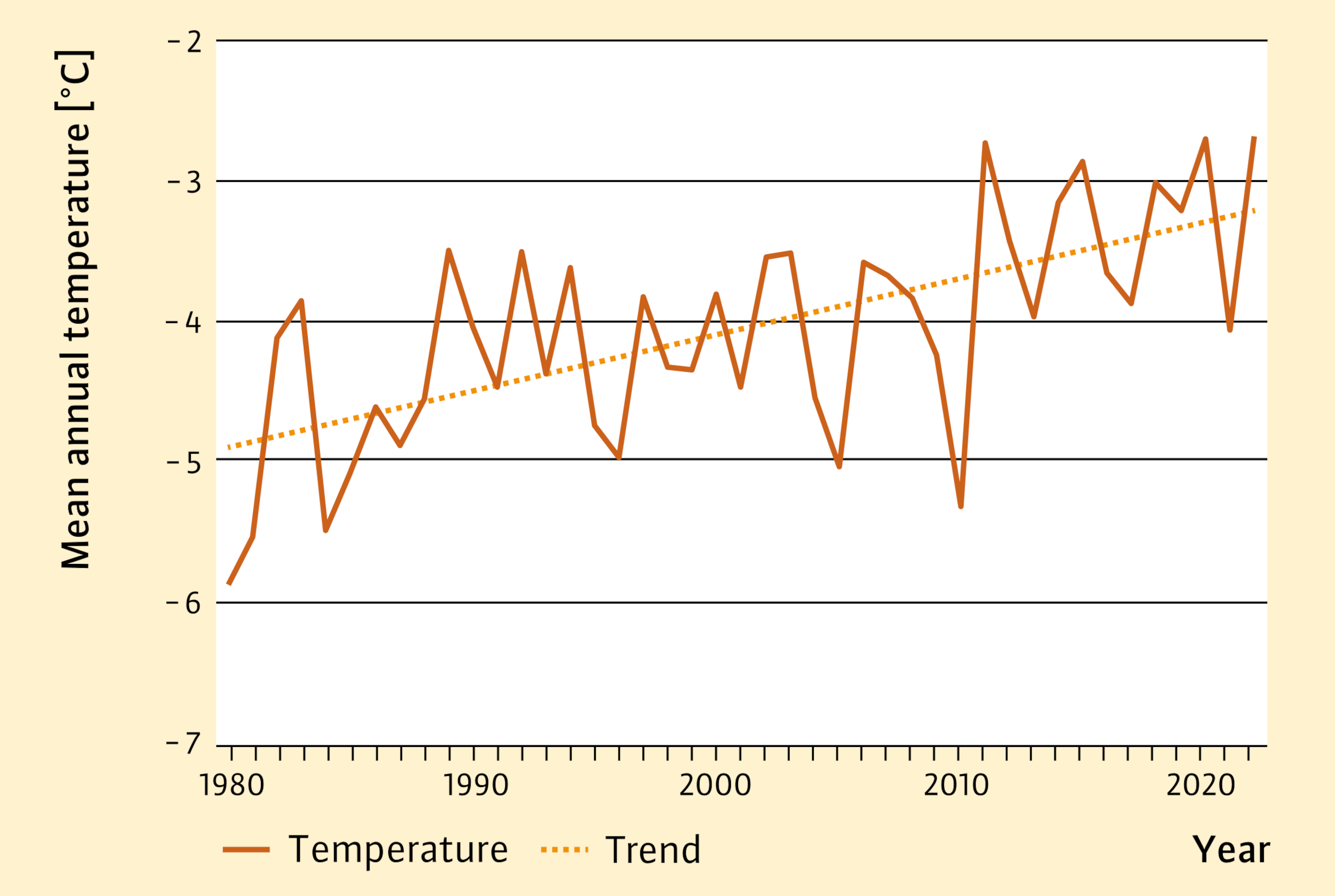
Fig. 2: Development in the annual average temperature on the Zugspitze mountain (2,962 m above sea level) since 1980. Source: Deutscher Wetterdienst (German weather service]
Survey of forest structures
Forest structures in the Wettersteinwald forest were first surveyed in 1986, in accordance with the methodological standards for natural forest reserves in Bavaria. The survey collected data at 21 grid points on the growing stock with a diameter of at least 7 cm (“Derbholz”), and an inventory was taken of the standing and lying deadwood, taking into account the type of decomposition, degree of decomposition and tree species. The sample plot radius was 15 metres in each case, corresponding to an area size of approx. 700 m². The forest surveys were repeated in 2021, with the methodology of the initial survey being used as far as possible in order to ensure the comparability of the data. The subalpine spruce forests are represented in the survey by eleven grid points, and the carbonate-larch-stone pine forests by ten grid points. In addition, the composition of the forest regeneration was recorded at each plot in 2021.
Changes in the forest structures
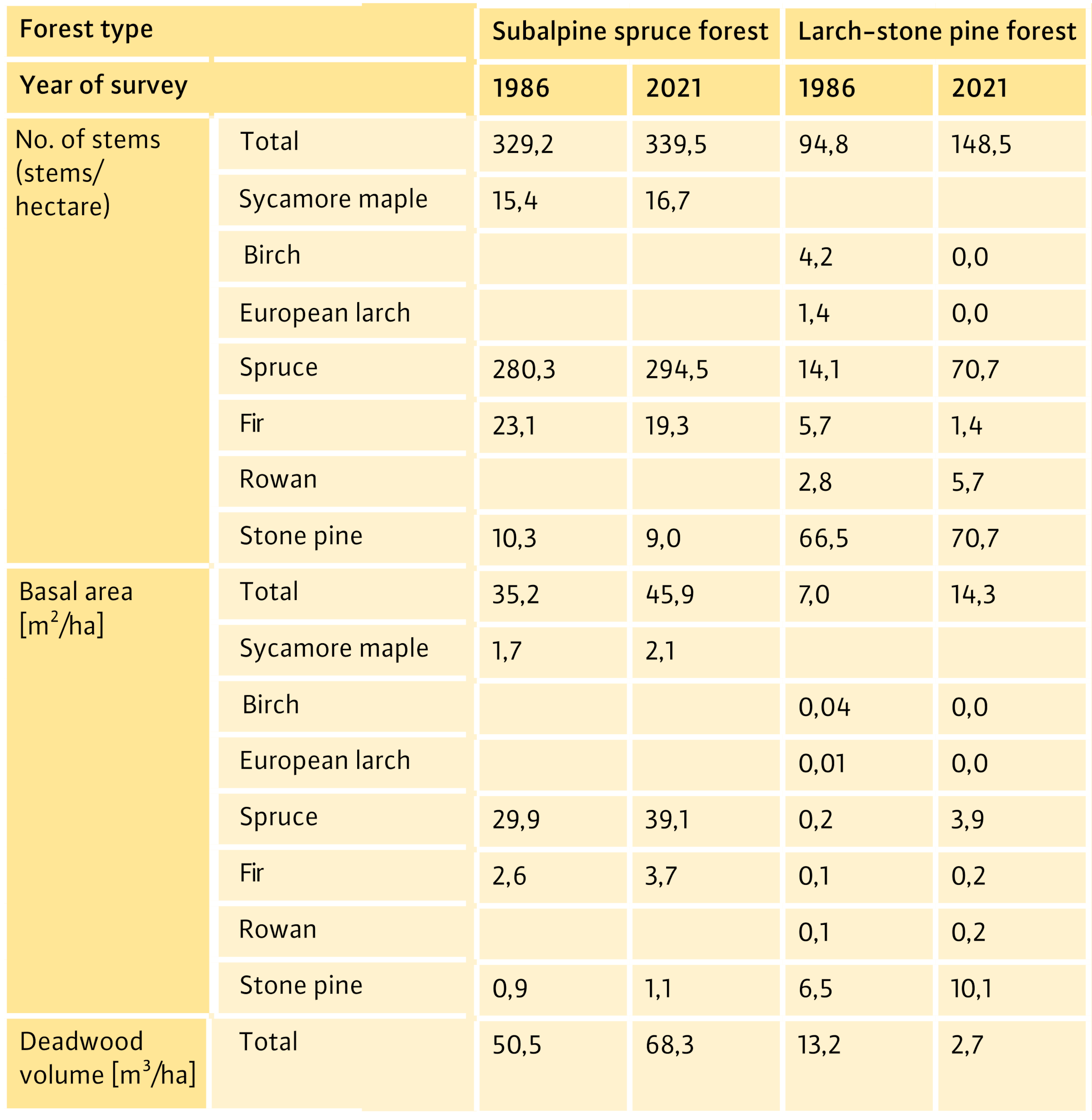
Fig. 3: Comparison of stem numbers, basal areas and dead wood volumes per hectare between the old surveys (1986) and the repeat surveys (2021) in the subalpine spruce forest and larch-stone pine forest respectively.
With regard to the stem numbers, hardly any changes were observed in the subalpine spruce forest in the comparison period. This applies to the total number of stems (on average 329 stems/ha in the old surveys vs. 340 stems/ha in the repeat surveys) and to the stem numbers of individual tree species (Figure 3). Additions through young trees reaching the minimum 7 cm trunk diameter were largely offset by losses of old trees.
The situation in the larch-stone pine forest is somewhat different. Here, the total number of stems increased significantly, from an average of 95 to 149 stems/ha, with this increase mainly being due to the significant increase in the number of spruce stems. Whereas an average of just 14 spruce specimens per hectare was found in the old surveys, today there are more than 70 specimens per hectare. Approximately half of all the spruce specimens recently recorded still have a diameter at breast height of less than 20 centimetres. Additions through young trees reaching the 7 cm trunk diameter threshold thus played a much greater role here than in the subalpine spruce forests.
If we look at the stand basal areas, an increase can be observed for both forest types (Figure 3). In the subalpine spruce forest, the basal area rose from an average of 35.2 m²/ha to 45.9 m²/ha during the comparison period, with this increase being mainly due to an increase in the basal area of spruce. Since, as seen above, the numbers of spruce stems in the subalpine spruce forest zone have hardly changed, the increase can primarily be attributed to the increase in the trunk diameter of the trees over the 7 cm diameter-threshold. In the larch-stone pine forest, too, the current surveys revealed a significantly higher stand basal area of 14.3 m²/ha than the old surveys (7.0 m²/ha). Here, too, the largest share of the basal area increment is attributable to the spruce, which significantly increased its basal area from an average of 0.2 to 3.9 m²/ha. In contrast to the subalpine spruce forests, however, the increase here is not only due to the increase in the diameter of the existing trees, but also to the many young trees that have grown sufficiently to cross the minimum trunk diameter threshold of 7 cm.
When comparing the proportions of individual tree species weighted according to basal area in the subalpine spruce forests, there is almost no difference between the two surveys (Figure 4 above). The tree species composition has hardly changed at all over the period of comparison.
The situation is different for the upper subalpine carbonate-larch-stone pine forests: Here, the proportion of spruce has increased significantly since 1986, from 3% then to 27% today, while the proportion of Swiss stone pine has in turn fallen from 93% to 71%. In addition to the Swiss stone pine, which dominated the tree layer alone in the 1980s, spruce now also occupies a significant share of the stands (Figure 4 below).
Differences between the two forest societies can also be seen if we look at the development of deadwood volumes. These increased on average in the subalpine spruce forest (from 50 to 68 m³). The individual sample plots differed considerably in terms of deadwood dynamics, however: the measured changes in the deadwood stocks since 1986 ranged from -32 to +100 m³ per hectare.
In contrast to this, the deadwood stocks in the larch-stone pine forest were overall at a significantly lower level, and also showed an opposite trend. Here, an average decrease of approx. 13 m³/ha was recorded, to 3 m³/ha today (Figure 3).
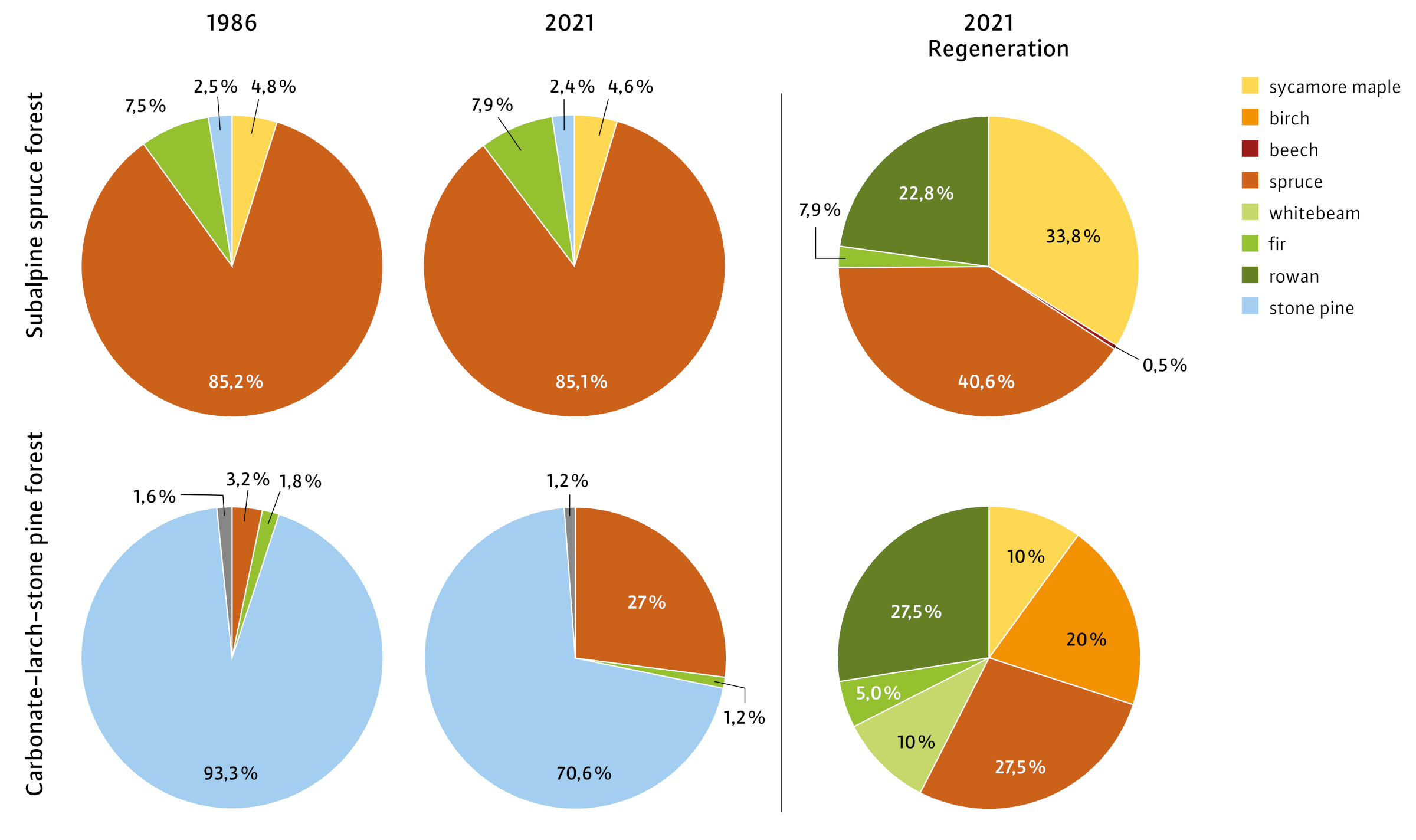
Fig. 4: Shares of individual tree species (weighted by basal area) in the old stands in the subalpine spruce forest and in the carbonate-larch-stone pine forest; the 1986 survey is shown on the left and the 2021 survey in the middle. For comparison, the tree species numbers in the regeneration layer are shown on the right.
What is behind this?
The developments observed in the subalpine spruce forest zone are likely to be largely due to the natural development of the forest since the reserve was established in 1978. In many places after the cessation of forest use, there is an increase in the basal area and the timber volume in the forest stands, as well as an increase in deadwood stocks (e.g. Endres & Förster 2009, Thom & Seidl 2022). However, it cannot be ruled out that the marked increase in temperature since the beginning of the 1980s may accelerate such processes under certain circumstances. No significant and widespread changes to the forest structure as a result of climate change, e.g. calamities triggered by drought or more frequently occurring storm events, have been observed so far in the spruce stands in the natural forest reserve. However, the significant increase in deadwood stocks of up to 100 m³ per hectare that has been recorded on individual sample plots indicates that disturbances caused especially by bark beetles and windthrow are already having some influence today – at least in some places. It seems likely that such events will increase in frequency and severity in future, thus leading to more pronounced changes in forest structures.
The changes in the upper subalpine larch-stone pine forests were more pronounced than those in the subalpine spruce forest zone. The significant increase in the proportion of spruce in the tree layer indicates a gradual change in the tree species composition. The causes of this process cannot be attributed to a single active factor. They are in fact the result of several interrelated factors. One cause of the development is likely to be the significant increase in temperature in the region. Since the very slow-growing Swiss stone pine can only compete with the faster-growing spruce at annual mean temperatures below +3 °C, rising temperatures could lead to a shift in the competitive balance in favour of the spruce and to the detriment of the Swiss stone pine in the medium to long term. The rise in temperatures over recent decades has probably already significantly improved the growth and vitality of the spruce in the upper areas of its range. The young spruce plants now ubiquitous in the regeneration can thus now grow to become part of the tree layer even in the highest locations in the natural forest reserve. Furthermore, there is a tendency towards weather systems coming more frequently from the SW and fewer coming from the NE, which is synonymous with a decreasing continentality of the climate in the northern Alps. This effect is likely to further weaken the competitiveness of the Swiss stone pine, which is adapted to more continental conditions.
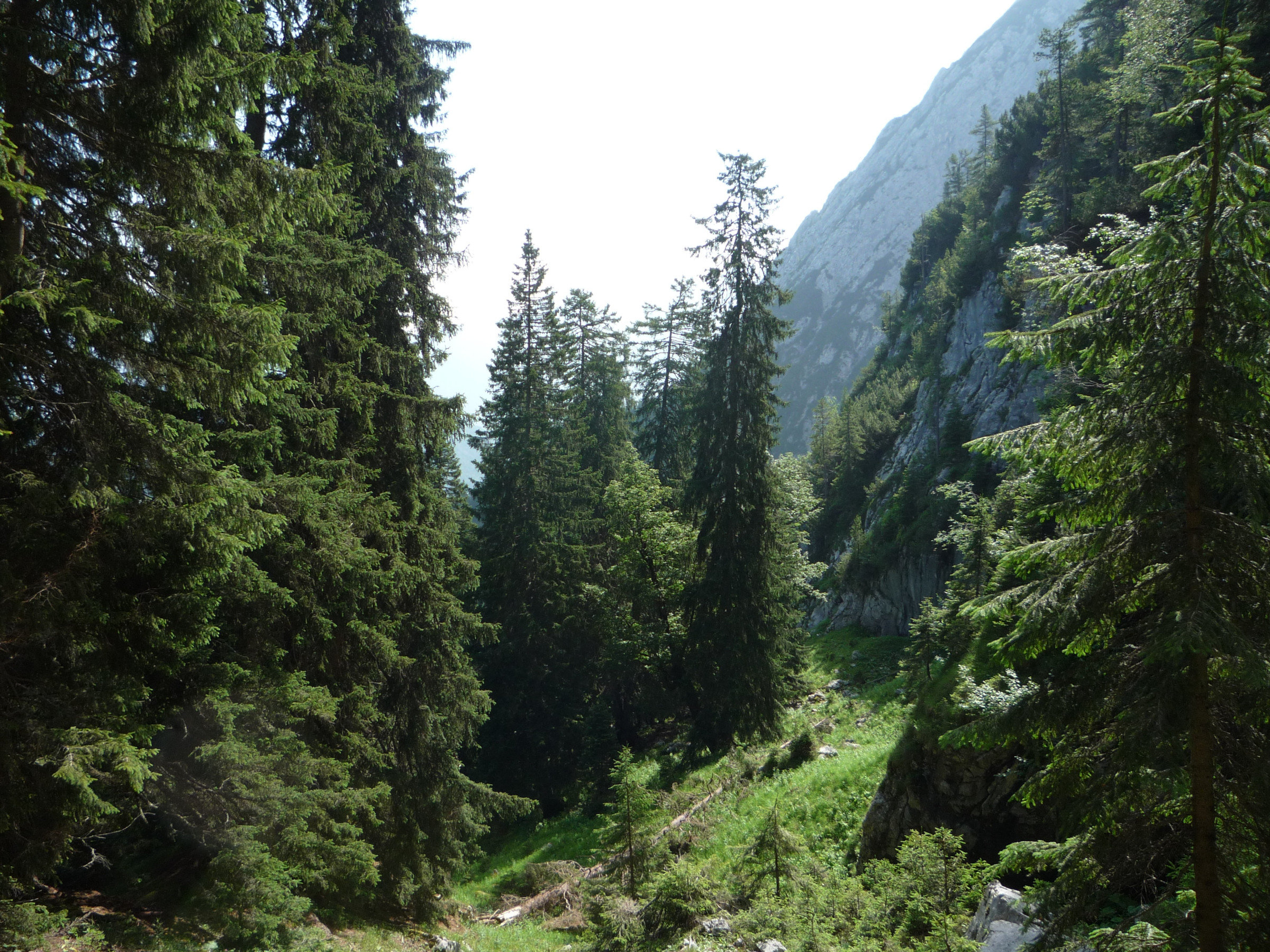
Fig. 5: Sparse subalpine spruce forest in the Wettersteinwald Natural Forest Reserve. Photo: Thomas Kudernatsch (LWF)
The increasing share of spruce in the tree layer could however also be due to changes in anthropogenic management methods. The larch-stone pine populations in the Wetterstein mountain range have for example been heavily influenced by use, and have been systematically kept open in the past (both by humans and by grazing animals). A cessation of these human activities or the reduction of their intensity in recent decades may also have favoured the establishment of spruce. The same applies to a change in wildlife management: since the early 1980s there has been increased culling of chamois and red deer, and a winter enclosure has been established. This has benefited the regeneration of forest trees (especially of fast-growing species such as spruce, beech or sycamore maple) in the region as a whole.
However, the increasing establishment of spruce (or other shade-giving tree species such as sycamore maple) in the sparse and exposed high-altitude stands is likely to make it more difficult for the Swiss stone pine to regenerate naturally in the future, since its young growth has a comparatively high light requirement. The less favourable the light conditions become for the young Swiss stone pine, the more it will be at a disadvantage in inter-species competition with more shade-tolerant tree species such as spruce. This could intensify the process of succession towards more spruce-dominated stands. The conditions for natural regeneration of the Swiss stone pine are obviously already unfavourable. This can be seen in the tree species composition in the current regeneration layer. Among the natural regeneration in the larch-stone pine forest in 2021, not a single stone pine could be found, while the percentage of spruce was almost 30% (Figure 4 below).
Despite more than four decades of natural forest development, the deadwood supply in the stone pine stands is comparatively low. According to Welzmüller & Ewald (2017), the reasons for this are that the natural development of the stands was disturbed for a long time by previous anthropogenic uses, and that deadwood accumulates only very slowly in the long-lived, relatively undisturbed stone pine forest.
Summary
A repeat of forest surveys from the 1980s revealed changes in the stand structures of the subalpine coniferous forests in the Wettersteinwald Natural Forest Reserve. Only relatively minor changes were observed in the lower subalpine spruce forests. These forests thus seem to be (still?) relatively stable in the face of the rises in temperature that have occurred.
The changes were much more pronounced in the high subalpine carbonate-larch-stone pine forests, however. Here, a marked increase in the percentage of spruce within the tree layer could be observed. In addition to other causes, this is especially likely to be related to the significant increase in temperature in the region over the last few decades. If this development continues, the Swiss stone pine could increasingly be displaced from its natural habitat by the spruce. Since the orography of the Wetterstein mountain range makes it almost impossible for the Swiss stone pine to move to higher altitudes, its occurrence in this region could decline significantly in the long term.
