



As characteristic mountain dwellers, chamois colonise a variety of habitats in the Bavarian Alps, too - from rocky regions and alpine meadows to mountain forests. The Bavarian Alps are predominantly close-to-nature. Nevertheless, wild animals in the Alpine regions, including the chamois, are also exposed to a wide range of anthropogenic influences: climate change, the increasing tourism in the Alpine region, agriculture, forestry and hunting all affect their habitats. Until now, there has been little data available on the effects of these factors on the population genetics of Bavarian chamois populations.
A consolidated data basis on the status of the populations is crucial for the management and protection of species. The LWF has been carrying out various projects relating to chamois in the Bavarian Alps for several years now. So far, the focus has been on two study areas in the Chiemgau and Karwendel regions, where the LWF has used genetic methods to determine the population sizes from droppings found, or studied the spatio-temporal behaviour of chamois using telemetry.
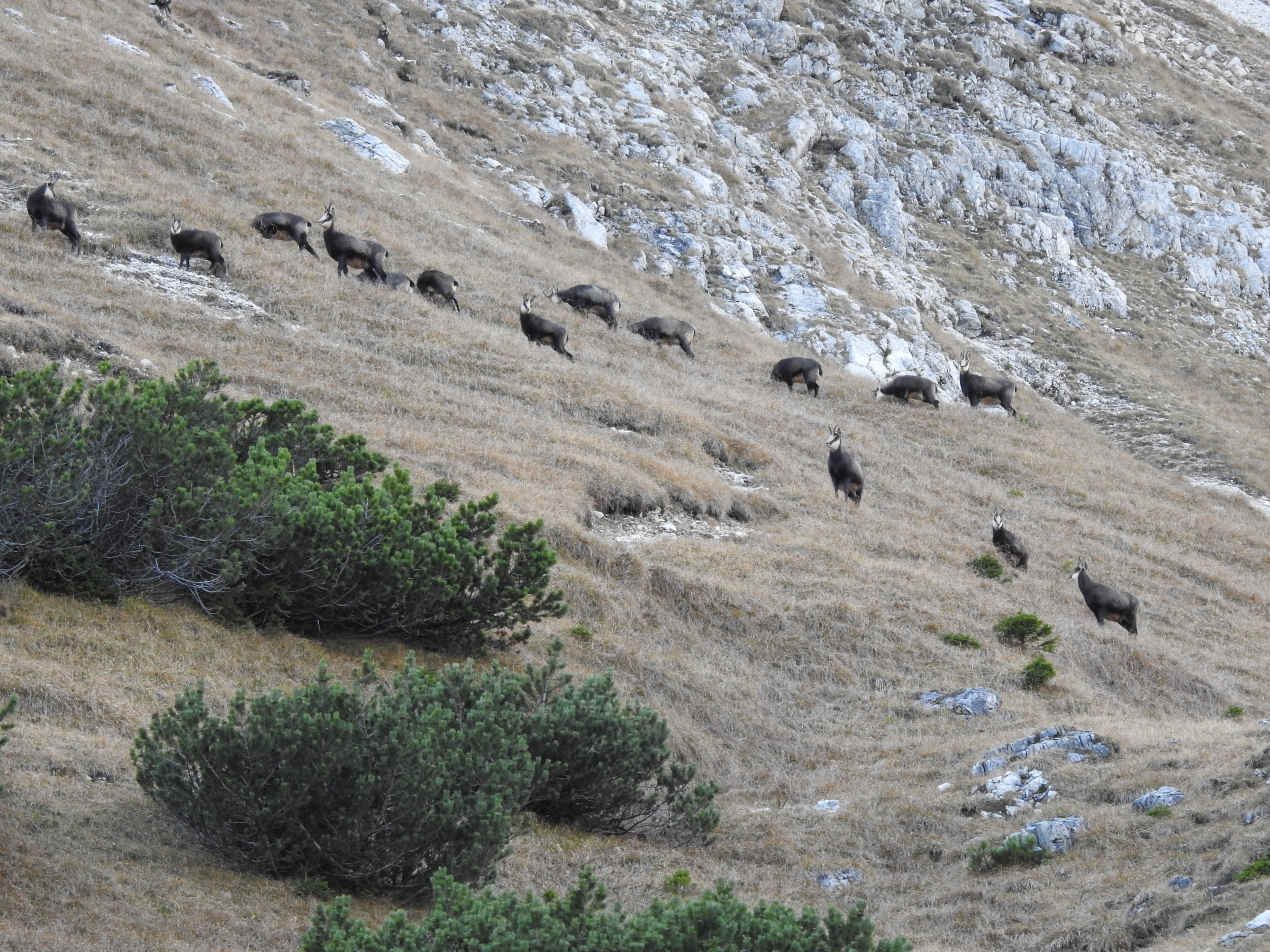
Fig.1: As typical mountain dwellers, chamois are widespread in the Bavarian Alps. Photo: Hannes Neuner (BaySF)
Genetic analyses of Bavarian chamois
For the genetic analyses, hunters took tissue samples from killed animals - occasionally also from fallen game - from the entire Bavarian Alpine region and neighbouring areas in Austria. The exact location was recorded for each sample, as this is the only way to evaluate spatial population structures and cross-reference them with landscape data. In addition, the hunters provided further important information on the condition and constitution of the animals with details of their age, sex, weight and the length of the yearling's tip - the upper part of the chamois’ horn, which remains unchanged after the first year of life.
First of all, DNA was extracted from the tissue samples in the laboratory. So-called microsatellite markers, i.e. short, particularly variable DNA segments, were used for the genetic analysis. From 16 of these microsatellite markers, a unique genetic profile was created for each individual. Such genetic profiles were collected for a total of 2,873 chamois. This extensive sample size allows well-founded statements to be made about the population structure of the chamois, but also about the genetic diversity and genetic exchange between different regions in the Bavarian Alps.
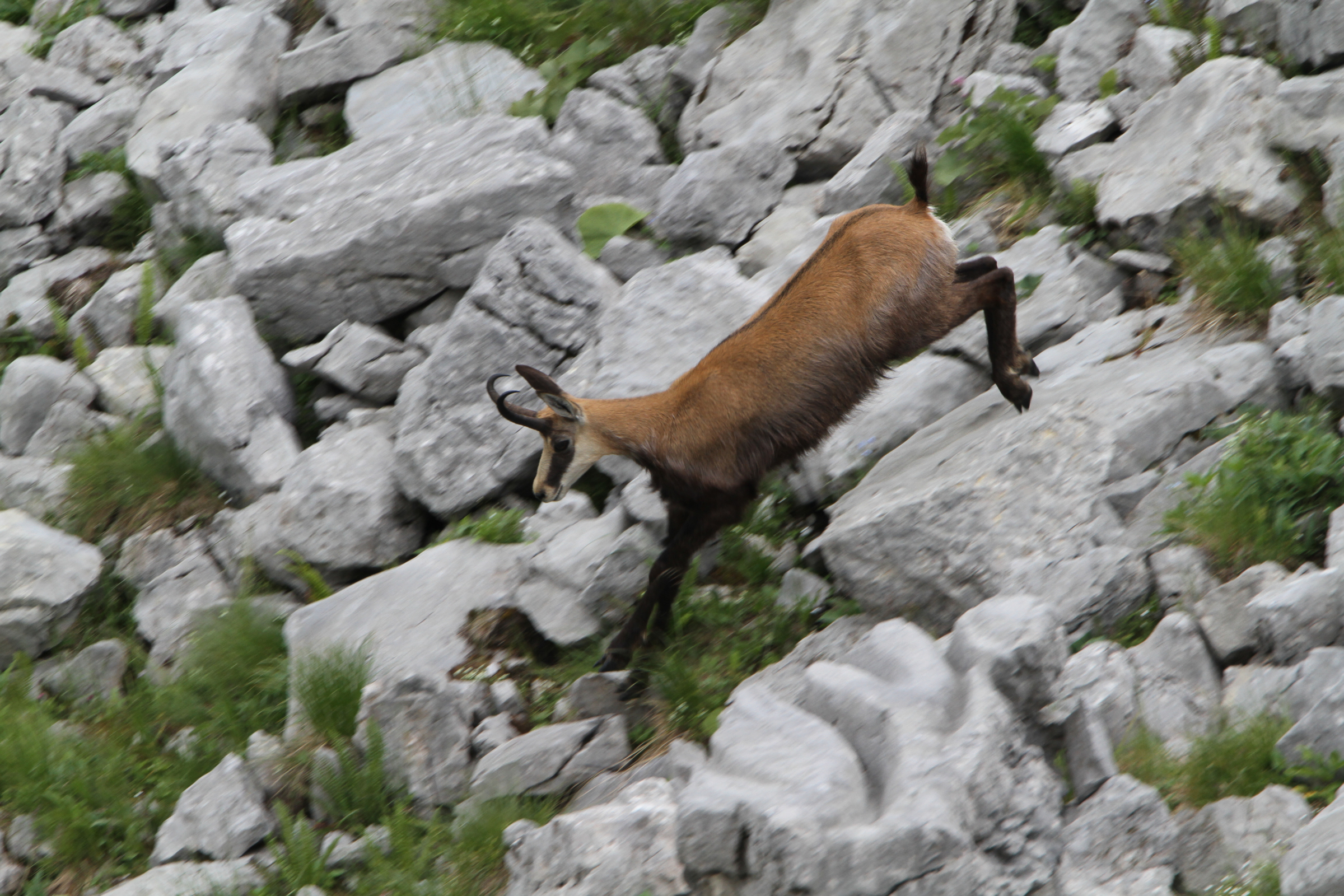
Fig. 2: Smaller valley areas, rivers or roads pose only minor obstacles to the spread of chamois in terms of population genetic structures. Photo: H.-J. Fünfstück, www.5erls-naturfotos
Analysis of genetic population structures
The first step in the evaluation focused on the question of population structure: Is there such a thing as “the Bavarian chamois”? Or can the Bavarian chamois population be divided into several populations that should be taken into account separately in monitoring and management?
As a rule, distinct populations develop when the genetic exchange (gene flow) between individuals is reduced. Gene flow is influenced on the one hand by the landscape, and on the other hand by the species’ ability to spread. Interruptions to gene flow are often caused by barriers between habitats - rivers or valleys, for example, but also anthropogenic structures such as roads or settlements. The longer the separation exists and the more pronounced it is, the greater the genetic differences between the populations. If there are no barriers between suitable habitats, genetic differences between individuals are usually due to geographical distance - because the distance between two individuals determines how likely they are to mate.
The genetic information can be used to analyse how similar the recorded individuals are: the more closely the animals are related to each other, the more markers match in their characteristics. This can be used to determine both close relationships and large-scale population structures. Whether and how the chamois populations in Bavaria can be divided into several populations or sub-units was analysed using so-called admission tests. These tests use Bayesian statistics to estimate the most probable number of groups (so-called “clusters”) into which the individuals can be divided on the basis of their genetic data. This involves forming groups that are as homogeneous as possible with genetically similar individuals. Two commonly used programmes for population delimitation were used for the Bavarian chamois populations (STRUCTURE and Geneland). These differ in their methodological approach. The clusters found were projected on to a map based on the location of the individual samples, in order to visualise the spatial distribution of the identified groups. For these groups, the differentiation was also calculated, i.e. the strength of the genetic differences between the various genetic groups.
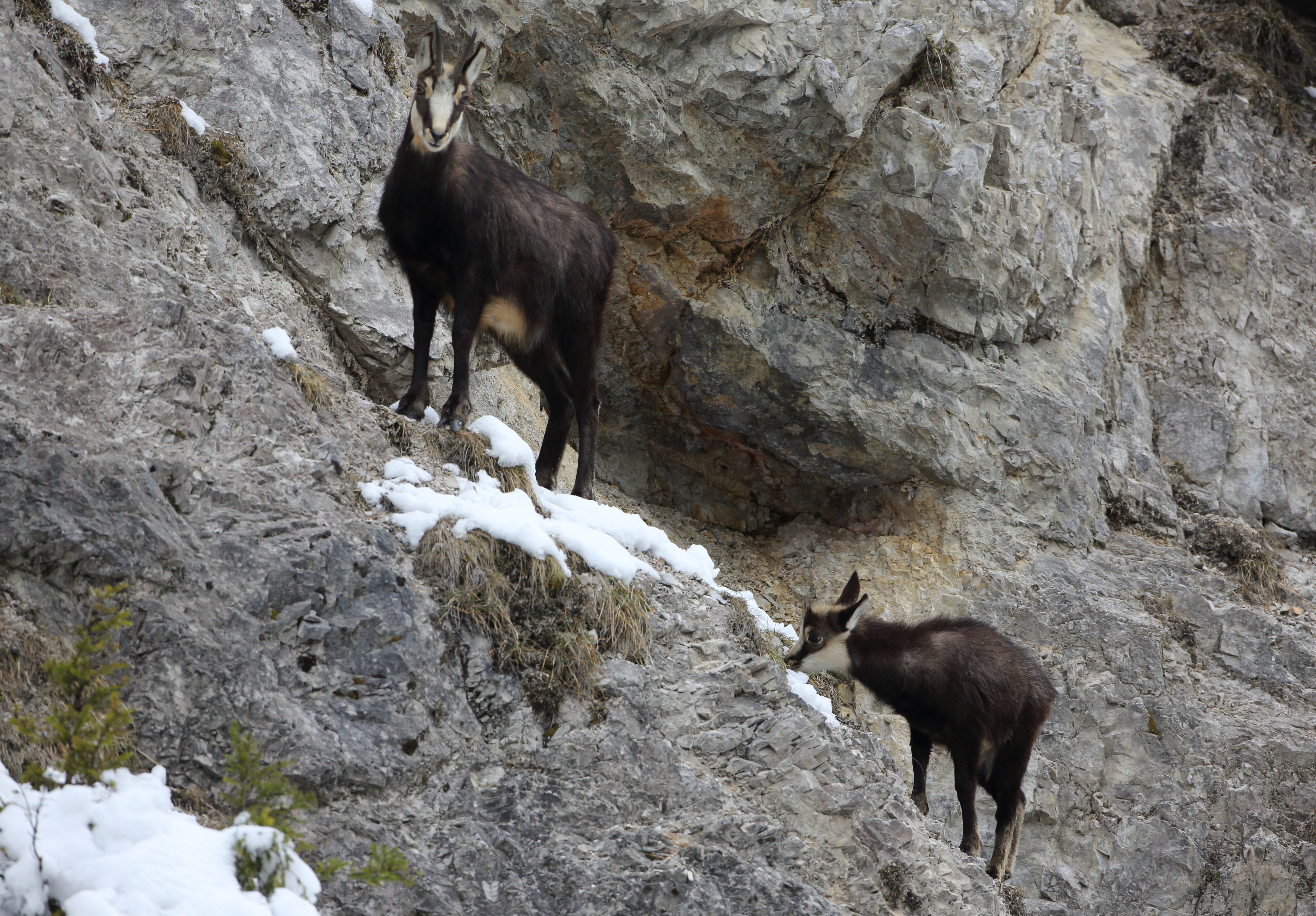
Fig. 3: Regular genetic exchange is an important factor for maintaining genetic diversity. Photo: H.-J. Fünfstück/ www.5erls-naturfotos
The chamois in Bavaria - well connected over long distances
The analysis of the population structure revealed a clear separation of the chamois populations to the west and east of the Inn Valley (Figure 4) - the Inn Valley obviously represents a barrier that is difficult for chamois to overcome. Several factors may be decisive here: the relatively large width of the River Inn, the predominantly fenced-off A93 motorway, the railway line, and the settlement areas in the Inn Valley. The two chamois populations identified are genetically clearly distinct, but not yet too strongly differentiated - they still remain genetically similar. It is noteworthy that individuals that could be clearly assigned genetically to the population west of the Inn valley were also shot east of the Inn. This suggests that isolated migrating individuals cross the Inn Valley, or that, at least in neighbouring Austrian areas, the populations mix. Within the two large clusters, the genetic structures were less pronounced and the population structure was determined more by geographical distance than by barriers.
The observation that larger valley areas represent a clear but not insurmountable barrier for chamois is also consistent with the results of a recent study on the post-glacial distribution of chamois throughout the Alpine region. Smaller valley areas, rivers or roads therefore represent only minor obstacles to the spread of chamois in terms of population-genetic structures. Detailed landscape genetic analyses, which compare the population genetic data with landscape data, have also shown good connectivity for large parts of the Bavarian Alps, i.e. good conditions for genetic exchange. This is a good sign for the Bavarian chamois population: regular genetic exchange is an important factor for the preservation of genetic diversity.
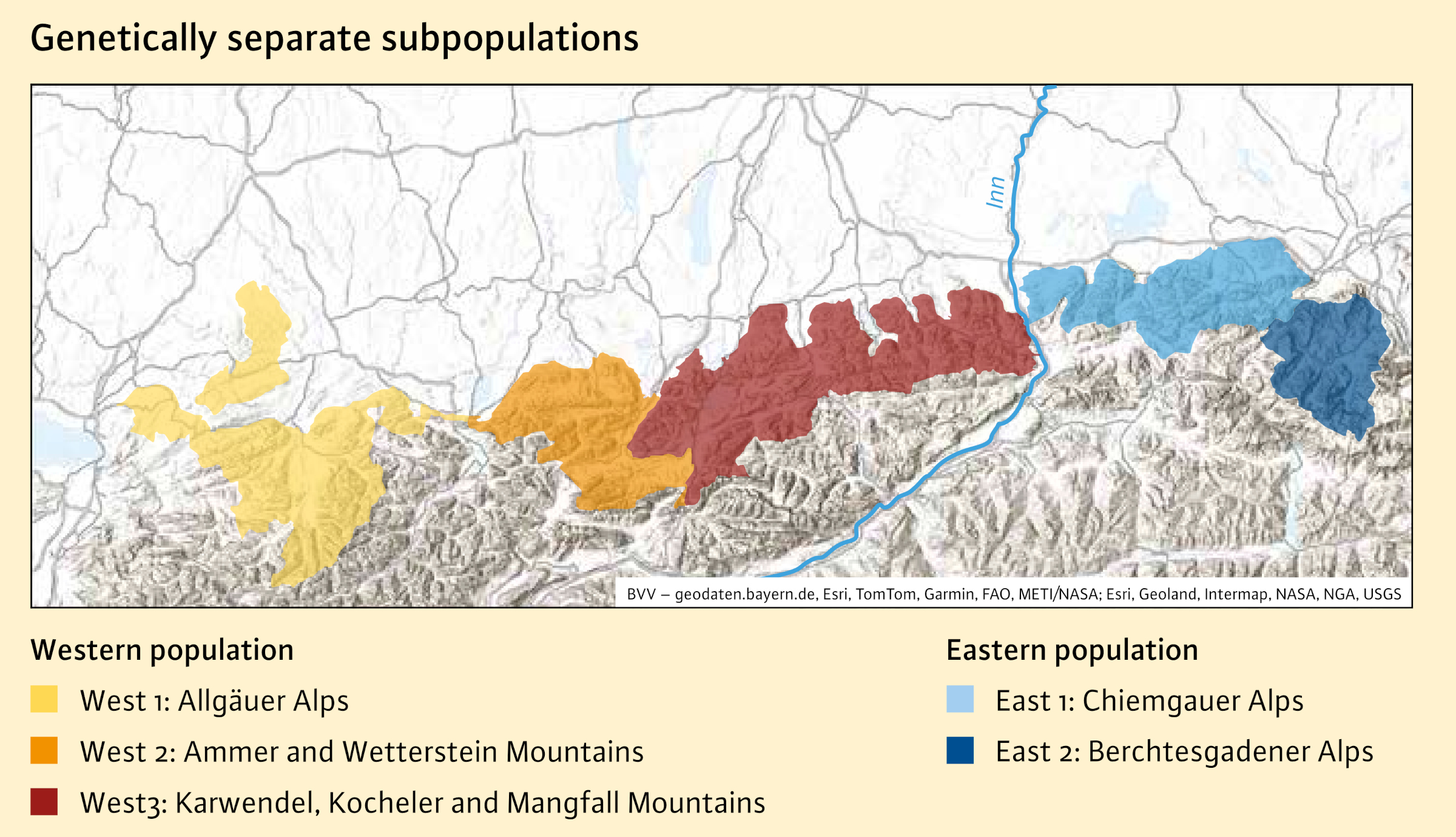
Fig. 4: Genetic population structure of chamois in the Bavarian Alps. The diagram shows the sampled natural areas/natural area units assigned to the respective genetic populations. The chamois populations can essentially be divided into one population to the west and one to the east of the River Inn - shown here as a blue line. Within these populations, subpopulations could be distinguished, although these were less clearly separated from each other.
Genetic diversity of Bavarian chamois populations
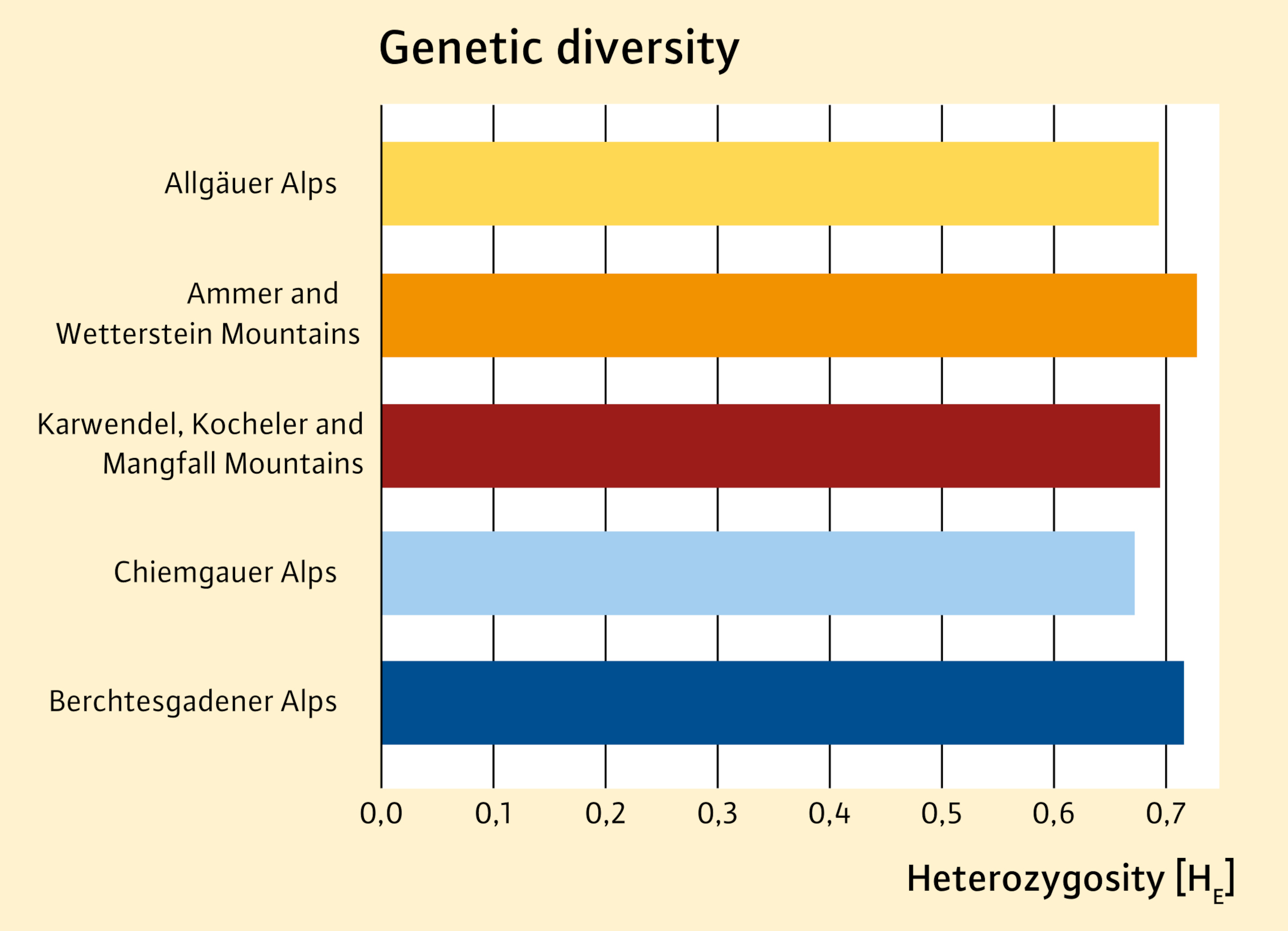
Fig. 5: Comparison of genetic diversity in the delimited Bavarian subpopulations based on heterozygosity; in a comparison across the Alpine region, the values of the Bavarian populations are in the medium to high range.
A central question of the project was the genetic status of the Bavarian chamois populations: How high is the genetic diversity of chamois in Bavaria, and are there differences between regions? To answer this question, various parameters reflecting genetic diversity were calculated for the delimited subpopulations. One of these parameters is the degree of heterozygosity: this can have values between 0 and 1 and indicates the proportion of individuals that are heterozygous for a particular trait. Heterozygous individuals have two different versions of a trait at an analysed gene locus, i.e. they have inherited different variants from their parents. Averaged across a population or subpopulation, the degree of heterozygosity provides information on the genetic diversity of these units. For the chamois in the Bavarian Alpine region, heterozygosity was in the medium to high range compared with other studies from the Alpine region, although there were slight differences between the individual subpopulations (Figure 5). Detailed analyses of the influence of the landscape on genetic diversity showed that small-scale genetic diversity, i.e. genetic variation within a small geographic area, decreases towards the edge of chamois occurrences and with decreasing proportions of altitudes suitable for chamois. This may be due to the fact that both the population density and the opportunities for genetic exchange are lower in peripheral areas. Overall, however, the Bavarian chamois population was found to have a good genetic status, with high genetic diversity, and good connectivity between different mountain regions.
Summary
The Wildlife Biology and Wildlife Management Unit of the LWF has conducted an extensive project to analyse the Bavarian chamois population using population genetics methods. The aim of the study was to examine the population structure, genetic diversity and connectivity of chamois populations in the Bavarian Alps in detail and create a comprehensive and objective database in the process. To this end, a total of 2,873 samples were analysed. The population genetic analyses showed that the Bavarian chamois populations have a high genetic diversity, are predominantly well connected, and engage in genetic exchange. The only relevant barrier to gene flow is the Inn Valley, which divides the Bavarian populations into an eastern and a western population. These two populations can be further divided into subpopulations, which, however, are in close contact with each other. The project thus provided important insights into the chamois, one of the iconic animals of the Bavarian Alps, and has established a basis for further monitoring.
The project “Survey of the spatial differentiation, connectivity and genetic status of local chamois populations in the Bavarian Alps (C54)” (duration: 2021–2024) was funded by the Bavarian State Ministry of Food, Agriculture, Forestry and Tourism.


